
Mental Health Apps in Africa: Can Technology Address a Crisis?


Africa has far more people living with mental health conditions than it has professionals to treat them. The World Health Organization’s latest figures, reported by Capital FM in May 2026, put the number at nearly 150 million people with such conditions across the continent in 2025. A Cambridge University Press review puts the workforce at about 1.4 mental health professionals per 100,000 people, against a global average of 9.
That gap explains why mental health apps in Africa have drawn so much attention from founders, researchers and funders. The harder question is whether an app can do more than point people toward help.
A workforce problem before it is a technology problem
Nigeria shows the scale of the shortage. Reporting by Campus Reporter cites WHO figures of only about 250 psychiatrists for a population above 200 million. The Association of Psychiatrists in Nigeria has said that about 90 percent of people with mental illness receive no treatment.
Cost and stigma compound the shortage. Mental illness is still widely read as weakness or a spiritual affliction, and a private therapy session can cost more than many households can spare. Digital platforms promise two things that clinics rarely can: anonymity and a lower price.
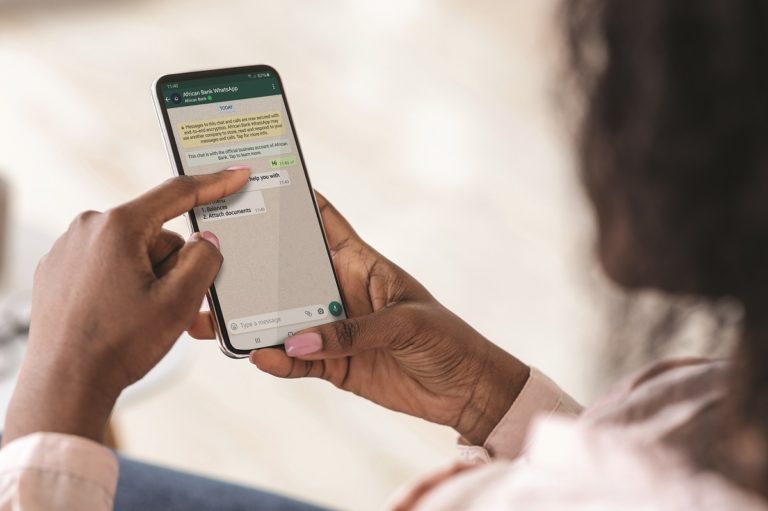
Nigerian startups have built around both. Truthshare, profiled by Techpoint Africa, offers professional sessions priced between N5,000 and N25,000 an hour, alongside free chat rooms and cheaper listening sessions. Blueroomcare connects users with licensed therapists by text, voice or video. These platforms mostly act as marketplaces that put a person in touch with a human counsellor, which is a different proposition from a self-help app.
What the evidence shows
Evidence on whether apps improve outcomes is thinner than the enthusiasm around them. The most useful African data so far comes from models that use technology to support people, and in several cases technology is not the main treatment.
Kenya’s Shamiri programme is the clearest example. It trains lay providers aged 18 to 22 to deliver short group interventions to adolescents, with clinical supervisors above them. A 2026 study in JMIR Human Factors describes shamiriOS, the open-source platform the programme built to manage this work. By the first quarter of 2024, it was running across 11 sites, serving 76,344 young people through 1,195 lay providers and 111 clinical supervisors. An earlier cost-effectiveness analysis estimated delivery at $15.17 per student, which shows how task-shifting keeps costs down when software handles scheduling, supervision and follow-up.
Researchers at the University of the Witwatersrand reached a similar conclusion working with adolescents. Their Kuamsha app, a six-module interactive game built around behavioural activation and developed for use in South Africa and Uganda, was paired with weekly phone calls from trained peer mentors. A Wits University summary of the July 2026 study notes that all 17 mentors met the competency standard after training. The lead researcher said that apps widen reach but are not a substitute for human contact. The study tested whether mentors could deliver the support well, and not yet whether it improves mental health outcomes.
Engagement is the problem behind that design choice. Many people download a mental health app, try it once or twice, and stop. Pairing the software with a person is one way to keep users in the programme.
Policy and regulation lag behind the products
Nigeria’s Mental Health Act was signed in January 2023, replacing a law from 1958. It protects the rights of people with mental illness and sets standards for psychiatric practice, and Techpoint reported at the time that it could open a new market for healthtech startups.
Implementation has been slow. Campus Reporter’s later reporting quotes the president of the Association of Psychiatrists in Nigeria saying that not one provision had been fully implemented. The same report quotes Chime Asonye, founder of Nigerian Mental Health, saying that there is no specific regulatory framework for mental health AI tools in the country.
That absence matters more as AI-driven apps multiply. A mental health app collects some of the most sensitive data a person can share. The Nigeria Data Protection Act applies to that data in general terms, but no regulator has set clinical safety standards, escalation rules for users in crisis, or claims limits for chatbots that present themselves as therapy. In practice, founders are making these decisions on their own.
The limits of the app model
Several constraints keep apps from filling the treatment gap alone. Data costs and smartphone ownership put the heaviest users out of reach of the people with the least access to care. Language is another barrier, since many tools are built in English and use frameworks developed in Western clinical settings. Crisis response is a third. An app can offer a helpline number, but it cannot send someone to a person in danger, and that is why most credible programmes keep trained humans in the loop.
Funding is a further constraint. Blueroomcare’s founder told Techpoint that raising money from investors was difficult, and mental health startups often struggle to show the revenue growth venture capital expects from a service many users can only partly afford.
What technology can and cannot do
The evidence so far supports a modest conclusion. Technology works best as infrastructure for care delivered by people: scheduling, training, supervision, anonymous first contact, and low-cost follow-up between sessions. Shamiri and Kuamsha both point in that direction.
Apps cannot make up for the shortage of professionals, and they cannot fund mental health services that governments have not budgeted for. Nigeria’s experience with its Mental Health Act shows that a law without funding or enforcement changes little.
The more realistic role for mental health apps in Africa is to widen the entry point to care while governments and health systems build the workforce and the rules behind it. Whether that entry point leads anywhere depends on who is waiting on the other side and whether the data users hand over is properly protected.