
EdTech for Out-of-School Youth: Reaching the Unreached

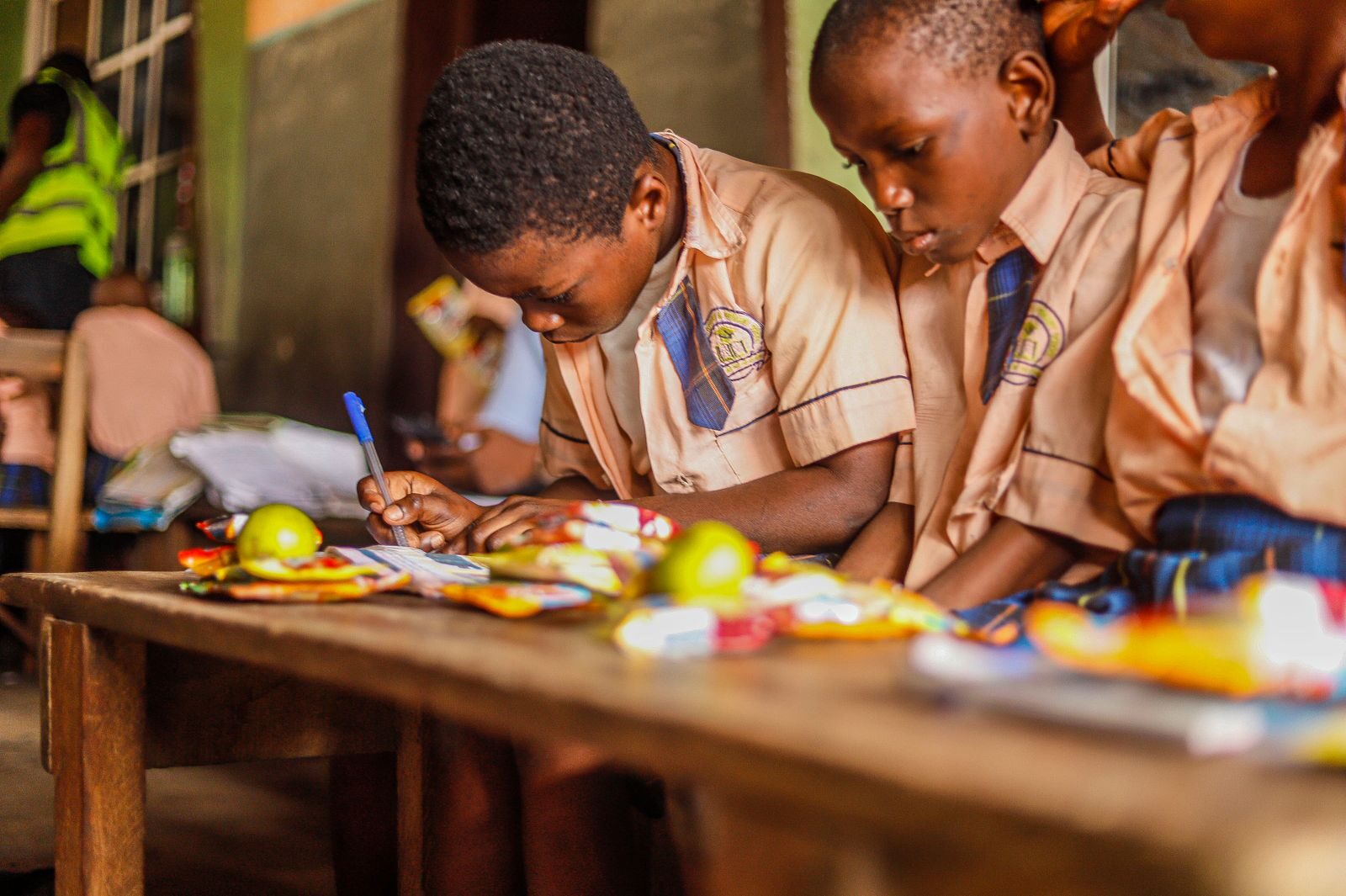
Nigeria’s education numbers have a way of losing their shock value through repetition. Say “18.3 million out-of-school children” often enough in policy documents and conference panels, and it starts to sound like a statistic rather than a crisis. But that figure, drawn from UNICEF’s 2024 reporting, places Nigeria ahead of every other country on earth for the sheer number of children without access to formal schooling. Roughly 10.2 million are of primary school age, and 8.1 million are of secondary age. It is a population larger than several West African nations combined, and it is growing, not shrinking.
Most of Nigeria’s EdTech sector was not built with this population in mind. Apps like uLesson, Tuteria, and AltSchool Africa have improved learning outcomes for students already enrolled somewhere, supplementing classroom instruction with video lessons, tutoring, or personalized coursework. That is a different, and considerably easier, problem than reaching a child who has never sat in a classroom, or a teenager who dropped out three years ago to work in a market. The harder question is what EdTech looks like when there is no school to supplement.
Why the Gap Persists
The reasons children end up out of school in Nigeria are not primarily technological. UNICEF and government officials point to poverty, insecurity, child marriage, and distance to the nearest functioning school as the dominant drivers, with the crisis worst in the northeast and northwest, where Kebbi and Sokoto states post some of the highest rates in the country. Insecurity compounds the problem directly. Armed groups abducted 777 schoolchildren in 2024 alone, according to UN monitoring cited in UNICEF’s Nigeria annual report, a pattern of school-linked violence that has made some parents in affected states reluctant to send children to class at all, regardless of what technology is available to them.
This matters for how EdTech is designed, because a smartphone app cannot fix an insecurity problem or a poverty problem on its own. What it can do, if built correctly, is lower the practical barriers around a child’s circumstances: no functioning school nearby, no money for transport, no safe way to attend class daily. That is a narrower and more realistic ambition than the industry sometimes implies, but it is also an achievable one.
What Already Works, and Its Limits
A handful of Nigerian platforms have quietly built products suited to this narrower goal, even if reaching the fully out-of-school population was not their original design intent. uLesson launched in 2019 with preloaded SD cards and USB drives carrying video lessons, explicitly built for environments with poor or no internet connectivity, a decision that mattered more for reach than any feature added since. Teesas, a smaller competitor, distributes offline video lessons in local and international languages and has donated tablets to orphanages and schools in underserved communities, addressing the device-access problem that offline software alone does not solve.
These are useful models, but they were largely designed for households that had already decided education mattered and had some means to pursue it, even modest ones. A genuinely out-of-school child, especially one working to support a family or living in a conflict-affected area, needs something closer to a bridge back into structured learning, not just a supplementary video library. A recent commentary in TheCable argued for community-based digital learning hubs, low-cost offline devices distributed through telecom partnerships, and closer coordination between EdTech firms and grassroots organizations like Slum2School Africa and Teach for Nigeria, which already have relationships with out-of-school populations that no app can replicate from scratch.
Funding Has Not Followed the Need
Part of the reason this segment remains underdeveloped is financial. EdTech has historically attracted a small share of African tech funding, and most of that capital gravitates toward platforms serving students already inside the formal system, where a paying customer, usually a parent, exists. uLesson’s $7.5 million Series A in 2020, the largest EdTech raise in Nigeria at the time according to Arbiterz, went to a product built to supplement school attendance, not replace it. Building for out-of-school youth means building for a population with limited ability to pay, which pushes the work toward donor funding and government partnership rather than pure venture-backed growth.
What Reaching This Population Would Actually Require
Closing this gap is less a product question than a coordination one. The government’s own education roadmap under the Renewed Hope Agenda sets a target of enrolling 15 million out-of-school children, a goal that will not be met through smartphone apps alone but could be meaningfully accelerated by them, provided the tools are matched to local conditions: SMS and radio-based content for areas without smartphones, offline-first apps for areas with intermittent connectivity, and community learning hubs staffed by local facilitators where neither option reaches far enough. None of this is technically difficult by industry standards. What has been missing is the alignment between telecom operators, EdTech developers, government agencies, and community organizations that would let existing tools reach populations they were never originally built for.
The measure of success here will not be download numbers or app store rankings. It will be whether a child in Kebbi or a teenager in a displacement camp in Borno ends up with a functioning path back into learning, built around the constraints of their actual life rather than the assumptions built into most EdTech products today.