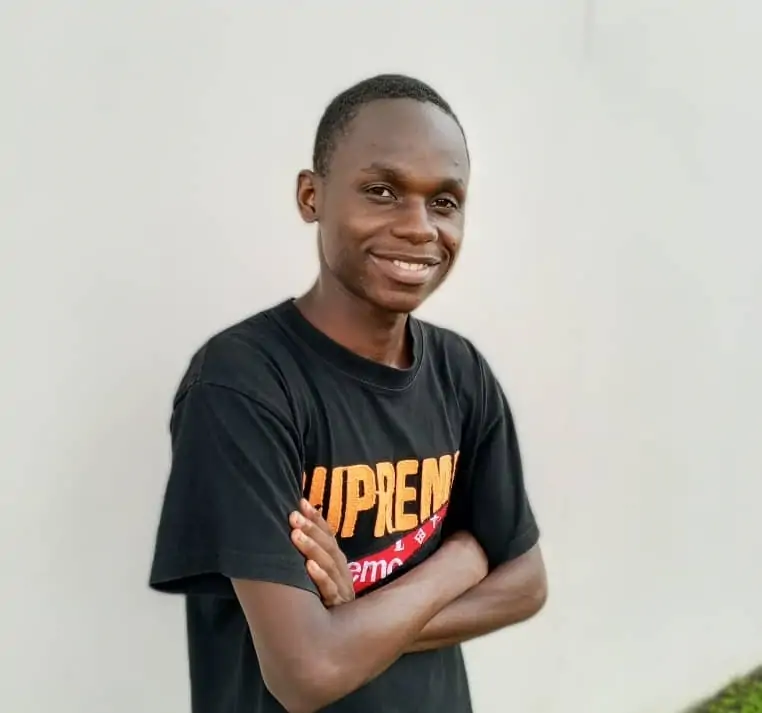

Medismarts Founder Obinna Osuji on Building the Digital Backbone of African Healthcare


Nigeria’s healthcare system has plenty of capable doctors, hospitals and insurers. What it has often lacked is a way for them to work together. Obinna Osuji, Co-founder and CEO of Medismarts, has spent more than a decade building that connection. Today his platform, Medicloud, is used by 28 HMOs and more than 14,000 healthcare providers, and it processed over N33.8 billion in healthcare transactions in 2025.
From software developer to healthtech builder
Osuji’s path to Medismarts ran through software development, healthcare and health insurance. Working across those fields left him with one firm conclusion: many of the problems people described as healthcare problems were really systems problems. Good professionals were operating with fragmented processes, disconnected data and too much manual work.
Medismarts was founded in 2015 to use technology on those structural weaknesses. The company first focused on digitising healthcare providers, including deploying its electronic medical record system across hospitals. Deeper industry experience showed that digitising individual hospitals was not enough. The insurer, the provider and the patient all needed to be connected.
That thinking became Medicloud. “Instead of building another standalone healthcare application, we set out to build infrastructure that could sit at the centre of the healthcare ecosystem,” Osuji says. The platform connects enrolment, authorisations, claims, clinical information, payments and reporting. Seeing it used by 28 HMOs and more than 14,000 providers, he says, “validates the problem we set out to solve more than a decade ago.”
Fragmentation, and who pays for it
The core problem Medicloud addresses is fragmentation. Healthcare has traditionally run as a collection of separate systems. A hospital keeps its own records, and an HMO runs another system. Claims may travel through spreadsheets or portals, authorisations move through separate channels, and finance teams reconcile everything afterwards. Every break between those systems adds delay, administrative cost and room for error.
Medicloud offers a common digital infrastructure across those steps. HMOs get better control of claims, enrolment, authorisations, provider management and healthcare expenditure. Hospitals get faster, more structured interactions with insurers and less administrative work. Patients benefit because the administrative processes behind their care become faster and more reliable.
For Osuji, the issue reaches beyond any one company. African healthcare systems must expand access to care with limited resources. “If technology can remove unnecessary administrative costs and make every naira spent on healthcare work harder, that has implications far beyond the organisations using our software,” he says.
How it works in real time
Osuji describes a patient walking into a hospital. Medicloud connects the activities around that single encounter. The provider verifies the patient’s eligibility, requests an authorisation where necessary, documents the encounter and submits a claim electronically. The HMO sees that activity within the same ecosystem and processes the claim under its benefit rules and policies.
Much of the work happens in the background through rules and automation engines. Rather than having someone manually inspect every claim, the system evaluates claims against predefined rules and automatically adjudicates those that qualify. In 2025, more than 26% of claims approvals were handled automatically, representing over ?9.2 billion in system-adjudicated transactions.
The same activity becomes usable management data. An HMO can see utilisation patterns, provider performance, claims trends and financial exposure in near real time, without waiting for someone to consolidate spreadsheets at month end. “That transition from fragmented transactions to structured, actionable data is one of the most powerful aspects of what we have built,” Osuji says.
The challenge of building enterprise technology in Africa
Osuji says the hardest part of building and scaling Medicloud has been working in an ecosystem that is still evolving. “You aren’t simply introducing software; you are often changing processes that organisations have used for years.” That means dealing with legacy systems, inconsistent data, infrastructure constraints and, above all, resistance to changing established ways of working.
Healthcare raises the stakes. An HMO or hospital cannot stop operating while a new system goes in, so migration has to happen while claims are being processed and patients are receiving care. The platform must also be secure, reliable and able to handle growing transaction volumes.
His conclusion is that scaling technology in Africa takes more than a good product. It takes patience, strong implementation capability and a deep understanding of the industry being transformed. Founders also have to “build for African realities rather than simply importing a model designed for another market.”
Impact in numbers
Osuji says the clearest measure of impact is what happens on the platform every day. Between 2024 and 2025, Medicloud processed 8.43 million claims. Claims volumes grew by 33.3% while average claims turnaround time fell by 30.4%. More than N33.8 billion in healthcare transactions flowed through the platform in 2025, and over N9.2 billion of claims were adjudicated through automated workflows.
He is careful to say the numbers are not the point. “Our impact isn’t the number of claims we process. It is what those efficiencies enable.” When an HMO processes claims faster, a hospital spends less time chasing approvals or reconciling transactions, and both sides have better information, more resources can go toward what the system exists to provide, which is healthcare.
What comes next
Medismarts intends to take what it has proven in Nigeria and build it into infrastructure that supports healthcare financing across Africa. After more than a decade studying how insurers, providers and patients interact, Osuji says the company now has the transaction volumes and operational experience to extend the model.
A major focus is more automation and intelligence inside the platform. With more than a quarter of claims approvals already handled automatically, the company believes structured healthcare data, rules engines and AI can raise that share significantly while keeping appropriate clinical and financial controls. Osuji expects faster decisions, lower administrative costs and better fraud and anomaly detection.
The larger vision is for Medicloud to become part of the underlying digital infrastructure for African healthcare, connecting insurers, providers, patients, financial institutions and other participants through a common technology layer. “Nigeria has been our proving ground; the next chapter is about expanding that infrastructure across the continent,” he says.
Three trends shaping African healthtech
Osuji sees the sector moving past its first phase, which was largely about digitisation. Putting a hospital record on a computer or giving an insurer a claims portal is useful, but the next phase is interoperability: systems that communicate with each other and data that moves securely across the healthcare ecosystem.
AI is the second trend. He believes its most immediate effect in African healthcare will be practical rather than spectacular. Claims adjudication, fraud detection, utilisation analysis, clinical decision support and administrative automation are areas where AI can remove large amounts of repetitive work and free scarce human resources for higher-value tasks.
The third is the convergence of healthcare, insurance and financial technology. As health insurance coverage expands across Africa, the infrastructure for collecting contributions, paying providers, managing benefits and analysing healthcare expenditure will matter more. In his view, the companies that can connect those pieces securely and at scale will play an important role in the next phase.
Advice for upcoming innovators
Osuji’s first piece of advice is to solve a real problem and stay with it long enough to understand it properly. He notes the pressure in technology to chase whatever model or trend is attracting attention, but says some of Africa’s biggest opportunities lie in problems that have existed for decades and are simply hard to solve.
His second is to spend time with the people who experience the problem. Some of the most important improvements to Medicloud, he says, “didn’t originate from a boardroom.” They came from understanding how claims officers, doctors, hospital administrators and finance teams actually work. Technology becomes valuable when it fits into those realities and improves them.
The third is resilience. Building Medismarts has taken more than a decade, with difficult periods, changes in technology, economic challenges and plenty that did not work the first time. “Building something meaningful in Africa often takes longer than the success stories make it appear,” he says. Persistence combined with a willingness to keep learning and adapting is, in his words, “an enormous competitive advantage.”
Looking for partners
Medismarts wants partners who share the belief that Africa’s healthcare challenges need infrastructure that can operate at scale. For HMOs, insurers, providers and other healthcare institutions, that could mean deploying Medicloud, integrating with its infrastructure, or working with the company on specific operational challenges.
For investors and strategic partners, Osuji points to a broader opportunity. The company has spent more than a decade building the technology, industry knowledge and relationships behind the platform, and has demonstrated the model at significant scale in Nigeria. As it deepens its use of AI and expands into more African markets, he says strategic capital, market access and partnerships can help accelerate the journey.
“We are not looking only for capital,” he says. The company wants to hear from insurers, healthcare providers, governments, technology companies, financial institutions and investors who share the vision of a more connected African healthcare system.
About Medismarts and Medicloud
Medismarts is a health technology company founded in 2015. Its flagship platform, Medicloud, connects enrolment, authorisations, claims, clinical information, payments and reporting for HMOs and healthcare providers. It currently supports 28 HMOs and more than 14,000 providers.