

Africa’s Data Centre Boom: Where the New Facilities Are Being Built

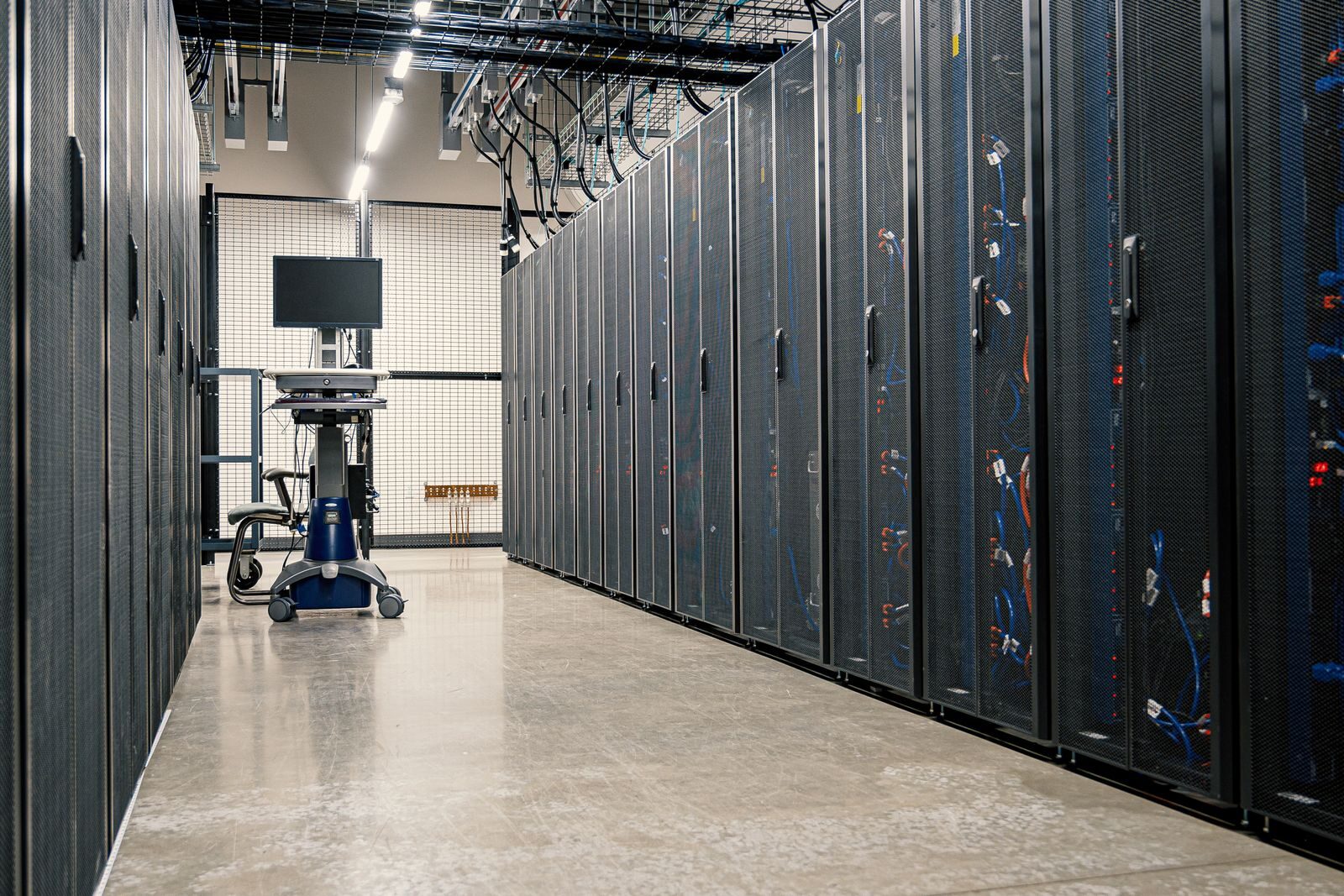
Africa’s digital infrastructure deficit has been well-documented for years. The continent accounts for less than 2% of the world’s co-location data centre supply, despite being home to roughly 18% of the global population. That imbalance is beginning to shift through a wave of construction activity that spans South Africa, Nigeria, Kenya, Egypt, and beyond.
The projects now underway represent the most concentrated burst of data centre investment the continent has seen. Understanding where these facilities are being built and why tells a larger story about where Africa’s digital economy is heading.
South Africa Remains the Anchor
Johannesburg and Cape Town continue to absorb the largest share of new capacity. The market logic is straightforward: South Africa hosts cloud regions for Amazon Web Services, Google Cloud, Microsoft Azure, Oracle, Alibaba, and Huawei, making it the only country on the continent with the infrastructure density to support hyperscale demand at scale.
Teraco, operating under Digital Realty, broke ground on its JB7 data centre in November 2024, a facility planned at 40 MW of IT load with liquid cooling designed for AI workloads. The same month, Teraco began work on a 120 MW solar photovoltaic plant in South Africa’s Free State province, intended to power its data centres across the country by 2026, a direct response to ongoing grid instability.
Africa Data Centres (ADC), a Cassava Technologies subsidiary, went live with a 6 MW expansion at its Cape Town CPT1 facility in July 2024, doubling the site’s total capacity and adding 1,000 racks of white space. The company is now building a second Cape Town facility, CPT2, carrying a 20 MW IT load. Much of ADC’s expansion has been backed by a $300 million financing arrangement from the US International Development Finance Corporation, which frames its support explicitly as a counterweight to Chinese infrastructure financing on the continent.
Nigeria: Lagos Emerges as West Africa’s Centre of Gravity
For years, Nigeria’s data centre market was constrained by unreliable power, high construction costs estimated at up to $15 million per megawatt, compared to a continental average closer to $10 million; and limited connectivity to subsea cable systems. That equation is changing as new undersea cables come ashore and operators make calculated bets on the Lagos market.
Rack Centre’s LGS2 facility, a 12 MW greenfield project in Ikeja, Lagos, has been completed, making it West Africa’s largest carrier- and cloud-neutral campus at 13.5 MW combined IT load across both Lagos sites. The new facility sits on a 20,000 square meter site and connects to 73 carriers, ISPs, and all eight undersea cables accessible from Nigeria, a connectivity profile that positions it as the logical home for cloud on-ramps and content distribution infrastructure serving the wider West African market.
MTN Nigeria launched the first phase of its Dabengwa Sifiso Data Centre in Ikeja in July 2025, named after a former MTN group CEO. Phase I delivers 4.5 MW across 780 racks, built to Tier III standards, at a cost of $120 million, including cloud infrastructure developed in partnership with Dell Technologies. A second phase, targeting between 14 MW and 20 MW, will be triggered by demand. The full two-phase commitment is valued at over $235 million. Notably, MTN launched a local cloud service alongside the facility with self-orchestration capabilities and billing in naira, positioning it as a more accessible alternative to hyperscaler pricing for Nigerian businesses and government entities.
Airtel Africa also broke ground on a 38 MW hyperscale facility on Lagos’s Victoria Island in March 2024, with completion targeted for early 2026. Operated under the Nxtra by Airtel brand, it is being positioned as the first of five hyperscale data centres the group plans to develop across the continent. If delivered on schedule, it will represent a step-change in the raw power capacity available to cloud providers and enterprises in Nigeria. Lagos currently hosts 13 of the country’s 16 operational data centres, ranking third in Africa after Johannesburg’s 31 and Nairobi’s 15, a concentration that underscores both the city’s dominance and the wider infrastructure gaps that persist elsewhere in Nigeria.
Kenya Builds for East Africa
Nairobi has been the most active East African market. IXAfrica Data Centres, which secured up to $200 million in debt funding in 2025, announced a second hyperscale facility in November 2024 with a 53 MW IT load capacity, incorporating on-chip cooling for AI deployments. In March 2026, the same facility became the home for Servernah Cloud, Kenya’s first sovereign AI cloud platform, indicating that local infrastructure is beginning to anchor domestic cloud ambitions, not just serve multinational operators.
Kenya’s regulatory environment has also played a role. The government’s Cloud Policy, introduced in 2024, formally adopts a cloud-first approach for public sector organisations, a decision that is expected to generate sustained domestic demand.
Raxio, which operates across multiple sub-Saharan markets, secured $100 million from IFC in April 2025 to develop its platform further, with facilities in Uganda, Côte d’Ivoire, Tanzania, and Ethiopia already operational or in development.
Egypt, Senegal, and the Expanding Map
Activity is no longer confined to the three anchor markets. Egypt has drawn attention as a digital hub for North Africa and the broader Arab-speaking market. PAIX Data Centres broke ground on a facility in Dakar, Senegal, in January 2025, extending carrier-neutral colocation services into West Africa beyond Lagos. Ghana’s Accra is attracting investor interest on the strength of its stable political environment and high solar irradiation, factors that reduce two of the biggest cost variables for data centre operators in Africa.
What Is Driving the Investment
Cloud adoption among African enterprises is growing at roughly 20% annually, and businesses are migrating workloads away from on-premises infrastructure toward colocation and managed cloud services. Subsea cable completionism, including 2Africa and Equiano, has materially improved international bandwidth and reduced latency, making cloud services more viable outside South Africa. Governments across the continent are accelerating their positions through tax incentives, special economic zones, and data localization policies that require certain categories of data to reside on the continent.
The construction market itself reflects this momentum. Valued at $1.26 billion in 2024, it is projected to reach $3.06 billion by 2030, though separate forecasts put the figure even higher, depending on the methodology.
The Gap That Remains
Despite the activity, Africa still holds less than 2% of global colocation capacity, and more than half of that sits in South Africa. The Africa Data Centres Association has estimated the continent needs up to 1,000 MW and 700 facilities simply to match South Africa’s current per-capita capacity levels across all other African nations. The current construction wave addresses a fraction of that shortfall.
Power infrastructure remains the most intractable constraint. Renewable energy commitments and power purchase agreements have become standard features of new builds, but they do not resolve broader grid deficiencies for the communities and businesses that supply chains depend on. In Nigeria, especially, the cost of building and operating diesel backup systems continues to inflate development costs.
The investment flowing into African data centres is substantial and genuinely consequential. Whether it proves sufficient to meet demand as cloud adoption accelerates and as AI workloads place new power and cooling requirements on facilities being planned today is a question the next few years will start to answer.