
The Quiet Revolution: How AI Is Reshaping Agriculture Across Africa

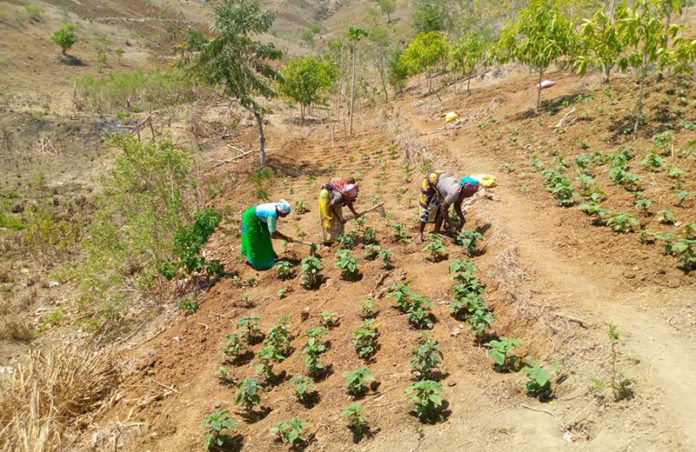
Africa feeds itself largely through the hands of smallholder farmers. That fact is easy to state and hard to appreciate fully. More than 60% of sub-Saharan Africans are smallholder farmers, and agriculture accounts for between 30 and 40% of the continent’s GDP, depending on the country and year. Yet despite this structural importance, the sector has remained stubbornly underproductive — constrained by poor infrastructure, limited access to finance, and the growing unpredictability of rainfall and growing seasons.
What has changed in the last several years is the scale and sophistication of the technology being deployed to address those constraints. Artificial intelligence, in particular, has moved from pilot programs and conference slides into actual field use, with a growing number of African startups delivering measurable results to farmers who have operated without meaningful technical support for generations.
From Data to Decision: Precision Agriculture Takes Root
The concept of precision agriculture using real-time data to make targeted decisions about inputs like water, fertilizer, and pesticides is not new. What is new is its accessibility in African contexts.
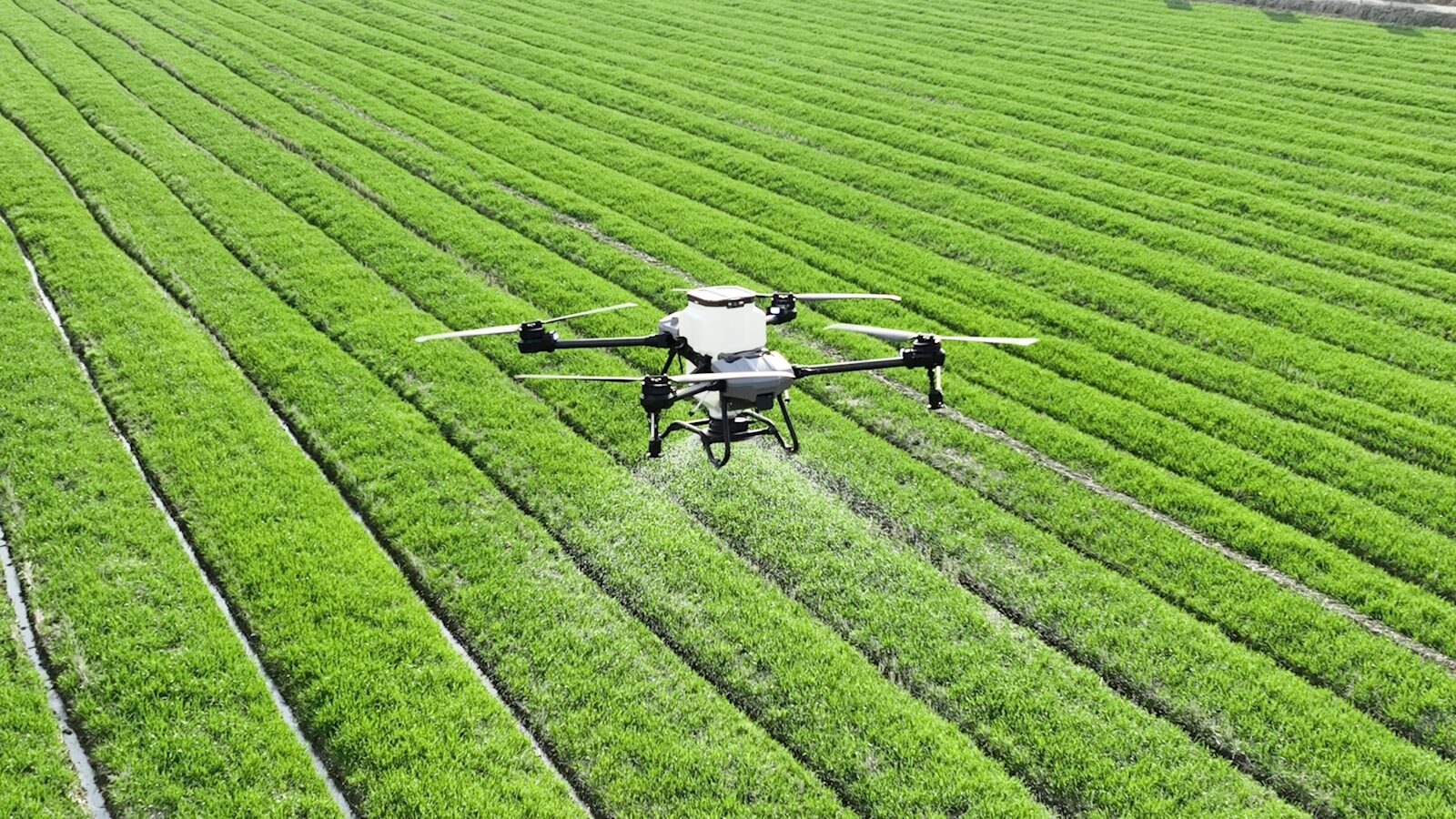
Startups across the continent are now combining satellite imagery, drone-based scanning, soil sensors, and machine learning to monitor crop health and predict yields with a level of detail that was previously available only to large commercial operations in Europe or North America. The practical result is that a smallholder farmer in Oyo State or the Rift Valley can receive the same quality of agronomic insight at a fraction of the cost.
In Ghana, KaraAgro AI pivoted from a basic crop disease detection app to a full drone-based scanning platform after recognizing that the bottleneck was not farmer awareness but physical access to expertise. The startup’s tools are now being used by Ghana’s Ministry of Food and Agriculture and the German development agency GIZ, a signal that technology developed on the continent is earning institutional trust.
In Nigeria, a company called Integrated Aerial Precision (IAP) has gone further still, offering drone services that don’t just detect crop stress but treat it: spraying pesticides, broadcasting seeds, and applying fertilizer with a precision that ground-based methods cannot match. IAP has reported that farmers using its services have cut input costs by 30% while increasing yields, a combination that directly improves both profitability and food output.
The Data Gap at the Center of It All
The numbers around adoption are worth pausing on. In sub-Saharan Africa, roughly 20% of farms currently use AI for crop monitoring, 17% for disease management, and just under 12% for yield prediction. Those figures reflect progress. They also reflect how much ground remains to be covered.
The fundamental challenge is not the technology itself. It is the data infrastructure on which any AI system depends. According to Adewale Adegoke, CEO of AgroXchange, the biggest barrier to precision agriculture in Nigeria and across the region remains data accessibility, and the difficulty of convincing farmers accustomed to established practices to adopt tools that require new behaviors.
Rural internet connectivity compounds this. AI tools that rely on continuous data streams perform poorly or not at all where mobile broadband is inconsistent. Some startups have adapted: Hello Tractor, which connects smallholder farmers with tractor owners, uses machine learning to monitor tractor usage and forecast weather through SMS in areas with limited internet access. It has digitized roughly 3.5 million acres since 2014. That kind of low-bandwidth design thinking is essential for any agritech tool intending to reach the farmers who need it most.
Nigeria’s Structural Opportunity and Its Constraints
Nigeria presents one of the clearest illustrations of both the opportunity and the difficulty. Smallholder farmers contribute up to 90% of the country’s food production, yet the sector is chronically underfunded, and Nigerian agritech companies continue to face three persistent funding gaps: limited local capital, a shortage of institutional investors, and an inability to attract larger-ticket investments.
A handful of companies have made meaningful inroads. Babban Gona, operating primarily in northern Nigeria, where 50 to 60 percent of the country’s maize is produced, recently secured a $7.5 million debt investment from British International Investment to scale its franchise model, one that connects farmers to inputs, financing, and markets through tech-enabled micro-enterprises. Similarly, Kitovu, a Nigerian agritech, uses remote sensing and AI-driven agronomic advisory to help farmers reduce input costs and improve soil health.
These interventions are notable precisely because they address the full stack of a farmer’s challenges, not just one part of it.
The Policy Question
Governments across Africa have begun paying closer attention. Kenya announced a curriculum overhaul at its national school of agriculture to incorporate AI, drones, and data science. The African Union, through its High-Level Panel on Emerging Technologies, has formally urged member states to integrate AI into agricultural weeding and broader crop management, identifying weed control as one of the most labor-intensive and underserved challenges facing the continent’s smallholder farmers.
Nigeria has yet to announce comparable structural policy commitments specifically around AI in agriculture, though federal programs targeting food security and agritech investment continue to evolve. The more consequential policy lever may be rural infrastructure: electricity access, mobile connectivity, and road networks that reduce post-harvest losses. No AI tool fixes a collapsed cold chain.
The farms of West Africa did not change overnight, and they will not be transformed by technology on a neat timeline. What is genuinely different now is that the tools being built for African agriculture are designed specifically for African contexts by founders who understand fragmented land, variable data quality, and the economic realities of farmers earning at the margins. That design sensibility, as much as any particular algorithm, is what gives the current moment its significance.