
Robotics in African Manufacturing: Where the Continent Stands and Where It Is Heading

Factories around the world installed 542,000 industrial robots in 2024, according to the International Federation of Robotics. Asia took 74 percent of them, Europe 16 percent, and the Americas 9 percent. China alone accounted for 54 percent, roughly 295,000 machines. Those shares leave little more than a rounding error for everywhere else, Africa included.
That is the starting point for any discussion of robotics in African manufacturing. The continent is not absent from the trend, but it is a small participant, and the gap with the leading manufacturing economies is widening.
A small base, led by cars
Hard numbers for Africa are thin. One market research estimate puts industrial robot volumes at about 3,000 units in 2024, rising to 7,000 by 2030, with South Africa, Egypt and Morocco driving demand. The same report names high implementation costs and a shortage of skilled personnel as the main brakes on growth. The figures are indicative, not official.
The clearest concentration of automation is in car plants, and increasingly that means Morocco. Renault’s Tangier and Casablanca factories assembled 394,000 vehicles in 2025, more than the group’s Spanish plants. Stellantis has expanded its Kenitra site from 200,000 vehicles a year to a planned 535,000. Morocco’s output of about 700,000 vehicles a year has displaced South Africa as the continent’s largest car producer, and around 80 percent of it is exported, mostly to Europe.
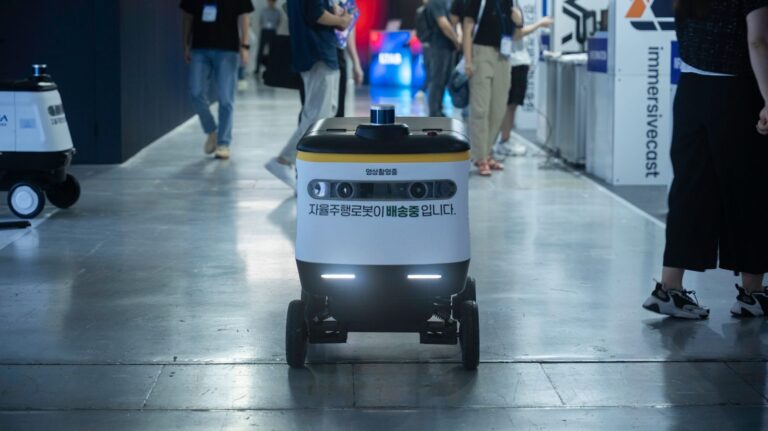
Export customers set the standards for quality and delivery. That helps explain why the country’s automotive corridor already runs robotic welding, automated guided vehicles and AI-based quality cameras.
South Africa’s picture is older and more mixed. BMW’s Rosslyn plant built more than 79,000 units in 2025, and lists accelerated digitalisation among its priorities for 2026. A pilot of an AI-powered automotive painting robot has also been reported in the country, according to a commentary in IOL. Beyond carmaking, adoption is patchier, and evidence is sparser. Reliable installation data for Nigeria is particularly hard to find.
Power, cost and skills
Three constraints keep recurring. The first is electricity. Kennedy Chengeta, an AI-focused entrepreneur and academic in Pretoria, told African Business that Nigerian manufacturers’ losses from power outages are put at around $27 billion a year. Digitalised factories, he said, cannot function without reliable power.
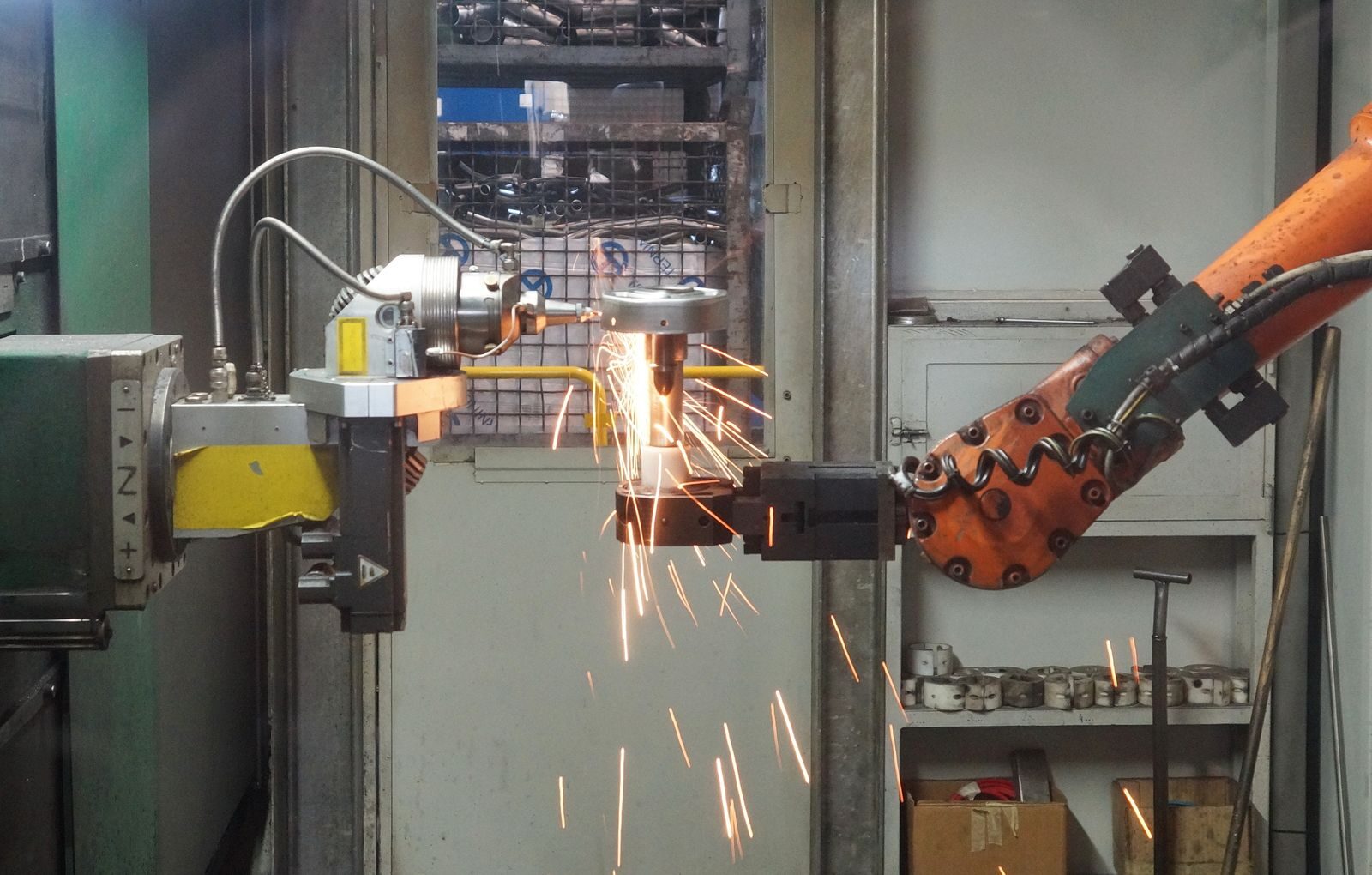
The second is cost. A robotic welding cell typically runs between $50,000 and $350,000, with payback in 18 to 36 months, according to an industry directory covering pipe manufacturing. That is within reach of mid-sized mills. It is harder for small producers without long-term financing.
The third is skills. Robots need integrators, technicians and programmers. Farhana Paruk, a Cape Town-based China specialist writing in IOL, argues that technical and vocational training should be rebuilt around mechatronics, software, electronics and robot maintenance.
The competitiveness problem
Dirk Willem te Velde, director of the International Economic Development Group at the ODI thinktank, warns that robots are being introduced much faster in China and South Korea. Advanced economies can now produce the same output with fewer people, he told African Business, which reduces the need for manufacturing output in poorer countries.
ODI estimates that by 2034 it will be cheaper to make a garment with a robot and 3D printing in the United States than to employ tens of people making it in Kenya. Textiles have traditionally been the first rung of industrialisation. If the estimate holds, the low-wage route Asian economies once used may not be open to African producers in the same way.
The tension is plain. More than 60 percent of Africa’s population is under 25, and the continent needs factory jobs. Paruk lists widespread job displacement as the principal risk of automation, particularly in economies already struggling to create formal employment.
Where it is heading
Near-term adoption is likely to look less like humanoid robots and more like ordinary industrial machines paired with software. Paruk notes that many humanoids remain expensive prototypes, while industrial robots are the more mature technology for developing economies.
Chengeta argues the nearer gain is in the systems layer. Most African manufacturers carry no legacy IT, so a plant still using paper job cards can move straight to predictive scheduling, quality modelling and maintenance optimisation. In his view, that lets smaller operations reach yields that once required large scale.
The supply side is changing as well. In 2024, Chinese manufacturers sold more industrial robots in their home market than foreign suppliers did, the IFR reported. China-linked partnerships are already appearing in Africa, including arrangements involving Namibia, China and South Africa on robotics curricula and skills centres. Paruk cautions that imported machines with closed software and maintenance systems could leave African economies at the bottom of the value chain. She argues that technology transfer, local training and assembly targets should be written into procurement contracts.
What it adds up to
Robots reach African factories where export contracts demand consistent quality, where power and financing are dependable, and where technicians exist to keep the machines running. Morocco has assembled those conditions around a single industry.
For Nigeria and most other markets, the sequence is less certain. Power reliability comes first, followed by the software and maintenance skills that support any automation. The question for policymakers is narrower than whether to automate. It is whether local integrators, training institutions, and suppliers gain from the machines that arrive, or whether the continent becomes a buyer of equipment designed and serviced elsewhere.