Mobile Wallet vs Bank Apps: Which Do African Users Prefer?

An analytical investigation into digital payments usage across Africa
Mobile phones have reshaped how money moves across Africa. From the plains of rural Tanzania to the high-density urban centres of Lagos and Nairobi, people increasingly use mobile devices to save, pay bills, send remittances and interact with financial services. Yet behind this broad statement lies an important question for technology, policy and financial inclusion: when users choose between mobile wallets and traditional bank applications, where does their allegiance lie and why?
This investigation examines patterns emerging across African markets, with attention to Nigeria where both fintech apps and bank mobile platforms are ubiquitous. Rather than declaring a clear winner, the evidence suggests a more nuanced landscape shaped by history, infrastructure, trust and market structure.
Background: Two digital paths to financial access
Mobile wallets and bank applications occupy different spaces in users’ financial lives, though their functions increasingly overlap. Mobile wallets, often synonymous with “mobile money” across Africa were pioneered in the mid-2000s. Platforms like M-Pesa in Kenya built ecosystems allowing users to send and receive money, pay merchants and cash in/out via agent networks, with only a mobile phone required. These systems were born in contexts where traditional banks had limited physical reach and many adults lacked accounts.
As of the early 2020s, East Africa’s mobile money penetration eclipsed that of bank accounts in some markets, with estimates showing a far higher share of adults having a mobile money account than a traditional bank account in countries like Kenya, Tanzania and Uganda.
Bank apps, by contrast, derive from institutional banking. They provide access to formal accounts and are tied to regulated financial institutions. Over the past decade, especially in Nigeria, Ghana and South Africa, many incumbent banks have invested in mobile applications that let customers view balances, transfer funds, pay bills and sometimes access loans or investment products.
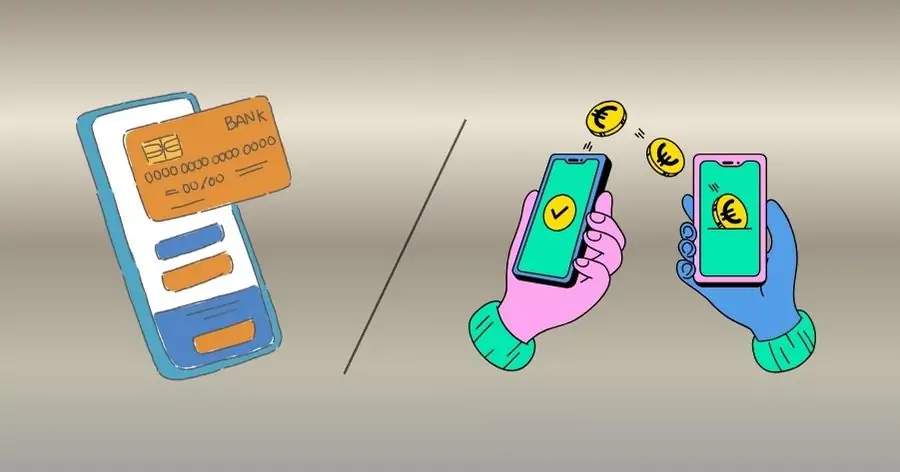
The two models co-exist, sometimes complementarily: mobile wallets often handle basic payments while bank apps offer deeper account services. Where overlap occurs, user choice reflects practical trade-offs in cost, convenience and trust.
Evidence on user preferences in Africa
Across the continent, evidence suggests that users do not universally prefer one model over the other; rather, their choices reflect local histories and service availability. A continent-wide snapshot from a 2024 survey suggests that nearly half of Africans surveyed use both mobile payments and mobile banking for daily transactions, with a notable share using only one or the other. Around 36 per cent relied solely on mobile banking and close to 10 per cent used only mobile payments, with a small remainder abstaining from digital financial services altogether.
In East Africa, and particularly in Kenya, mobile money remains deeply entrenched. A 2024 usage survey cited more users relying on mobile money than on bank apps, with over 50 per cent of respondents favouring a mobile wallet ecosystem compared to about 42 per cent for banking apps. That reflects long-standing market structures: mobile money platforms pre-dated widespread bank app use and continue to offer network effects through merchant acceptance and agent reach.
South Africa presents a contrasting pattern. Surveys there indicate that banking apps dominate user behaviour, while non-bank mobile wallets and mobile money services remain niche. In one consumer perception study, banking apps were used by a majority of respondents for domestic money transfers and utility payments, whereas mobile wallets registered low adoption often attributed to perceptions of limited acceptance and trust challenges in linking to bank accounts.
In West Africa, including Nigeria, patterns align more with a mixed or competitive landscape. Another research found that local fintech wallet brands such as OPay and PalmPay commanded notable user shares alongside traditional bank mobile apps, evidencing that neither mode has exclusive dominance.
What drives user choices?
Understanding preference requires unpacking forces beyond raw adoption figures.
Practical accessibility and infrastructure: Mobile wallets gained traction in large part because they were designed for contexts where traditional banks had limited reach. Through extensive agent networks and USSD/SMS capabilities, mobile money works on basic handsets and in low-connectivity zones. Bank apps, by contrast, typically require smartphones, reliable data and stronger digital literacy. These factors shape who can use which service and how often they do so.
Trust and institutional heritage: In markets with strong banking traditions, users often place higher trust in banks and their apps. The South African case, where banks have longstanding institutional presence and regulatory frameworks, reflects higher trust in banking apps compared with non-bank digital options. Conversely, in countries where mobile money was the first widespread digital payment solution like Kenya, user trust has grown with usage and familiarity.
Service scope and user experience: Mobile wallets have broadened their value propositions beyond simple transfers to include savings, microcredit and merchant services, blurring lines with core banking functionalities. Bank apps have also expanded features but sometimes struggle with legacy systems and customer experience issues. These product strategies influence user satisfaction and habitual use.
Costs and convenience: Transaction costs matter in markets where small-value payments are common. Mobile wallets often price peer-to-peer transfers and merchant payments competitively, while bank apps may include fees for certain transactions. Users attuned to cost pressures will weigh these differences in daily life.
Where clarity is lacking
Quantifying absolute preference remains challenging. Publicly available surveys vary in methodology, scope and temporal context. Few comprehensive, nationally representative studies directly compare mobile wallet use against bank app use across multiple African markets with consistent definitions.
Moreover, usage intensity equals how often users transact and the monetary value involved may differ substantially between wallets and bank apps even when headline adoption appears similar. Preferential use for specific tasks (e.g., savings vs. peer payments vs. merchant purchases) also complicates simple categorisation.
Regulatory and policy considerations
Preference patterns are not just consumer choices; they interact with regulatory frameworks. Central banks influence digital finance adoption through licensing rules, interoperability requirements and consumer protection mandates. For example, licensing structures that treat mobile money issuers and banks differently can affect how easily wallet providers expand services or tie into broader financial infrastructure.

Interoperability, the ability to move funds seamlessly across different platforms remains an area where policy action could influence preference. Limited interoperability between bank apps and various wallet ecosystems can create friction and reinforce siloed usage patterns.
Why this matters
Understanding user preference between mobile wallets and bank apps has several implications. For financial inclusion advocates, distinguishing between access (account ownership) and usage (transactions, savings, credit) is vital. The model that best supports sustained engagement may differ from the one that simply extends basic access. For policymakers, evaluating how regulatory environments shape market structure and competition matters for consumer choice and financial stability.
For operators and investors, recognizing that preference is not monolithic but context-dependent can inform product strategy and partnerships. For markets like Nigeria, where a vigorous fintech ecosystem sits alongside traditional banking infrastructure, the interplay between mobile wallets and bank apps will continue evolving. Patterns of adoption suggest neither category will vanish; rather, user behaviour will likely reflect a diversified portfolio of services chosen according to need, context and trust.
The evidence highlights a complex landscape of digital financial services in Africa. Users do not universally prefer one type of app; instead, preference patterns reflect local realities, historical trajectories, and pragmatic considerations. As digital financial ecosystems mature, understanding these nuances will remain central to assessing how technology reshapes money in everyday life.