
Meta AI Just Got a To-Do List — And It’s Ticking Off Your Tasks

Meta AI has quietly crossed a line that most chatbots never reach: it no longer waits to be asked. The assistant, now running on Meta’s newly released Muse Spark 1.1 model, can plan a task, link up with your email and calendar, build presentation slides, and carry a job through to completion without you having to babysit every step.
The upgrade sits at the center of Meta’s push toward what it calls personal superintelligence — an assistant that understands your context, stays available around the clock, and takes care of things on its own. With Muse Spark 1.1 powering both the Meta AI app and meta.ai, the shift is less about smarter answers and more about follow-through.
From Answering Questions to Finishing Jobs
Until now, most people have leaned on Meta AI the way they’d lean on a search engine with better manners: ask a question, get an answer, maybe brainstorm an idea or generate a caption. That transactional relationship is changing. Meta AI can now set a plan in motion and keep working on it without repeated prompting.
Say you’re redoing your kitchen. Meta AI can pick up on your taste, browse Marketplace for furniture and fittings that fit your budget, and hand you a finished mood board. Tell it you’re training for your first half marathon, and it will draft a week-by-week schedule, adjust the plan around your availability, and drop an updated version into your feed every Monday morning. Ask for help organising a birthday dinner, and it will shortlist restaurants, cross-check your calendar for an open evening, and come back with options.
The assistant can also run a daily briefing — scanning your calendar, flagging a double-booking or a change of plan, and delivering a short summary at whatever time suits you. The setup only happens once. After that, Meta AI keeps the task running quietly in the background, whether it’s a weekly meal plan, a nudge about new sneaker releases, or an afternoon roundup of topics you follow.
Research and Slides, Done in Minutes
Deeper dives get the same treatment. When you want to understand a subject properly, Meta AI can pull material from across the web, research papers included, alongside what creators and communities are already discussing on Meta’s platforms, then condense it into something you can actually use instead of a pile of open tabs. If you’d rather see the findings than read them, you can ask the assistant to turn the research straight into a slide deck.
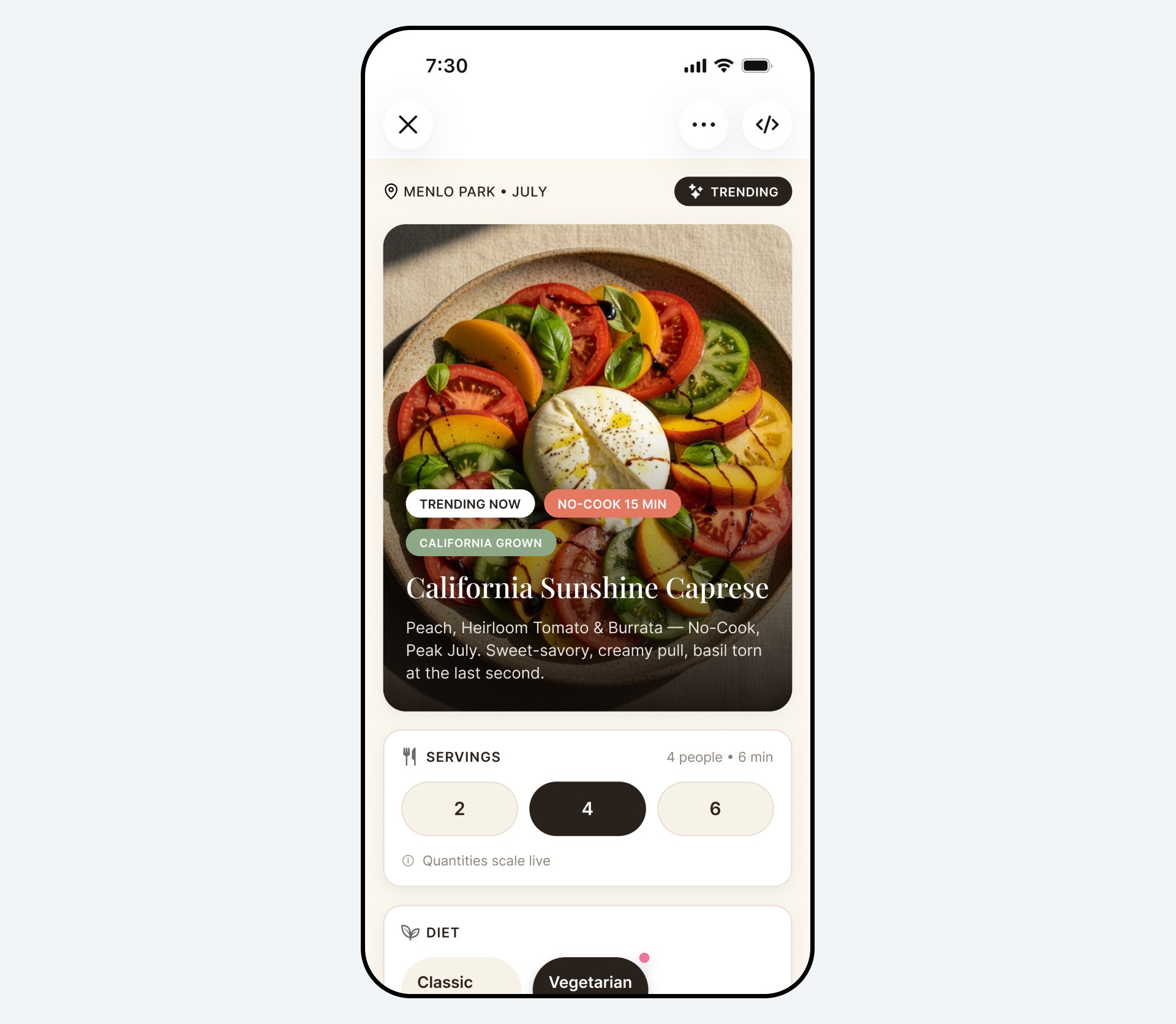
None of this happens in a black box. While Meta AI is compiling a report, building a presentation, or drafting a plan, you can jump in mid-task and redirect it, asking it to change the tone, drop a section, or shift focus and it adjusts immediately rather than waiting for you to start over. Everything the assistant produces, from a training calendar to a slide deck to a mood board, is now stored in one place, so it can be revisited, built on, or shared later.
Rollout and Access
The new capabilities begin rolling out today in select markets through the Meta AI app and meta.ai, with Meta saying it will extend the feature set to more countries and surfaces, including WhatsApp over the coming weeks. That staggered release is worth watching for users across Africa’s mobile-first markets, where WhatsApp remains the dominant messaging platform and any AI upgrade that lands there tends to reach far more people than a standalone app ever could.
Meta is framing the update as a matter of choice rather than a forced upgrade. Users can still treat Meta AI as a quick-answer tool, use it for more contextual, personalised responses, or lean on it for shopping recommendations pulled from posts, Reels, and products shared across Meta’s apps. For anyone who wants a conversation that stays off the record, Incognito chats remain available.
Meta describes this as an early step rather than a finished product, with more updates expected as it continues shaping Meta AI into a tool that acts on a user’s behalf rather than simply responding to prompts. For now, the shift from assistant-that-answers to assistant-that-acts marks one of the more concrete moves yet toward the agentic AI future that major tech players have been promising for the past two years.