
Last-Mile Connectivity in Rural Africa: What Is Actually Working

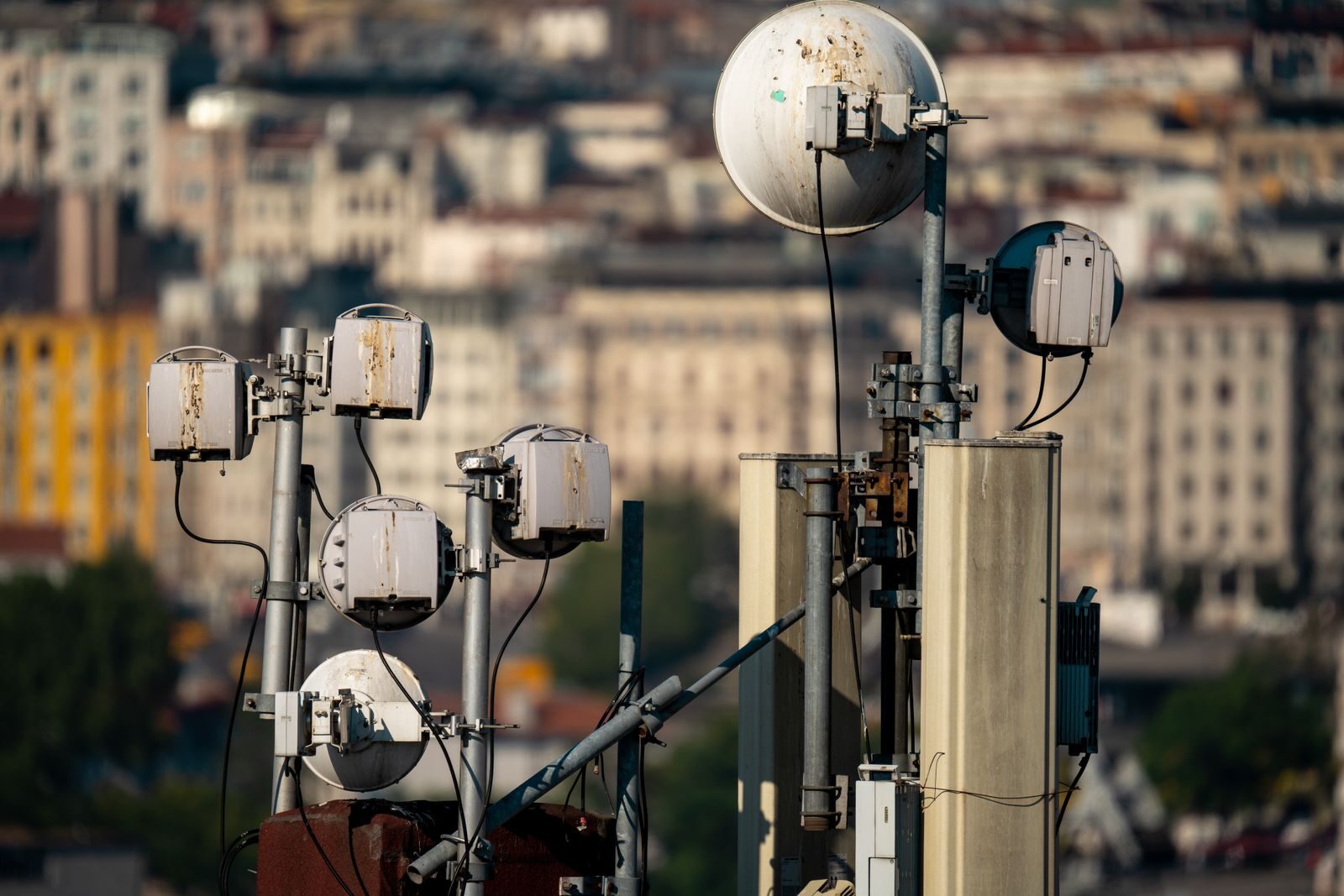
Africa has spent two decades laying fibre along highways and cables under the sea. The hard part is the last stretch, from the nearest node to a village, a clinic or a school. ITU data cited by TechAfrica News shows that nearly one in four rural Africans has no realistic prospect of getting online, and that only 30 percent of the continent’s population lives within 10 kilometres of an optical fibre node.
No single technology closes that gap. The approaches showing results share a pattern: they match the technology to how many people live in a place, and they solve power and ownership at the same time as coverage.
Why the last mile resists the usual playbook
Fibre and conventional towers depend on density. Where fewer than ten people share a square kilometre, the cost per connected user rises quickly, and rural revenue per user is already low. Power compounds the problem, since only about 53 percent of Sub-Saharan Africa has electricity access, according to the World Bank figures in the same TechAfrica News report. Rights-of-way approvals can add six to 18 months in parts of East and Central Africa.
Coverage is also only half of the problem. GSMA’s 2026 connectivity report puts Sub-Saharan Africa’s usage gap at 66 percent, against a coverage gap of 9 percent. Most people who live under a signal still do not use it. GSMA’s separate rural connectivity research found adults in rural parts of low- and middle-income countries are 25 percent less likely to use mobile internet than urban adults, with affordability and literacy cited as the main barriers.
Community networks: small, but built to last
The best-documented rural model on the continent is also one of the smallest. Zenzeleni began in 2012 in Mankosi, in South Africa’s Eastern Cape, as a local voice network. It grew into a community-owned internet service provider organised as cooperatives under a non-profit that helps new communities set up their own.
The economics explain why it has lasted. Residents run the network and pay only for wholesale backhaul, so revenue stays local rather than flowing to a distant operator. A 2018 case study counted about 3,500 people across 12 villages, in an area where only a tiny share of households had grid power.
The limits matter too. Community networks serve thousands of people, not millions, and they depend on regulators allowing them to operate and access spectrum. TV White Space, which uses gaps in broadcast spectrum to carry broadband over long distances, has connected schools and clinics where it is permitted, but regulatory support remains inconsistent across the continent.
Powered sites, funded together
Nigeria’s current approach treats power and connectivity as one project. A model discussed at the Nigerian Communications Commission’s investment forum splits the costs: the Universal Service Provision Fund (USPF) pays for towers, base stations and backhaul, while the Rural Electrification Agency (REA) funds solar mini-grids, panels and batteries. The two agencies signed a memorandum of understanding to align their rural projects.
There is movement behind it. The Federal Executive Council has approved 4,000 telecom towers for underserved communities through a public-private partnership starting in 2026, part of a wider push that includes satellite links and 90,000 kilometres of planned fibre. At a rural connectivity summit this month, officials put the country’s rural base stations at over 11,000. The REA said it has commissioned more than 150 hybrid solar mini-grids and deployed about 1.45 million solar home systems under its electrification project.
The scale of the task is still large. Official figures put the share of rural Nigerians without connectivity at 61 percent in July 2024. NCC officials have also acknowledged that insecurity, vandalism and fibre cuts keep undermining rural expansion. A site that is powered but repeatedly damaged does not deliver coverage.
Satellite for the places nothing else reaches
For settlements too sparse or remote for towers, low-Earth-orbit satellites are moving from pilot to policy. The NCC has said it plans to use part of the USPF to subsidise satellite operators serving an estimated 23 million Nigerians who remain offline, with incentives tied to coverage in unserved and underserved locations.
Cost is the obstacle. The TechAfrica News report describes non-terrestrial networks as still too expensive for widespread consumer use, though they are the only realistic option for those with no terrestrial route. That points toward shared access over household dishes.
An earlier USPF-backed rollout used that logic. According to vendor Gilat Satcom, its Village Island system gave each of ten villages a satellite link, Wi-Fi routers, solar power and communal tablets, with individual connectivity priced from $1 a month. These are the company’s own figures, but the design, a single powered satellite hub serving a whole village through local Wi-Fi, fits the economics better than individual connections.
What decides whether any of it lasts
The common thread is that rural networks fail less often from bad technology than from weak follow-through. GSMA’s Caroline Mbugua has said Universal Service Funds across Africa are underperforming and need reform, pointing to accountability, transparency and sustainability as the missing principles. Funds that subsidise sites but not maintenance, or towers but not affordable devices, build coverage that people cannot use.
The approaches that hold up combine four things: technology suited to local density, a reliable power source, someone with a stake in keeping the network running, and prices rural users can pay. Nigeria’s tower programme, its satellite subsidies and the community-network model all test parts of that formula. Whether they add up to higher usage, not just wider coverage, is the measure that will matter.