
How Alex Otti Is Rebuilding Abia State: Roads, Health Centres, Digital Economy, and a N1 Trillion Budget

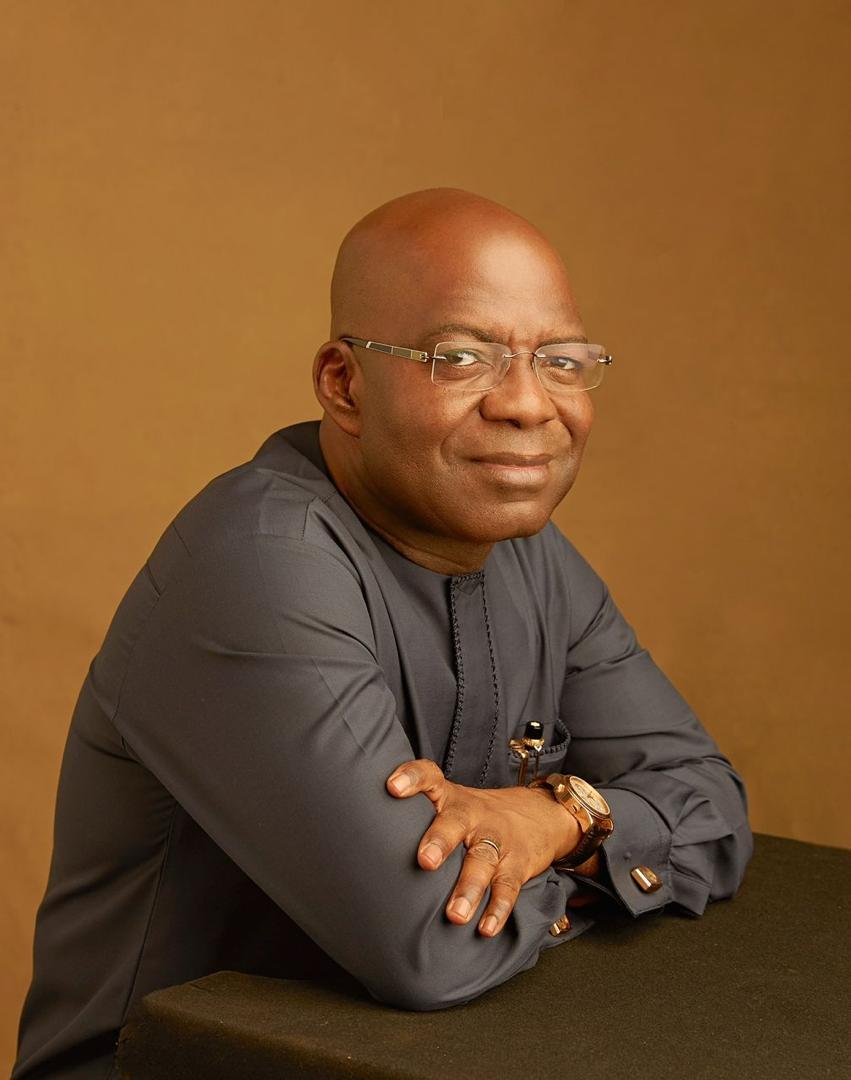
Three years ago, Abia State was a byword for abandoned projects, salary arrears, and institutional decay. Today, that narrative is being forcibly rewritten, from kilometre by kilometre of tarmac, ward by ward of refurbished health centres, and policy by policy of fiscal discipline. The man at the centre of this transformation is Dr. Alex Otti, OFR, who on May 29, 2023, became the fifth democratically elected governor of Abia State.
A former Group Managing Director of Diamond Bank Plc and trained economist, Otti came into office with a banker’s instinct for numbers and a reformer’s appetite for disruption. Nearly 37 months into his tenure, the data that can be verified across multiple independent and government sources, tells a compelling story.
Roads: 414 Projects, 864 Kilometres, and a State That Can Finally Move
Infrastructure was the most visible decay Otti inherited. Roads across Umuahia, Aba, and rural local government areas were largely impassable. His administration treated this as an emergency.
At his May 2026 media chat held at the renovated Okpara Auditorium in Umuahia, Governor Otti disclosed that his administration had completed 414 road projects covering 864.12 kilometres across the state in three years, with an additional 82 road projects measuring about 212 kilometres currently under construction at various stages of completion.
The federal government subsequently handed over key arterial roads to the Otti administration for repair and completion, including the Umuahia–Ikot-Ekpene road, the Umuahia–Onuimo road, and the Ohafia–Arochukwu road, as a recognition of the state’s execution capacity. On February 13, 2026, Governor Otti and retired Lt. Gen. Ihejirika commissioned the Omenuko Bridge and 30km Arochukwu road, a historic delivery that had eluded previous administrations for decades.
Healthcare: Project Ekwueme and a State That Just Got Rated Nigeria’s Most Health-Prepared
Perhaps no sector has seen a transformation more consequential than healthcare. Otti inherited a public health system in which many primary healthcare centres were locked, unstaffed, and structurally compromised.
His response was “Project Ekwueme”, a N10.7 billion flagship initiative to rehabilitate, remodel, and retrofit 200 primary healthcare centres across 184 wards in the state within a 100-day delivery window. The project was officially flagged off on January 20, 2025, at the Primary Health Centre, Ngwu, Uzuakaoli, in Bende LGA, with each facility designed to be powered by renewable energy, equipped with an efficient water supply, and supported by drug storage infrastructure.
The rollout has been systematic. The first four revitalised PHCs were commissioned in June 2025 across the three senatorial zones, with subsequent inaugurations continuing into 2026 under the same framework, as Pulse Nigeria confirmed with the commissioning of the Umuisi Primary Healthcare Centre and the Okafia Primary Healthcare Centre in Igbere in May 2026.
The numbers behind the rollout are striking. As of June 2026, 277 PHCs had been refurbished, with approximately 135 already fully functionalised, as Otti disclosed at the Invest Lagos 3.0 Summit on June 8, 2026. The state has recruited 821 healthcare professionals, with 771 already resumed duty, and over 193,000 persons enrolled in the Abia State Health Insurance Scheme. An earlier April 2026 figure from the Guardian placed ABSHIS enrolment at 157,462 Abians, and the May figure reflects continued growth.
The sector’s budget commitment has been consistent: 15 percent of the state’s annual budget has been dedicated to healthcare in each of the past three years, second only to education, which commands 20 percent. That discipline is attracting global recognition.
On April 9, 2026, a World Bank delegation led by Senior Health Specialist Dr. Olumide Okunola visited Abia State and announced that the state had set a national benchmark for healthcare service delivery. The team, on a Public Financial Management Mission, had specifically selected Abia as a case study for how states can structure financial support for basic healthcare. SBM’s 2025 Report separately rated Abia as Nigeria’s most health-prepared state, based on per-capita budget allocation.
The Specialist Hospital Push
Otti is not stopping at PHCs. On May 28, 2026, as part of activities marking his administration’s third anniversary, Governor Otti performed the groundbreaking ceremony for the Abia Specialist and Diagnostic Centre at Umunnato, Alayi, in Bende LGA. The facility, designed to upgrade the long-abandoned Umunnato General Hospital, will feature a 100-bed ward, operating theatres, accident and emergency units, maternity wards, dental units, and radiology departments, and all of this is targeted for completion within one year.
According to Abia’s Commissioner for Health, Prof. Enoch Ogbonnaya Uche, international healthcare consultants have already commenced work to secure Joint Commission International (JCI) certification for the facility, ensuring it meets global regulatory and operational standards. Each of Abia’s three senatorial zones is slated to have a dedicated tertiary healthcare referral centre.
Elsewhere, reconstruction is ongoing at the Okeikpe, Ikwuano, Arochukwu, and Ohafia General Hospitals, and at the Abia State University Teaching Hospital (ABSUTH). Governor Otti has also set a target of JCI certification for ABSUTH and two other specialist hospitals in the state.
Transportation: Electric Buses and the Abia Green Shuttle Initiative
Public transportation has been a persistent challenge for Abia’s residents. The Otti administration responded with the Abia Green Shuttle Initiative, launched on December 25, 2025, deploying electric buses on key routes to offer affordable and sustainable transportation.
As of April 2026, the initiative had transported over 226,000 passengers. Twenty additional electric buses are expected by July 2026, with another 30 arriving subsequently, pushing toward a target of 100 electric buses by year-end. The government is simultaneously installing solar-powered charging facilities for the electric fleet and has already delivered 70 bus shelters across Umuahia and Aba.
The Umuahia Multi-Modal Transport System has been completed and put into use, while work on the Aba Terminal is expected to be completed in 2027. Governor Otti has also approved land for an Air Force base in the state and has indicated that the Abia airport runway will be ready soon.
Digital Economy and Youth Empowerment: TechRise, ?306M for SMEs, and a Seaport Dream
Otti arrived in office with a “Dig Once Policy”, a regulation directing the coordinated laying of underground broadband infrastructure across urban and semi-urban communities in Abia, signalling from day one that digital infrastructure was a governance priority.
Three years later, the tech-focused interventions have deepened. Governor Otti launched a N306 million digital business support scheme targeting small and medium-scale enterprises across Abia, focused on empowering businesses with digital tools, funding, and structured enterprise support to compete in an increasingly technology-driven economy.
On the youth side, TechRise Cohort 3 was recently flagged off, enrolling 850 youths in a three-month intensive programme covering artificial intelligence, machine learning, cybersecurity, product design, software development, data engineering, and emerging technologies. The broader TechRise programme targets 15,000 Abia youths.
The Abia Leadership Academy (ALA), inaugurated in August 2025, complements this pipeline designed to identify and develop young leaders for an increasingly complex world. Governor Otti also approved the site for an Aba Study Centre of the National Open University of Nigeria (NOUN) in May 2026, expanding access to digital and distance learning in the state’s commercial hub.
On a macro infrastructure level, on May 8, 2026, Otti approved a feasibility study for the proposed Azumini-Obeaku Seaport and Inland Waterways Corridor, following a high-level meeting with a delegation from China Harbour Engineering Company Limited. If realised, the project could fundamentally alter South-East Nigeria’s import-export logistics and position Abia as a gateway for maritime commerce in the region.
Education: 20 Percent of the Budget, Free Schooling, and UNESCO’s Endorsement
Education has received the highest budgetary allocation of any sector under Otti consistently 20 percent, maintaining the UNESCO-recommended benchmark in each year of his tenure.
Free and compulsory basic education was introduced in January 2025, and school enrolment has risen sharply since then. UNESCO formally commended Governor Otti’s education policy in March 2026, the same month he announced computer-based testing (CBT) examinations for the second batch of teacher recruitment, a merit-based process designed to professionalise the teaching workforce.
In the 2026 budget, Abia’s N203.2 billion allocation to education from a total N1.016 trillion budget compares favourably with peer states, a figure that is more than three times the absolute figure allocated to education by Imo State in the same fiscal year, despite Imo’s larger overall budget.
Fiscal Discipline: From 17th to 4th in Budget Transparency
Otti’s banking background is most visible in how he has managed Abia’s public finances. In one of the most striking metrics from his administration, Abia State moved from 17th position in 2023 to 4th position in 2025 in national budget fiscal transparency rankings.
In December 2025, Otti signed into law the 2026 Budget of N1,016,228,072,651.99, titled the “Budget of Acceleration and New Possibilities”, a 13 percent increase over the 2025 budget of N750.28 billion. Of the total, 80 percent (N811.81 billion) was allocated to capital expenditure, a 32 percent increase from capital spending in 2025. Recurrent expenditure accounts for just 20 percent.
The governor also signed into law the “Abia State Governors and Deputy Governor Pensions (Repeal) Law 2024”, abolishing payment of pensions to former governors and deputy governors in the state, a politically consequential reform that frees resources for public investment.
Abia also created the Greater Aba Development Authority (GADA) through legislation, giving institutional backing to the commercial hub’s development. The state has additionally completed a new Aba Master Plan in collaboration with UN-Habitat, and digitised approximately four million land documents to improve land administration and verification.
Environment: From One of Nigeria’s Dirtiest to One of Its Cleanest
On environmental governance, Otti has noted publicly that when he took office, over 13 tonnes of refuse were being evacuated weekly from Abia’s streets. Reforms at the Abia State Environmental Protection Agency have since reversed that picture with the agency now responsible for creating more than 2,000 jobs through environmental management initiatives, and the state now described as among the cleanest in Nigeria.
Judiciary: Courts Coming to Every LGA
In the judiciary sector, the Abia government has embarked on the construction of court halls in all 17 local government areas of the state, each equipped with renewable energy, digital libraries, internet access, and water supply. An ultra-modern court complex has already been commissioned in the state.
The Bigger Picture
The pace of change in Abia over the past 37 months has drawn comparisons that were once unimaginable. At a January 2026 civic reception by the Ukwa la Ngwa bloc in Aba, Senator Enyinnaya Abaribe, one of Nigeria’s most senior legislators, said Otti had set a new standard of governance for Nigeria.
What makes the Otti story particularly relevant for Nigeria’s broader tech and development discourse is its method: digital systems in land administration, CBT-based teacher recruitment, solar-powered infrastructure, a digital skills pipeline for youth, broadband-first policy, and data-driven fiscal management. These are not borrowed talking points; they are embedded in the state’s legislative and budgetary architecture.
The governor’s re-election ambitions are also now formalised. On May 8, 2026, the Labour Party’s National Working Committee presented Otti with a free governorship nomination form at the Abia State Governor’s Lodge in Asokoro, Abuja, effectively opening his 2027 campaign, a strong signal that the party sees him as a model of what governance in Nigeria’s South-East can look like.
For a state that once made headlines for all the wrong reasons, Abia in 2026 is a different story, a story of one being told in completed road kilometres, filled health centres, tech-trained youth, and a trillion-naira budget that actually exists to serve citizens.