

“The Technology Is Not the Implementation”: Bisola Fasanya on Building Voice AI That Actually Works

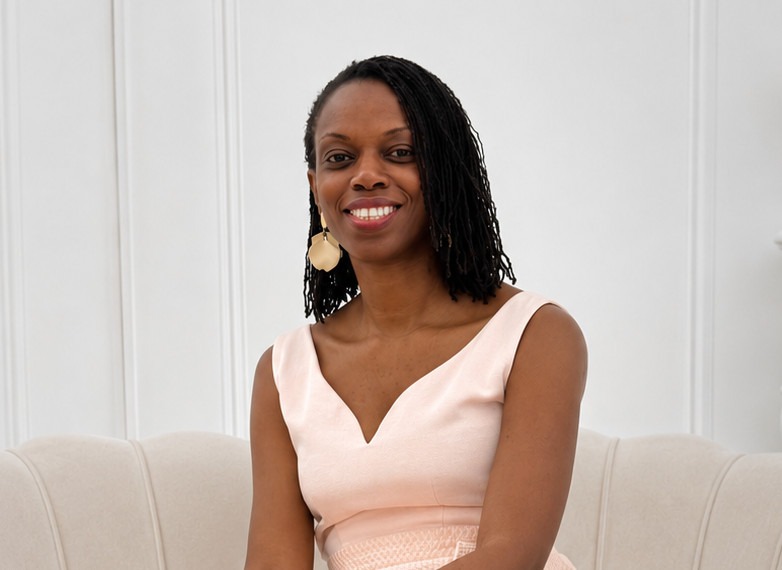
Bisola Fasanya is a London-based Voice AI Implementation Specialist and the founder of Atel Q, a SaaS platform that gives small and medium-sized businesses access to voice-based AI agents capable of handling inbound calls, qualifying leads, booking appointments and responding to customer enquiries around the clock. In March 2026, she published The New Voice of Business, a practical, jargon-free guide to Voice AI adoption for business owners. The book climbed to number one in Amazon UK’s Artificial Intelligence category within days of release and held that position for months.
TechTrends.Africa sat down with Fasanya to talk about her journey, the real bottleneck holding businesses back from AI adoption, the honest conversations her book forces readers to have with themselves, and where she sees Voice AI heading next, including her interest in African markets.
TechTrends.Africa: Before we get into the AI side of things, tell us a bit about yourself. Your background, and how your path led you to where you are today in London.
Bisola Fasanya: I was born in Belgium and then got “sent” to boarding school in Nigeria, at Federal Government Girls’ College, Sagamu, before returning to Belgium for university.
I studied International Trade, followed by a Master’s in Commercial Sciences and IT at ICHEC Brussels Management School. I majored in management information systems, so even then, I was looking at how business and technology fit together.
I moved to London to work, and my professional career led me to data analytics and digital strategy, working with organisations including IBM, Thomson Reuters and Capital Group.
I founded Atel Q, where I help organisations implement AI. I’m also the AI Ambassador for Enterprise Nation and a member of the London Chamber of Commerce and Industry.
TechTrends.Africa: What first drew you into Voice AI specifically, rather than the broader AI or tech space? Was there a moment or project that made you realise this was the problem you wanted to solve?
Bisola Fasanya: For me, it was how quickly you could see the connection to business value.
With a lot of AI conversations, you hear, “This will save you a few minutes here or a few hours there.” And of course, that’s useful. But with Voice AI, I could see a very direct connection to things like revenue, customer experience and getting work done.
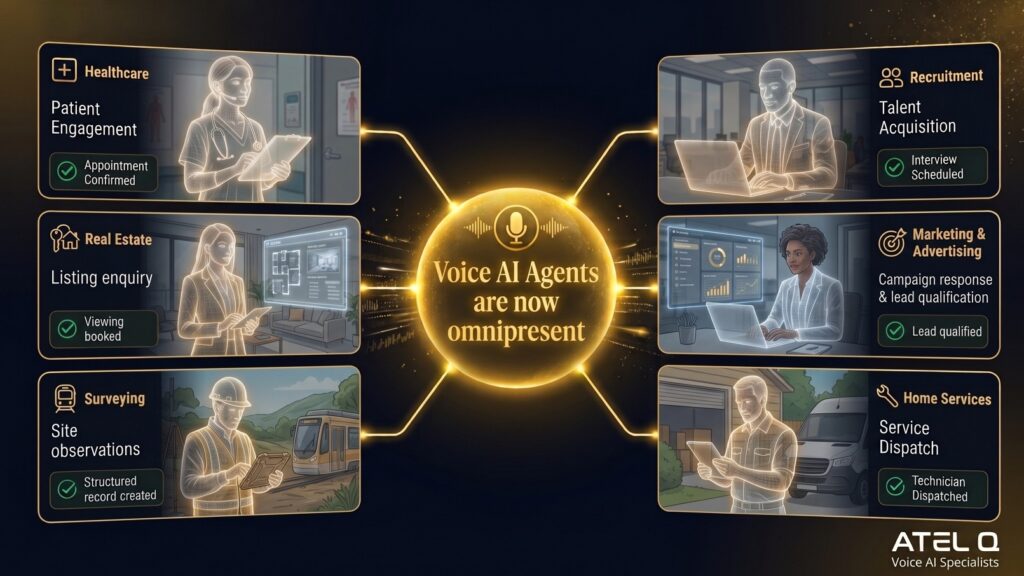
Think about someone calling an estate agent and booking a viewing. Or a recruitment conversation that leads to an interview being scheduled. A surveyor could talk through what they’re seeing on site and have those observations turned into a structured record. There are so many situations where a conversation can lead straight to a useful action.
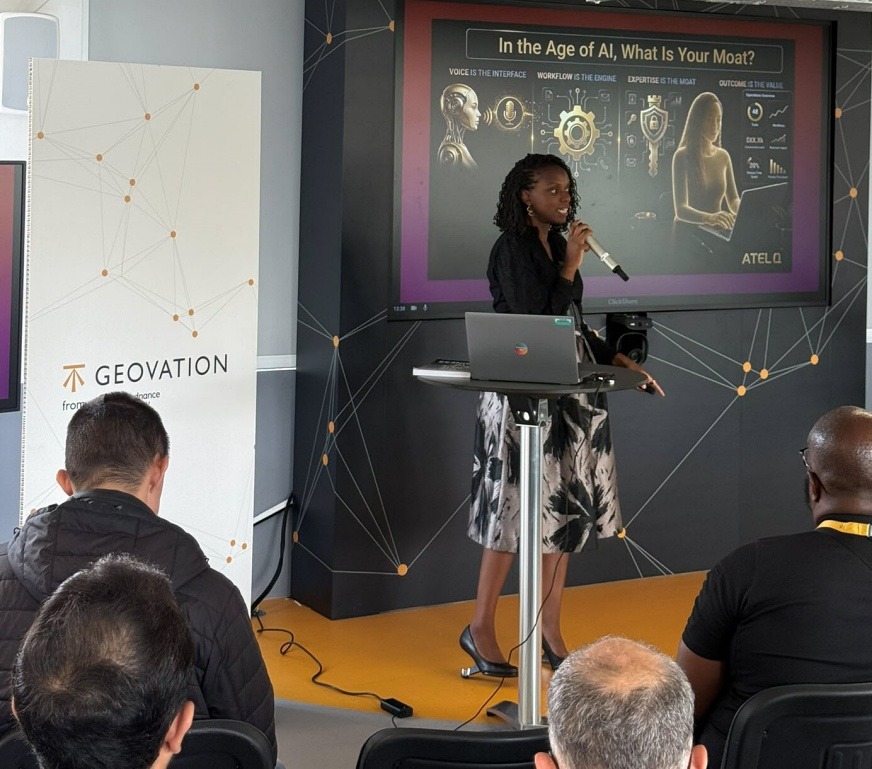
And that’s the part that really interested me. When I started working with Voice AI over a year ago, it gave me a very practical way into agentic AI. By that, I mean AI that can take steps and use other systems to complete a task. At that time, that was really one of the only ways you could get access to agentic AI. We call it Voice AI, but the voice is really how you interact with something much bigger happening behind the scenes.
TechTrends.Africa: Atel Q is built around helping SMEs actually deploy Voice AI rather than just evaluate it. What gap in the market convinced you that implementation, not access to the technology itself, was the real bottleneck for small businesses?
Bisola Fasanya: Well, the first thing I’d say is that this goes well beyond small businesses. You can have a big budget, a technical team and several AI pilots running, and still struggle to show what any of it is doing for the organisation.
PwC published findings in May 2026 about AI performance in Africa, reporting that 82 percent of organisations were running AI pilots, but few had scaled adoption across the business. So there’s plenty of activity. The difficulty is turning that activity into something that works beyond the pilot.
And I keep asking: why are we starting AI projects with the tool? Before we get into platforms and demonstrations, can we agree on what we’re trying to achieve? What needs to change in the business? Who is responsible for making that happen?
This is something I say a lot: the technology is not the implementation. You still have to work through the processes, the people, the systems and how you’ll measure the result. Buying access to a tool doesn’t answer those questions for you.
That’s where Atel Q comes in. We help leadership teams work through those decisions and then take the opportunities that make sense through to implementation.
TechTrends.Africa: You’ve said most businesses ask, “Are we ready for AI?” and stall out comparing platforms for months. What’s the question you think they should be asking instead, and how do you help them get there?
Bisola Fasanya: I’d start with: what business outcome are we trying to create?
What do you actually want to change? Are customers waiting too long for a response? Are enquiries getting lost? Is your team spending hours moving information between systems?
Once we’re clear on that, I ask three more questions: which workflows need to change? Who owns the implementation? How will we know it worked? That last one is so important. We need to agree on what success looks like before we start.
Saying, “We want to use AI,” doesn’t give people much to work with. Saying, “We want to shorten the time between an enquiry and a confirmed appointment,” gives us a problem we can look into.
My framework takes people through five stages: the business outcome, the current workflow, where AI could help, what it will take to implement it, and whether it delivered the value we expected.
That’s also what we work through in Atel Q’s Executive AI Alignment Workshop. We help leadership teams get clear on which opportunities are worth taking further and what needs to happen next.
I cover this in Chapter 6 of the book, too. There’s a readiness audit with seven dimensions, covering your processes, systems, call patterns, potential revenue impact, people, compliance and starting point.
But you need a clear purpose before that audit becomes useful. Otherwise, you’re asking, “Are we ready?” without really knowing what you’re getting ready for.
TechTrends.Africa: The New Voice of Business hit number one in Amazon’s AI category within days. What made you decide to write it now, and who did you picture reading it as you wrote?
Bisola Fasanya: Honestly, I was seeing people repeat mistakes I’d already seen in the data world.
Someone would get excited about a platform or a tool, and we’d be several conversations in before anyone asked, “What business problem are we actually trying to solve?”
I could see that happening with Voice AI. People were understandably excited about what it could do, but some were jumping straight into the technology without thinking through how it would fit into their business.

That’s why I wanted to write the book. I wanted people to have something they could turn to that explained both the possibilities and the work involved.
I had three groups in mind. Business owners and directors were one. Then people running operations or leading technology inside larger organisations, whether that’s a contact centre, a housing association, a charity or another organisation dealing with lots of enquiries.
And I also wrote it for consultants, agency owners and entrepreneurs who want to offer Voice AI as a service and need to understand what they’re taking on.
I wanted to be honest with all of them. Here’s what’s possible. Here’s what you need to think about. Here’s where things can go wrong.
Seeing it reach number one in Amazon’s Artificial Intelligence category and stay there for several months was really encouraging. But what I want people to get from it is the confidence to make informed decisions, including knowing when to step back and do a bit more groundwork.
TechTrends.Africa: The book includes honest guidance on implementation risks, not just the upside. What’s a risk or failure mode with Voice AI adoption that you think doesn’t get talked about enough?
Bisola Fasanya: For me, it’s starting without a clear objective and then having no agreed way to measure success.
We spend so much time talking about whether the technology will work. But let’s say it does. What were you expecting it to achieve?
Did you want more bookings? Faster responses? More capacity for your team? And how will you know whether that happened?
You can have an AI system handling lots of calls and still be creating problems for the business. If people have to call back, staff have to correct the information, or enquiries don’t get resolved, then the number of calls handled isn’t telling you the whole story.
The other thing is that so much of this work sits on the human side. People need to understand the process. They need to know what the AI is responsible for and when someone should step in. And somebody needs to own it after it goes live.
Without that, you can end up with a system that’s running, but nobody is really checking whether it’s helping. That’s a risk I think deserves much more attention.
TechTrends.Africa: You work with SMEs across multiple industries. Has that variety changed how you think about what “AI readiness” really means, versus how it’s usually defined?
Bisola Fasanya: To be honest, I hate to disappoint, but it’s the same problem across the board.
Of course, there are differences. Some sectors have more regulation, more sensitive information or more complicated systems. You have to take those things seriously.
But underneath all of that, you will find the same rush to pick a tool and get going. I understand the excitement, but you can’t skip the questions that make the project worth doing.
What outcome are we working towards? How does the work happen today? Is the information we’re relying on any good? Can the systems connect? Who’s going to support this, and who owns it?
Those questions come up across the board. So I don’t look at readiness simply in terms of how advanced a company’s technology is. You can have very sophisticated systems and still have unclear processes or nobody taking responsibility.
Equally, a business with simpler systems can have a sensible starting point, clear processes and a team that understands what it’s trying to achieve.
Working across industries has made me even more convinced that you have to get those basics right. Skipping them doesn’t make the work disappear. You just end up dealing with it later, when it’s usually more difficult.
TechTrends.Africa: Where do you see Voice AI heading for small businesses over the next few years? And is there a type of business or market, including outside the UK, you’re especially keen to bring Atel Q’s work to next?
Bisola Fasanya: One of the things I talk about in the book is the move “from assistants that answer questions to agents that complete tasks.” That’s the direction I’m most interested in.
Say you have a problem with a service. You explain what’s happened, arrange an appointment and receive your confirmation as part of the same conversation. Or you’re out on site, you talk through your observations, and a record is prepared for you to check. Those are just the kind of things that could make someone’s day easier.
I also expect us to see more voice combined with images, text and video. So you might be speaking to a support agent while showing it the problem through your camera. Or dealing with a virtual receptionist that has a face on a screen and can help you find the right service.
What interests me is whether that makes the interaction more useful. Can showing the problem help get it resolved? Can speaking make something easier when your hands are busy? Can you finish the task without having to repeat everything somewhere else?
Over time, I think these capabilities will become a normal part of how businesses operate. The difference will be in how well they’re put to use.
Beyond the UK, I’d be interested in exploring opportunities in African markets with the right local partners. I already know that clients and businesses communicate differently here. This is something I have come to educate myself on by being “on ground.” Just like my recommendations, understand how people already work, the languages they use, the infrastructure and what customers expect.
For me, it always comes back to the same question: what are we trying to improve, and what will it take to make that happen?
Bisola Fasanya is the founder of Atel Q and author of The New Voice of Business. She is the AI Ambassador for Enterprise Nation and a member of the London Chamber of Commerce and Industry.