

How AgriTech Startups Are Helping Smallholder Farmers Improve Yields

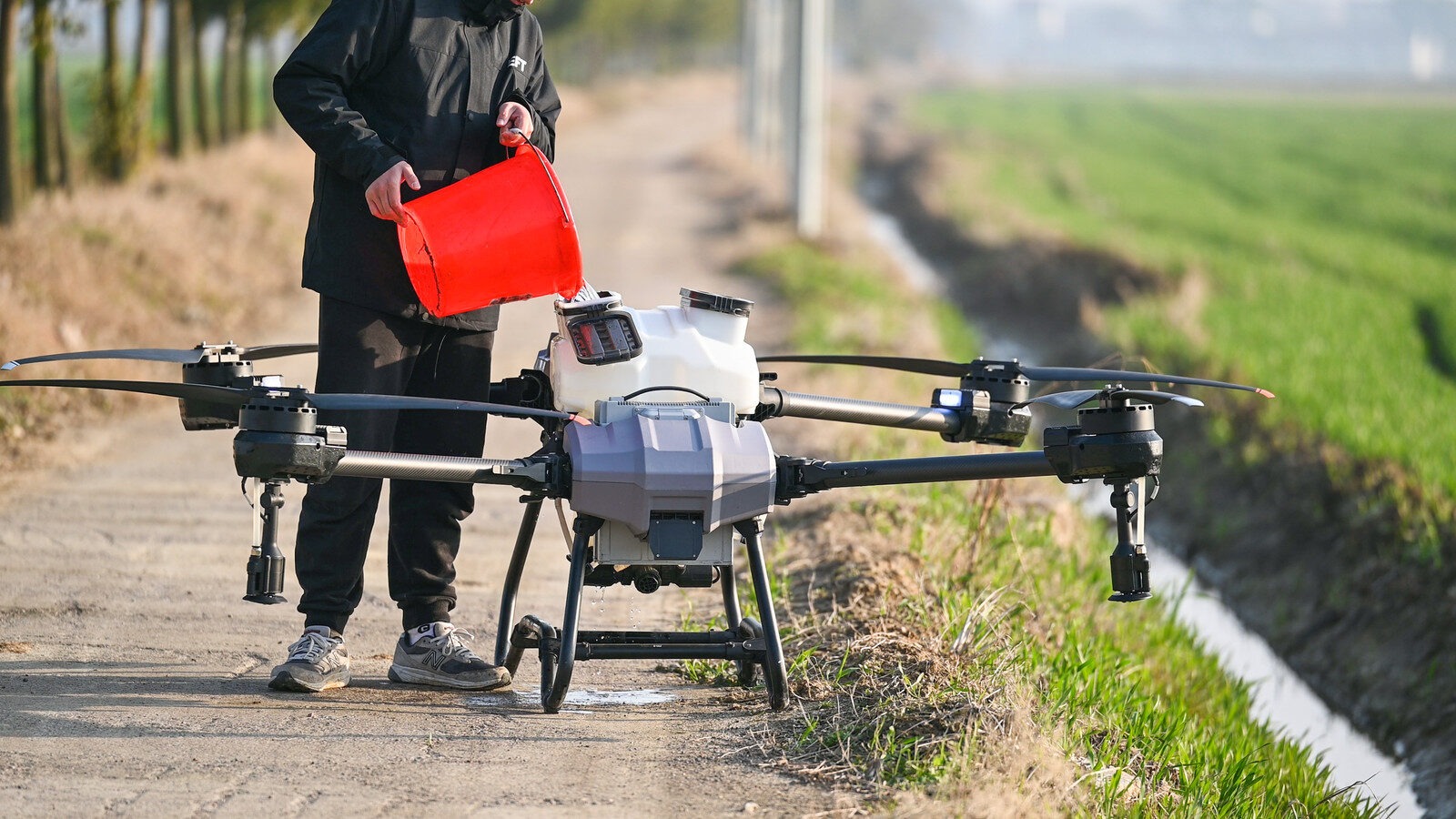
Africa’s food security problem has never really been a land problem. The continent holds roughly a quarter of the world’s arable land, yet contributes only about a tenth of global agricultural output. The gap sits between the farm and the market, in the tractors smallholders can’t afford, the credit they can’t access, the fertiliser they buy on guesswork, and the harvests that spoil before reaching a buyer.
A cluster of agritech startups across Nigeria, Kenya and beyond has spent the last decade trying to close that gap, and the results, while uneven, are beginning to show up in yield data and farmer incomes rather than pitch decks.
The mechanization gap, and how startups are renting their way around it
Smallholders dominate African agriculture. An estimated 33 million of them account for roughly 80 per cent of food production across sub-Saharan Africa, but most farm plots are too small to justify owning a tractor. Nigeria illustrates the scale of the shortfall starkly. The country has about six tractors per 100 square kilometres of arable land, against a global average closer to 200, according to figures cited by Open Road Impact.
Hello Tractor, the Nigerian-founded company now headquartered in Nairobi, built its business around that shortfall. Its model works like a ride-hailing app for farm equipment: tractor owners list idle capacity, and smallholders book services through a mobile app or, where smartphones aren’t available, SMS. A low-cost monitoring device fitted to each tractor lets owners track fuel use, location and idle time, making it commercially viable to lease machinery to fragmented, small-plot farmers.
The company says it now connects more than two million farmers across 20-plus countries with thousands of equipment owners, and its pay-as-you-go financing arm, built on a 5 per cent down payment structure, has drawn John Deere in as a minority investor, a sign the equipment giant sees a genuine market here, not a development curiosity.
Financing inputs that farmers previously had to do without
Mechanization solves only part of the yield problem. The other half is what goes into the ground — quality seed, the right fertiliser blend, and the working capital to buy both before planting season rather than after a harvest. This is where a second category of agritech companies has concentrated its efforts, using data in place of the collateral most smallholders lack.
Kenya’s Apollo Agriculture, founded in 2016, assesses farmer creditworthiness using satellite imagery, soil data and machine learning rather than land titles or bank statements, then delivers a bundled package of inputs, insurance and advisory support through local agents and agro-dealers. The company has reported serving more than 350,000 farmers, and in May 2026 it completed what it described as Kenya’s first private local-currency securitization focused on agriculture, according to Ecofin Agency, a structure that lets institutional investors fund smallholder credit indirectly rather than through donor grants alone.
Nigeria has its own version of this model in Babban Gona, which runs a franchise system for maize and rice farmers in the country’s north. Member farmers get inputs, credit, training and harvest support through locally run agent networks, and the company has maintained loan repayment rates above 99 per cent, an unusual figure in a segment banks have historically treated as too risky to touch. In September 2025, British International Investment committed $7.5 million in debt financing to help the company reach an additional 140,000 smallholders by 2029, a further sign that development finance institutions are treating agritech credit models as investable infrastructure rather than one-off pilots.
Why the finance layer matters more than the technology itself
It’s worth being precise about what’s driving yield gains here, because the framing often overstates the technology and understates the finance. Satellite imagery and machine learning are useful for pricing risk. Still, the underlying intervention is the oldest one in agricultural development: getting proven inputs and equipment to farmers who previously couldn’t afford them, on repayment terms that fit a farming income cycle rather than a bank’s standard loan product.
What agritech has changed is the cost of reaching those farmers — a Nairobi-based team can now underwrite thousands of small loans using remote data instead of sending loan officers to inspect every plot, and that cost reduction is what makes lending to smallholders viable at scale rather than as a subsidised program.
The financing gap that remains
None of this should be read as a solved problem. A recent review by Startup Map Africa found only a dozen African agritech companies with verifiable funding announcements in the first half of 2026, against a continent of roughly 33 million smallholder farms — a scarcity the authors argued was itself the story. Investors remain more comfortable backing companies with proven repayment data, like Babban Gona and Apollo, than newer entrants without a multi-year track record, leaving a long tail of smaller ventures, particularly in post-harvest storage and processing, competing for a shrinking pool of early-stage capital.
For Nigerian founders building in this space, the lesson from Babban Gona and Hello Tractor is less about the sophistication of the underlying model and more about patience: both spent years proving out repayment and yield data in a narrow geography before development finance institutions and equipment manufacturers backed their expansion. In a sector where trust with farmers and lenders has to be earned field by field, that may be the more durable advantage than any algorithm.