
Africa’s Green Data Centre Opportunity: Solar-Powered Server Farms

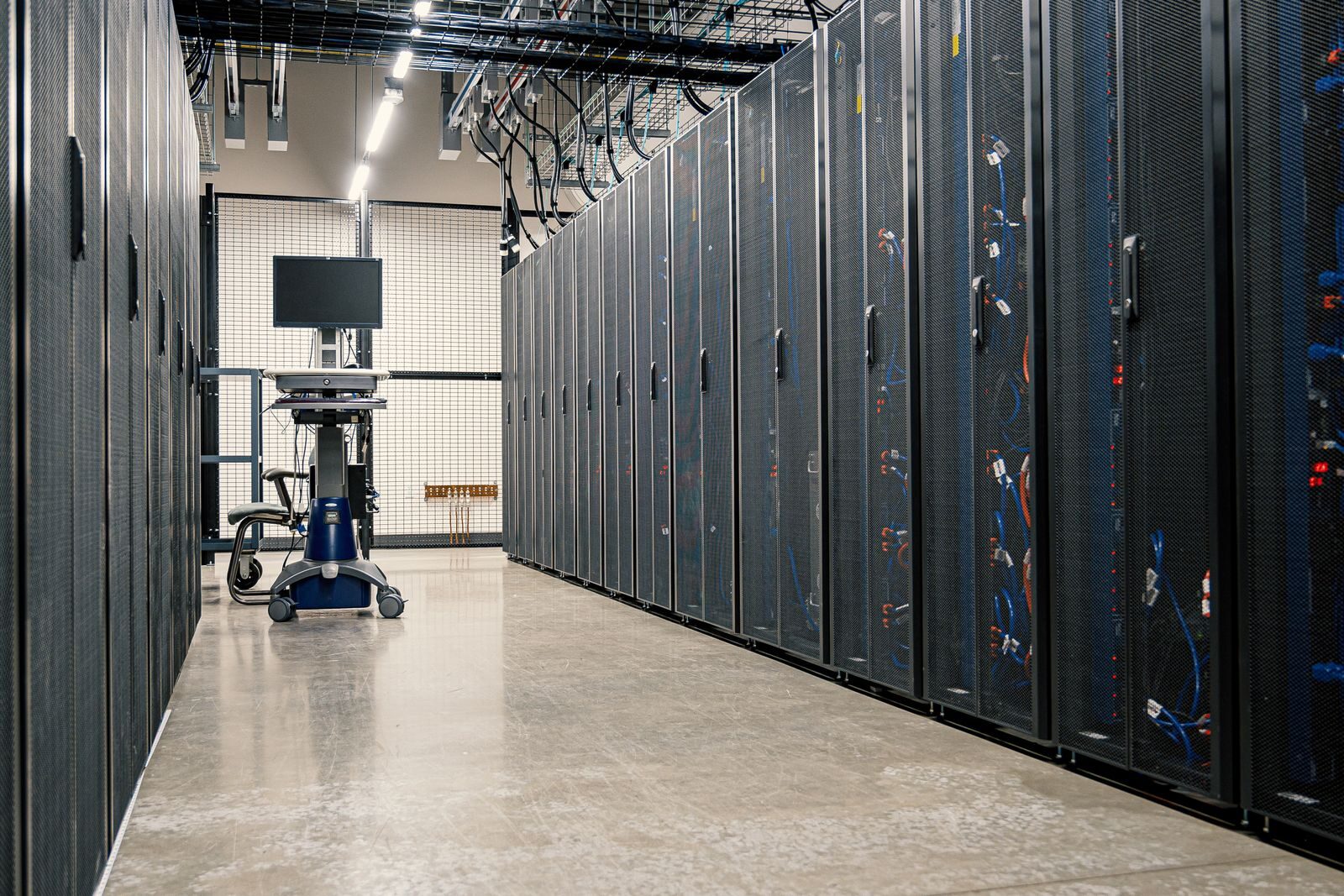
Africa’s data centre industry is growing at a pace that would have seemed unlikely a decade ago, and it is running into a familiar continental problem almost immediately: power. Unlike Europe or North America, where operators mostly worry about efficiency and cost, African data centres are contending with grids that fail outright. That failure is now pushing operators toward a solution that doubles as an opportunity — building server farms that run on solar from the start, rather than retrofitting diesel-dependent facilities later.
A market outgrowing its power supply
The numbers on both sides of this equation are moving quickly. The African data centre market was valued at roughly $3.49 billion in 2024 and is projected to reach $6.81 billion by 2030, according to the African Energy Chamber’s 2026 outlook report. The Africa Data Centres Association estimates the continent needs at least 1,000 megawatts of new capacity across 700 additional facilities to keep up with demand from cloud services, streaming, and AI applications, a gap detailed in Bracewell’s analysis of Africa’s data centre energy challenge. Yet Africa still accounts for less than 1 percent of global data centre capacity, a gap that reflects power constraints as much as capital ones.
Nigeria illustrates the tension well. The country has the third-highest number of data centres on the continent, with 17 facilities that collectively required around 137 megawatts of capacity in 2025, according to the same African Energy Chamber figures. But those facilities operate against a backdrop of a national grid that, per Mordor Intelligence’s market analysis of Nigeria’s data centre power sector, subjects operators to an average of 4,600 minutes of outages a year — far above global norms. That reality has made diesel generation the default backup for years, an expensive and carbon-heavy workaround that data centre operators increasingly want to avoid, both for cost reasons and because international cloud and colocation clients now ask about emissions.
Where solar is already being built in
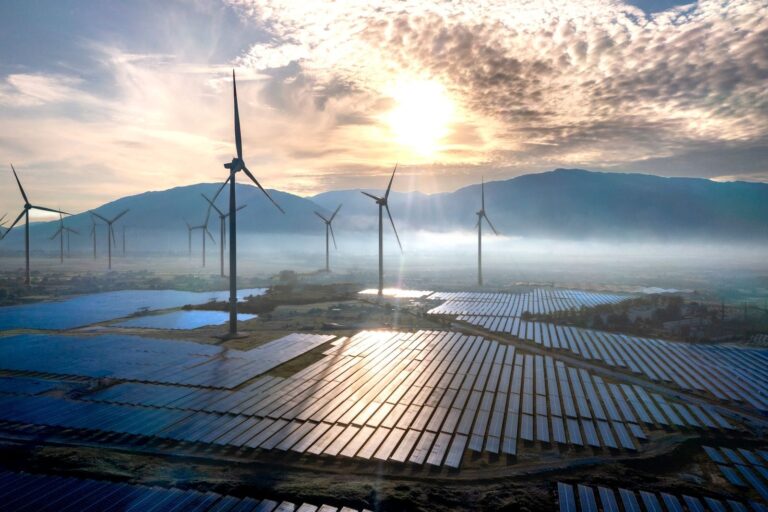
South Africa has moved furthest on integrating solar directly into data centre power planning. Africa Data Centres and Distributed Power Africa are developing a 12-megawatt solar farm designed to support facilities in Johannesburg and Cape Town, one of the clearer examples of a continental operator treating renewable generation as core infrastructure rather than an add-on. South Africa’s 58 commercial data centres have made the country the continent’s largest market, and operators there are increasingly commissioning their own generation because, as reporting on South Africa’s power-constrained data centre build-out has noted this year, the binding constraint on further growth is no longer connectivity or capital — it is megawatts.
Kenya has taken a different but related route, leaning on its unusually clean grid rather than site-specific solar installations. The country’s electricity supply is already more than 60 percent renewable, combining geothermal, solar, wind, and hydro. That mix is why Microsoft and G42 chose Kenya’s Naivasha geothermal zone for a planned 100-megawatt data centre, part of a $1 billion investment, with room to expand toward a full gigawatt. It is not a solar story specifically, but it demonstrates the same underlying logic driving interest in Africa’s green data centre potential: renewable-rich countries can offer operators lower emissions and a grid steadier than the intermittent nature of solar alone would provide.
Smaller markets are testing the model too. Côte d’Ivoire’s 37.5-megawatt Boundiali solar plant, commissioned in 2023 with an expansion target of 83 megawatts, feeds into a national goal of sourcing 45 percent of electricity from renewables by 2030 — a target that will shape how the country’s six data centres are powered going forward. African Business’s coverage of green AI data centres on the continent frames this as a structural advantage: much of Africa’s required infrastructure has yet to be built, reducing the risk of locking in inefficient legacy designs the way older markets did.
Nigeria’s slower, more cautious path
Nigeria’s data centre operators have been more tentative about solar than their South African or Kenyan counterparts, and the reasons are practical rather than ideological. Rack Centre’s chief executive, Lars Johannisson, told trade press in 2025 that solar would eventually join the power mix at the company’s new Lagos facility, but declined to specify capacity or the share of generation it would represent. Connecting Africa’s reporting on Nigeria’s data centre growth prospects points to two concrete obstacles: solar’s intermittency, which is a harder problem for facilities that cannot tolerate downtime, and the amount of land solar panels require in Lagos’s Victoria Island and Lekki corridor, among the most expensive real estate in the country.
Power purchase agreements with renewable mini-grid developers are emerging as a workaround, letting data centres access solar-generated electricity without owning the generation infrastructure themselves. Nigeria’s broader solar sector gives that model room to grow. The country added 803 megawatts of solar capacity in 2025 alone, a 141 percent year-on-year increase, and installed renewable capacity nationally reached 3.59 gigawatts, according to Nigeria Renewable Energy Market Report figures. Battery storage is catching up too, with installed capacity rising more than 300 percent in a single year as lithium prices fall. Nigeria’s 2026 Mini-Grid Regulations, which raised allowable mini-grid capacity from 1 megawatt to 5, and up to 10 for interconnected systems, could make it easier for solar developers to size projects specifically for data centre loads rather than smaller commercial customers.
Why this is more than an environmental story
The commercial logic for green data centres in Africa does not rest on sustainability commitments alone. Diesel is expensive and exposed to currency and subsidy shocks, both of which have hit Nigerian operators hard in recent years. Grid electricity, where available, is unreliable enough that most facilities already run backup generation as a baseline cost of doing business, not an exception. Solar-plus-storage changes that calculation by offering a source of power that is falling in cost even as diesel and unstable grid supply become more expensive.
There is also a case, made increasingly by outlets covering the sector this year, that Africa’s data centre build-out is young enough to avoid the legacy mistakes of older markets. Much of the infrastructure the continent needs still has to be built, which means renewable generation can be designed in from the start rather than bolted on. That is a genuine advantage over regions where data centre capacity was built out decades ago around assumptions that no longer hold.
The obstacles are real and shouldn’t be understated. Water scarcity limits conventional cooling approaches in several markets. High upfront capital costs still slow adoption of advanced cooling and storage technology, particularly for smaller operators without access to the financing that has backed projects in Kenya and South Africa. And solar’s intermittency remains a genuine engineering constraint for facilities that cannot afford downtime, which is why battery storage and hybrid renewable-grid arrangements, rather than solar alone, are shaping up as the more realistic model across most of the continent.
What comes next
The direction of travel is fairly clear even where the pace differs by country. South Africa is treating solar as core infrastructure. Kenya is leaning on an already-green grid to attract hyperscale investment. Nigeria is moving more cautiously, constrained by land costs and grid instability, but its underlying solar and storage market is expanding fast enough that power purchase agreements with mini-grid developers look increasingly viable. None of this guarantees Africa closes its data centre capacity gap quickly. But it does suggest that when that capacity gets built, a meaningful share of it will be solar-powered by design, not by retrofit — a distinction that matters both for the continent’s emissions trajectory and for the long-term operating costs of the facilities themselves.