
Who Is Leading in Africa’s Fastest-Growing Solar Market?

For years, the conversation about Africa’s energy future was framed around what the continent lacked: financing, infrastructure, and reliable policy. The numbers coming out of 2025 complicate that narrative significantly.
Africa recorded the fastest year-on-year growth in solar capacity of any region in the world last year. According to the Africa Solar Outlook 2026, released by the Africa Solar Industry Association (AFSIA) in January, the continent’s total installed solar capacity reached 23.4 gigawatts, a 26 percent increase from the previous year, drawn from over 42,000 projects across all 54 countries. That growth rate outpaced both China and the Middle East in relative terms, two regions that have long dominated global renewable energy headlines.
“Africa has long been perceived as a marginal solar market,” said John van Zuylen, AFSIA’s CEO. “The Africa Solar Outlook 2026 demonstrates that this perception no longer reflects reality.” The shift is real, measurable, and uneven in ways worth examining closely.
The Leading Markets: A Continent No Longer Driven by One Country
For most of the past decade, any conversation about solar in Africa defaulted almost immediately to South Africa. That framing is becoming outdated.
South Africa remains the continental leader by volume. It added 1.6 gigawatts of new solar capacity in 2025, topping the continent by a considerable margin. Much of that growth has been driven not by government-led projects, but by households and businesses generating their own electricity in response to load-shedding, that is, the rolling blackouts that have plagued Eskom’s national grid for years. South Africa’s Renewable Energy Independent Power Producer Procurement Programme (REIPPPP) has also provided a structured, internationally credible procurement model that continues to attract private investment and has added over 6,000 MW of renewable capacity since its inception.
Nigeria came in second, adding 803 megawatts, a 141 percent surge year-on-year, according to the Global Solar Council’s Africa Market Outlook. That figure places Nigeria firmly in a tier of markets that no longer needs qualifiers like “emerging” or “promising.” Egypt added 500 MW and Algeria 400 MW, rounding out the top four.
Morocco, Zambia, Tunisia, Botswana, Ghana, and Chad each added substantial capacity, signalling a broadening of the market beyond the traditional leaders. Eight African countries installed more than 100 megawatts of solar in 2025, double the number that crossed that threshold in 2024. A year prior, only two countries had managed it.
Nigeria: Growth Driven by Grid Failure, Not Grid Investment
Nigeria’s solar expansion deserves closer attention, precisely because of what is driving it. The numbers are impressive on their face, but the underlying dynamic reveals a system under significant strain.
About 96 percent of Nigeria’s installed solar capacity is off-grid, a figure that reflects not enthusiasm for distributed energy, but a widespread loss of faith in the national grid. Businesses, factories, and households are self-generating to bypass a system that, in some areas, delivers as few as five hours of electricity per day. The Nigerian off-grid solar market is now valued at approximately $2.5 billion, driven by the economics of comparison: the International Finance Corporation estimates that decentralised solar systems can deliver 25 to 50 percent in direct cost savings for Nigerian businesses compared to diesel generation.
There are policy developments worth noting. In early June 2026, Nigeria’s Electricity Regulatory Commission (NERC) formalised a net billing framework that allows commercial and industrial customers with solar installations of around 50 kilowatts and above to export surplus power to distribution companies at regulated rates. It is a step toward integrating the distributed solar boom with formal grid infrastructure, a necessary move if the country is to convert rooftop installations into a functioning, reliable layer of national energy supply.
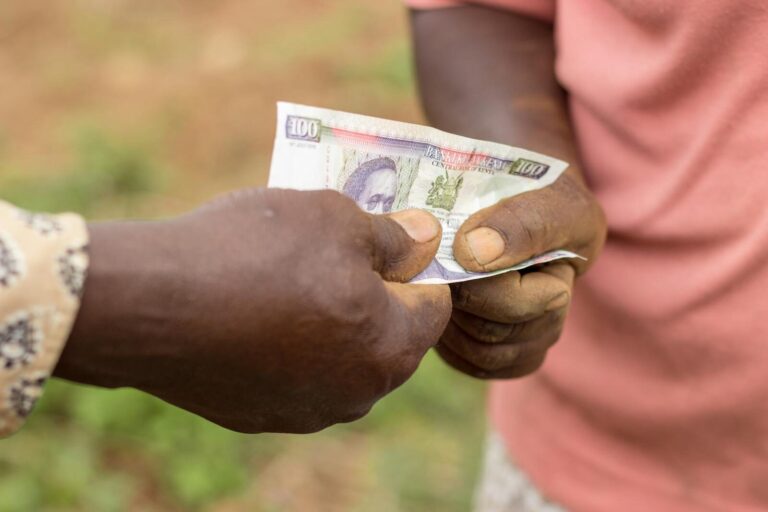
Financing remains the primary barrier. A basic home solar system often costs more than a month’s income for low-income families, and currency volatility continues to inflate the cost of imported components. Exchange-rate pressures, inconsistent policy implementation, and limited access to affordable local capital are slowing adoption among the segment of the population that needs it most.
Morocco and Egypt: The North African Anchor
North Africa’s contribution to the continental solar story is substantial and structurally different from what is happening in sub-Saharan Africa. Egypt and Morocco are building at scale, with utility-grade infrastructure backed by foreign direct investment and clear national targets.
Morocco’s Noor Ouarzazate complex remains one of the largest concentrated solar power facilities in the world at 580 MW. The country has recently doubled its domestic solar panel manufacturing capacity to 1 gigawatt per year, and has set a target of generating more than 52 percent of its electricity from renewables by 2030. The institutional framework, particularly the Moroccan Agency for Sustainable Energy (MASEN), has given investors a credible counterpart and reduced project risk.
Egypt is scaling faster than its headline numbers might suggest. Three gigawatt-scale projects are currently in various stages of coming online, including EliTe Solar at 3 GW and Masdar at 4 GW, the latter still without a confirmed start date. North Africa now accounts for more than half of the continent’s combined solar and wind capacity, a concentration that reflects both resource advantage and the relative accessibility of international financing for geopolitically stable, credit-rated economies.
The Financing Gap and the Chinese Factor
One dynamic that runs through virtually every African solar market is the role of Chinese supply chains. Africa’s solar panel imports from China jumped 60 percent in the 12 months to June 2025, reaching an all-time high. Chinese companies are, by most accounts, the primary enablers of Africa’s green transition at the equipment level by supplying the panels, batteries, and increasingly the manufacturing infrastructure that makes deployment possible.
That dependency comes with its own set of questions around supply chain resilience, local value creation, and debt exposure. Roughly 64 gigawatts of solar equipment has been shipped to the continent since 2017, yet only 23.4 GW of working solar capacity exists. That means a significant portion of imported equipment has not been installed or has not been formally documented. The gap between imports and deployment points to logistical, financing, and institutional bottlenecks that cheaper panels alone cannot solve.
What the Numbers Mean
Africa holds 60 percent of the world’s highest-quality solar resources, yet solar currently provides only 3 percent of the continent’s electricity generation. That gap between endowment and utilisation is narrowing, but slowly.
The 2025 figures confirm a genuine inflection point in market development. Solar is no longer a story about a handful of pioneering countries. It is becoming a continental priority, with adoption driven by a combination of economic necessity, falling technology costs, and in some markets, improving policy frameworks. The 2023 Nairobi Declaration set a target of scaling Africa’s renewable capacity from 56 GW in 2022 to at least 300 GW by 2030. At current growth rates, that target remains ambitious. Whether it is achievable depends as much on financing access, grid investment, and policy consistency as it does on the availability of sunlight, of which Africa has no shortage.