
AI Diagnostics in African Hospitals: Promising Pilots, Scaling Challenges

Walk into a public clinic in rural Siaya County, Kenya, and the shortage that defines African healthcare becomes obvious within minutes. There is roughly one doctor for every 5,000 people across much of the continent, against a global benchmark closer to one per 1,000. That gap is precisely where artificial intelligence has begun to find its footing, not as a replacement for clinicians, but as a way to compress the distance between a patient’s symptoms and a usable answer.
In several African countries, AI-assisted diagnostic tools are now running in real clinical settings, not just research papers. The results are genuinely encouraging. But the harder story that will matter most for the next five years is what happens after the pilot ends.
Where the Pilots Are Working
The clearest gains have come in image-heavy specialties where the region has always struggled with a shortage of trained readers: radiology, pathology, and infectious disease screening.
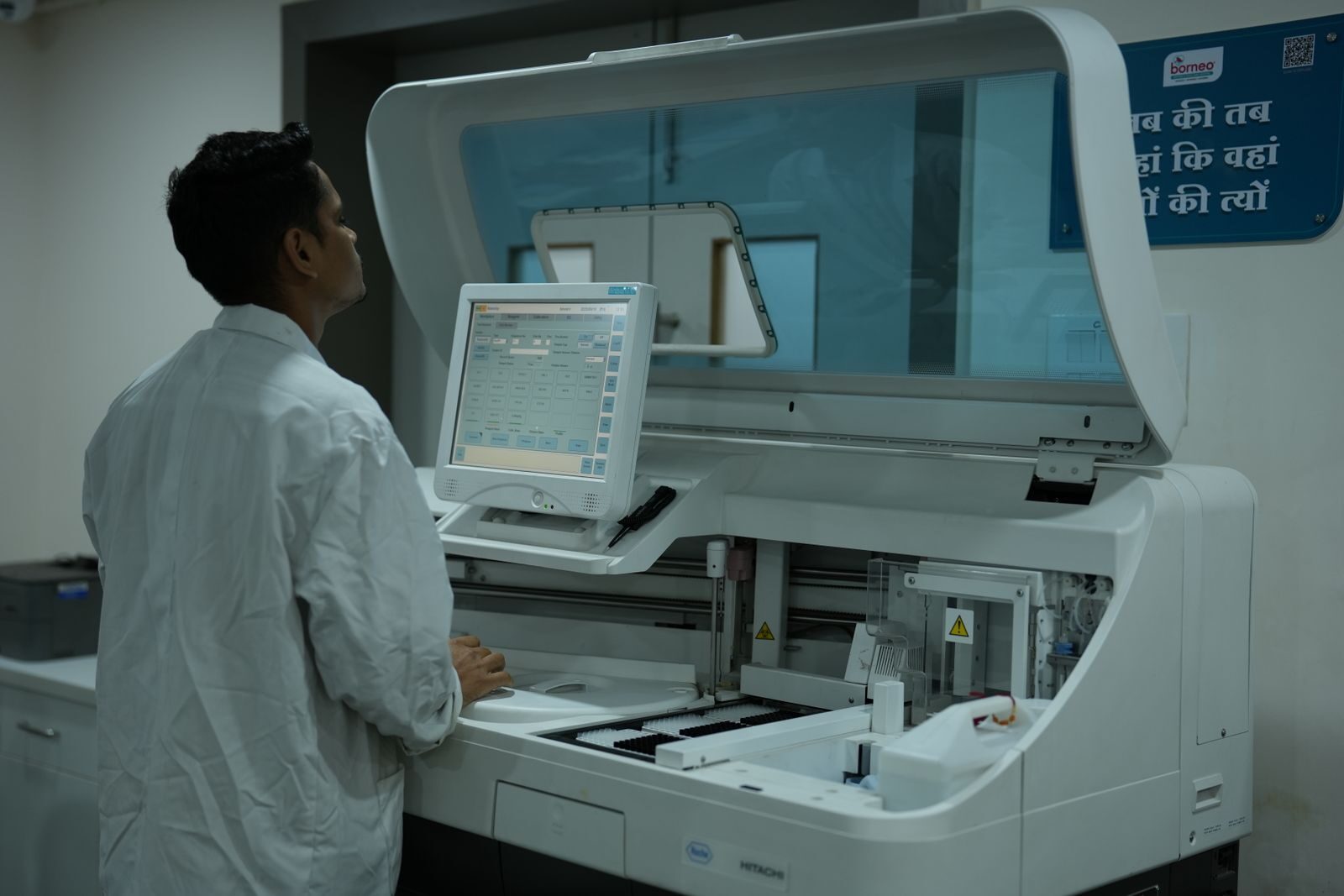
Computer-aided detection software for tuberculosis, including tools like CAD4TB, has been deployed across screening programmes in several African countries, and the World Health Organization reaffirmed its backing for computer-aided TB detection in 2025 after reviewing updated evidence. In practice, this means a portable X-ray unit paired with software can flag likely TB cases in areas that have never had a resident radiologist.
Malaria diagnosis has seen a similar movement. In western Kenya, a smartphone-based microscopy tool has cut what used to be a days-long wait for a fever diagnosis down to about ninety seconds, according to reporting from Global Voices on community health workers using AI-assisted tools in remote clinics.
Nigeria has produced one of the more concrete hospital-level results. At University College Hospital, Ibadan, a clinical speech-to-text system built specifically for African-accented English, developed by Intron Health’s Tobi Olatunji reduced radiology reporting turnaround from 48 hours to about 20 minutes, simply by letting doctors dictate notes instead of typing or handwriting them. It is not glamorous technology, but it is the kind that survives contact with an overworked hospital ward.
In Ghana, minoHealth AI Labs has built diagnostic imaging tools aimed at the same underlying problem with too few specialists reading too many scans, while in Egypt, the teleradiology platform Rology now routes scan reports back to referring doctors within 12 hours for routine cases and roughly an hour for emergencies, according to figures cited by The Next Africa.
Why the Numbers Look Better Than the System
It is tempting to read these results as evidence that African healthcare AI has turned a corner. The reality is narrower. A 2026 review in Public Health Challenges looking at diagnostic AI adoption in the Democratic Republic of Congo found consistent gains in controlled studies with improvements of 12 to 15 percent in radiology accuracy, faster epidemic detection, but concluded that implementation remains hampered by weak digital infrastructure, insufficient clinician training, and the absence of a clear regulatory framework. That gap between what works in a study and what survives in a district hospital is the real story of AI diagnostics on the continent right now.
Africa’s own contribution to the global AI-health research base remains small, about 2.8 percent of published output, concentrated heavily in Egypt and South Africa, with most projects still leaning on partnerships with institutions outside the continent for funding, data, or technical validation. That dependency is not necessarily a problem in itself, but it does mean scaling decisions are often made elsewhere, and local health systems have limited leverage to shape the tools they end up using.
Three structural issues keep surfacing across country after country. Power and connectivity remain unreliable outside major cities, which matters enormously for tools that depend on cloud processing or continuous data transfer. Health data systems are fragmented, often paper-based, and rarely interoperable between facilities. This makes it hard to build the large, representative local datasets these models need to perform reliably outside a pilot’s carefully chosen sample. Again, regulatory frameworks for software-as-a-medical-device are still being written in most jurisdictions, including Nigeria, which leaves hospitals and vendors negotiating liability and oversight on a case-by-case basis rather than against a settled standard.
What Scaling Actually Requires
The evidence so far suggests the technology itself is rarely the bottleneck. A diagnostic model trained well and validated on local data tends to perform competitively; the WHO’s own guidance on computer-aided TB detection reflects that confidence. The harder work is institutional: financing the communication backbones that let images and results move between facilities, training frontline nurses and radiographers to interpret AI outputs and confidence scores rather than treating them as a black box, and building national procurement and reimbursement pathways that don’t require every hospital to negotiate its own pilot from scratch.
Nigeria’s position in this is instructive. The country has some of the continent’s most active builders in this space. However, its public hospital system is also where the infrastructure gap is most visible outside a handful of teaching hospitals in Lagos, Abuja, and Ibadan. Tools that work at UCH Ibadan do not automatically work in a secondary healthcare centre three states away without power, internet, and a trained operator.
The Realistic Picture
None of this argues against continued investment in AI diagnostics for African healthcare. The clinical case is sound, and the tuberculosis and radiology results in particular are hard to dismiss. But the continent’s experience so far points toward a slower, more uneven path than the pilot headlines suggest; one where success depends less on model accuracy and more on the unglamorous work of infrastructure, training, and regulation catching up to what the technology can already do.