

Meet the 7 Agritech Startups Revolutionizing Agriculture in Africa

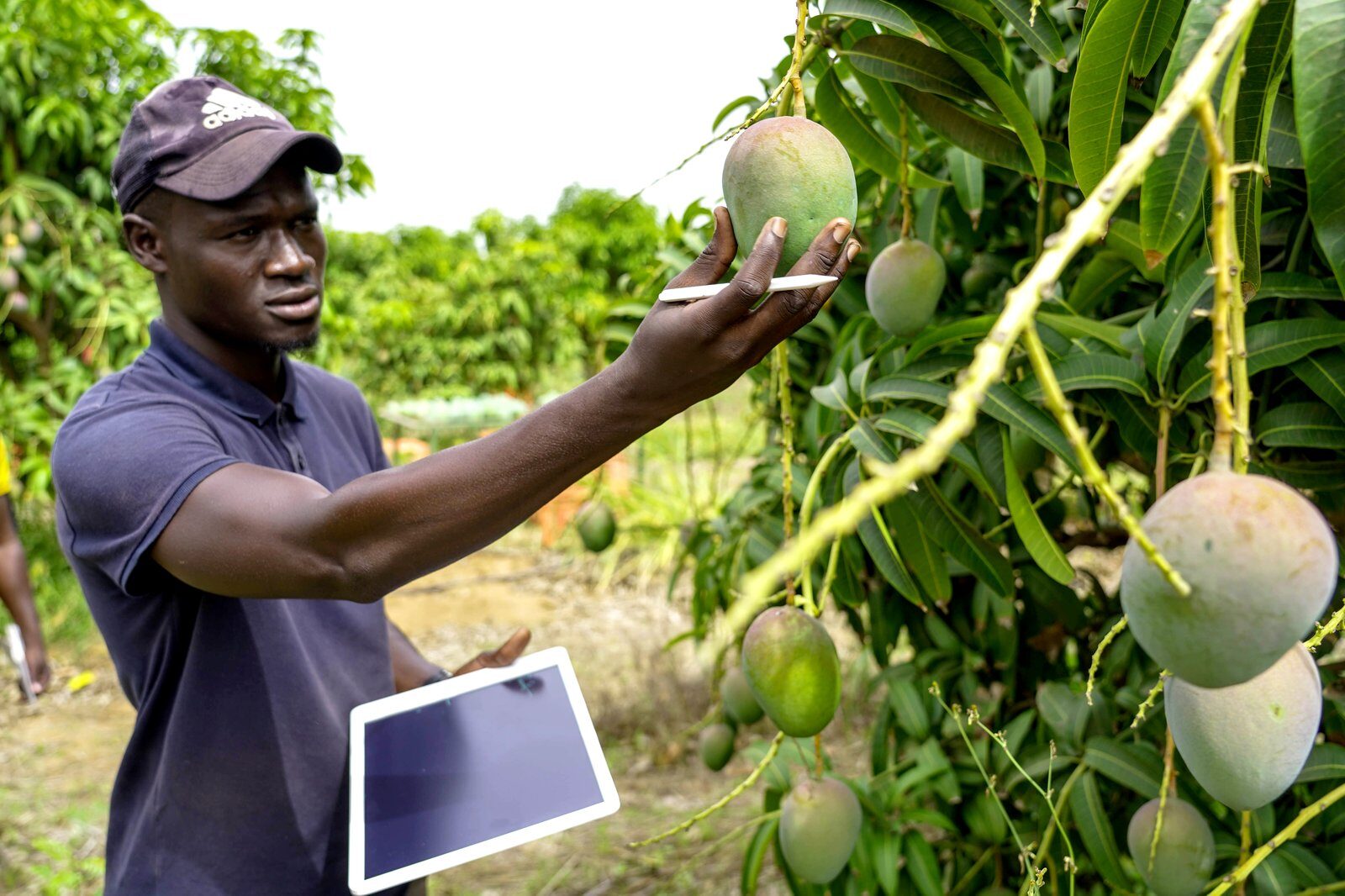
Africa feeds over a billion people, yet the continent imports more than $40 billion in food annually. That contradiction sits at the heart of why agritech has attracted so much entrepreneurial energy over the past decade. Between 2014 and 2024, more than 700 agritech startups raised over $1.56 billion across Africa, according to an Agtech 2024/2025 report. The money is significant, but the more compelling story is who is actually changing ground-level conditions for smallholder farmers, and how.
Here are seven startups worth knowing.
1. Apollo Agriculture — Kenya
Apollo Agriculture was founded in 2016 by Eli Pollak, Benjamin Njenga, and Earl St Sauver with a specific thesis: smallholder farmers in Africa are not poor because they lack ambition, but because they cannot access the right inputs at the right time, backed by credit. Apollo uses machine learning, remote sensing, and mobile technology to offer farmers a bundled package: quality seeds, fertilizer, insurance, and tailored agronomic advice, all financed through a digital credit product tied to the harvest cycle.
The model has proven durable. By early 2024, Apollo had served over 350,000 farmers across Kenya and Zambia and raised $10 million in new funding from Swedfund and ImpactConnect to deepen its reach. Total funding stands at approximately $67.8 million. The startup operates through a network of over 1,000 agrodealers, making it one of the more operationally grounded agritech businesses on the continent.
2. Releaf — Nigeria
The founding insight behind Releaf was blunt. As co-founder Uzoma Ayogu put it: “You cannot code a palm nut to crack itself.” When Ikenna Nzewi and Ayogu, graduates of Yale and Duke respectively, set out to disrupt Nigeria’s oil palm sector, they recognized that most African agritech had focused almost entirely on software. The physical processing bottleneck remained untouched.
Releaf builds proprietary hardware and software to decentralize palm oil processing in Nigeria, setting up smaller factories close to where smallholder farmers actually grow oil palm. The effect is direct: farmers avoid expensive logistics, factories operate near full capacity, and ingredient quality improves enough to supply manufacturers like PZ Cussons and Presco. Since launching, Releaf has processed more than 10 million kilograms of palm nuts and secured over $100 million in supply contracts. Its technology has reportedly enabled processors to increase throughput by a factor of 200. In a sector involving an estimated 4 million smallholder farmers, that scale matters.
3. Complete Farmer — Ghana
Desmond Koney founded Complete Farmer in 2017 after a stint as a mechanical engineer. The Ghanaian startup operates a digital platform that connects smallholder farmers, through precision agronomy protocols, real-time monitoring tools, and logistics support, directly to international buyers in Asia, Europe, and beyond.
The model has attracted serious institutional confidence. In 2023, Complete Farmer raised $10.4 million in a pre-Series A round led by Acumen Resilient Agriculture Fund and Alitheia Capital. By mid-2025, the European Union’s AgriFI facility had committed a further €2.2 million specifically to build six new fulfilment centres in Ghana’s northern regions, where agricultural infrastructure is thin. The company now serves over 12,000 smallholder farmers and is working toward a target of 50,000 by 2028.
4. Hello Tractor — Nigeria/Pan-Africa
The mechanization gap in African agriculture is often discussed, but rarely addressed. Jehiel Oliver founded Hello Tractor in 2014 to change that. The platform allows smallholder farmers to book tractor services on demand via a mobile application, while tractor owners earn income by renting out idle equipment. The model is sometimes described as Uber for tractors, but that framing undersells how structural the problem is. In sub-Saharan Africa, there is roughly one tractor per 1,500 hectares of arable land, compared to one per 10 hectares in North America.
Hello Tractor’s platform bundles tractor access with financing, farm inputs, advisory services, insurance, and market connections, an intentional effort to make mechanization a gateway to broader agricultural transformation rather than just a productivity tool. The company now operates in multiple African markets, including Nigeria, Kenya, and Tanzania, and has partnered with organizations including Babban Gona and the One Acre Fund.
5. Farmcrowdy — Nigeria
Farmcrowdy was Nigeria’s first digital agriculture crowdfunding platform. Founded in 2016 by Onyeka Akumah, Akindele Phillips, Temitope Omotolani, Christopher Abiodun, and Ifeanyi Anazodo, it started with a straightforward proposition: allow everyday Nigerians to sponsor a farm, and share in the returns. In its early years, the company grew its farmer network to over 25,000 smallholders across 14 states.
The company has since pivoted away from the pure crowdfunding model toward a digital agriculture infrastructure play, reorganizing around six business units covering structured finance, insurance, marketing, and food aggregation. It secured a $2.4 million equity raise during Akumah’s tenure, and was one of only a handful of Nigerian startups accepted into Techstars. Farmcrowdy received the National Productivity Order of Merit from the Nigerian government in 2019, a signal of how seriously federal institutions had begun to take the agritech conversation.
6. Agrix Tech — Cameroon
Francophone Africa tends to be underrepresented in startup coverage. Adamou Nchange Kouotou co-founded Agrix Tech in 2018 precisely to address a problem that afflicts farmers across the region: crop disease diagnosis is slow, expertise is scarce, and losses routinely eliminate thin margins.
The Agrix Tech app lets farmers photograph a diseased crop and receive an AI-driven diagnosis, along with a treatment recommendation. Critically, the platform operates in local African languages, including voice recognition support, a design choice that signals genuine intent to reach rural users rather than urban tech adopters. Beyond diagnostics, the platform automates business plan generation to help farmers access microfinance and connects them to buyers through a web marketplace. In a region where banking penetration is low and agricultural extension services are stretched, this combination of tools is meaningfully different from general-purpose farm apps.
7. Emata — Uganda
East Africa’s agritech ecosystem has historically concentrated on Kenya. Emata, founded in Uganda in 2021, suggests the next frontier may lie in markets that have received less attention. The company offers affordable digital loans to smallholder farmers using AI and advanced risk analytics, with the ability to disburse loans as small as approximately $15. The focus is on dairy, coffee, maize, and oilseed farmers.
The access-to-finance problem in African agriculture is well documented. Informal lending rates can run five to ten times higher than what formal institutions charge, but formal institutions rarely serve farmers at all. Emata’s automated credit scoring, which pulls from farmer behavioral and production data, allows it to operate at a cost structure that makes small-ticket lending viable. By early 2024, it had partnered with 43 agricultural organizations and reached 38,000 farmers. Emata’s own data suggests its loans have driven an average 25 percent improvement in dairy farmer productivity.
What These Seven Startups Suggest
The diversity of approaches here is deliberate. There is no single technology unlocking African agriculture. The problems are too varied, geographically and structurally, for that. What links these companies is a recognition that farming in Africa requires solving for credit, inputs, mechanization, market access, disease management, and post-harvest processing, often simultaneously.
That is a harder problem than any app can solve in isolation. The startups that are building durable businesses are those, like Releaf with its physical processing infrastructure, or Complete Farmer with its fulfilment centres, that are willing to go beyond software into the structural plumbing of agricultural value chains. Africa’s food import bill is not inevitable. These founders are working to prove it.