
Meet MAIDS, the Nigerian Startup Turning Insurance into a Wealth Tool

There is a sentence Nigerians have been saying for decades, usually muttered after paying a motor insurance premium at the start of the year and filing zero claims before December: “Insurance is a waste of money.”
It is one of the most financially damaging ideas in this country, and statistically, it is winning. Nigeria, Africa’s most populous nation and largest economy, has an insurance penetration rate of just 0.4 percent of GDP. That puts it far behind South Africa’s 11.3 percent, Namibia’s 7.4 percent, Morocco’s 2.1 percent, and even Kenya’s 1.2 percent. In a country where one accident, one medical emergency, or one sudden death can erase a lifetime of savings overnight, most Nigerians remain completely unprotected.
The industry has known about this crisis for years. What it has rarely done is build something structurally new to fix it. That is what Mutual Aid Specialist Microinsurance Limited, known as MAIDS, aims to do. And the tool they are using is one Nigerians are rapidly becoming fluent in: blockchain.
The Trust Problem Is the Real Problem
Before unpacking what MAIDS has built, it helps to understand why the insurance problem is so stubborn. Operators have been candid about the rot. The scepticism did not materialise from nowhere; it has roots in decades of rejected claims, bureaucratic delays, and a general sense that fine print was written to protect the insurer, not the insured. A Statista survey found that as of 2018, about 97 percent of Nigerians had no health insurance. Only 3.4 million of the estimated 12 million vehicles on Nigerian roads carry valid motor coverage. The rest are running on forged or expired certificates.
The cultural layer compounds this. In parts of Nigeria, insurance is seen as inviting misfortune. In others, the logic of paying every year and “getting nothing back” simply does not compute for households already stretched thin.
But here is what those households are missing: in a mutual insurance structure, the money does not disappear. Premiums pooled by members stay within the community. When nothing goes wrong, the reserves build. When something does, they pay out fast. The insured are not customers of a distant corporation; they are co-owners of a shared financial safety net. Their money, quite literally, is still working for them.
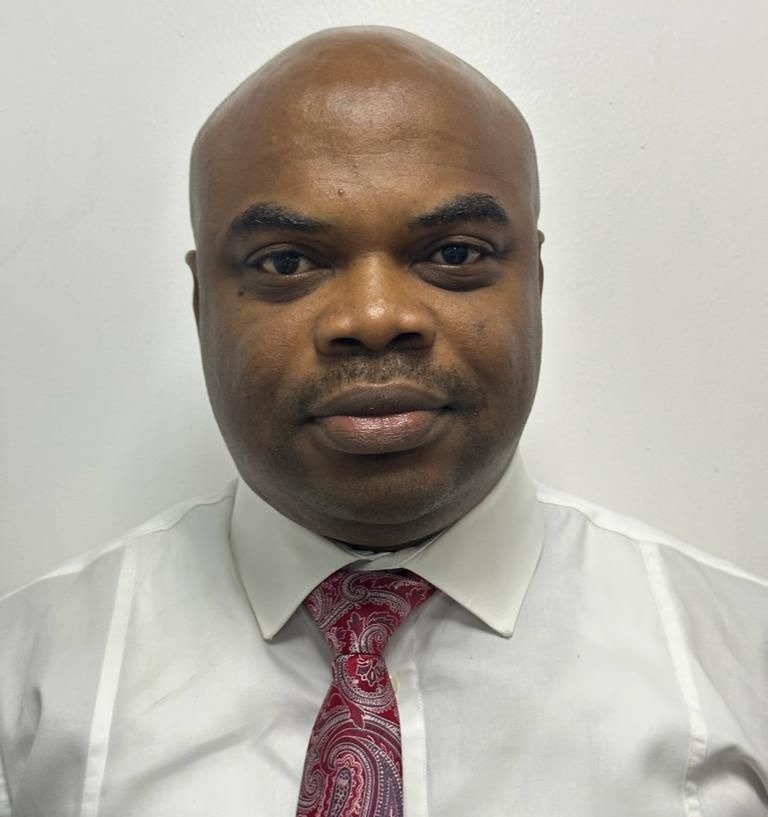
MAIDS Executive Director and Founder, Adetola Adegbayi, a former Executive Director at Leadway Assurance, has staked her company on getting that message through. Her framing is precise: “Nigerians have to willingly see the value of insurance for themselves and our communities as a way of financing emergencies and building infrastructure.” She adds that life annuities supply capital to fund national development. Insurance, built correctly, is not just protection. It is a savings mechanism, a capital pool, and an investment vehicle, simultaneously.
What BLOHMI Actually Does
MAIDS, incorporated in Lagos in January 2024 and licensed by the National Insurance Commission (NAICOM) under a state micro-insurance framework, formally launched operations in April 2026 with its Blockchain Hybrid Mutual Insurance model — BLOHMI.
The idea is elegant. Traditional commercial insurance is opaque: you pay a premium, a distant company pools it, invests it, takes a margin, and if your claim survives the fine print, eventually pays out. You never see the pool. You never know your place in it. The insurer holds every card.
Mutual insurance flips this. Policyholders are stakeholders. The pool belongs to the member community. Surpluses return to members rather than being extracted as corporate profit. This is the same philosophy behind Nigeria’s esusu, ajo, and adashe groups — community risk-pooling that Nigerians have practised informally for generations. MAIDS is not introducing a foreign concept. It is formalising one that already lives in Nigerian culture, and wrapping it in technology that makes it verifiable.
BLOHMI layers blockchain on top of that mutual foundation. Every premium payment, every claim, every transaction is recorded on an immutable, publicly verifiable ledger. Nothing can be quietly altered. No claim can be buried in a file and forgotten. Every member can trace, in real time, what is happening to the pool they co-own. For a younger, digitally native generation that already navigates crypto wallets and on-chain transactions, this is a natural fit. But even for a market trader who will never open a blockchain explorer, the practical outcome is the same: transparent processes, accountable governance, and rules that cannot be rewritten against her.
Divisional Managing Director Geraldine Umeche was direct at the Lagos launch: “Our vision is to ‘flip the script’ on uninsured risks by offering insurance that builds wealth.”
Built for Nigeria’s Real Economy
MAIDS is not chasing the salaried professional with an HR-managed benefits package. It is going deeper into the informal sector workers and low-income earners who make up the vast majority of Nigeria’s economically active population: the market trader in Alaba, the okada rider in Owerri, the smallholder farmer in Benue.
To reach them, the company has introduced Fixed Sums Assured, bite-sized coverage products modelled on Nigeria’s sachet-packaging economy. The same logic that sells shampoo and seasoning in affordable single-use sachets is now being applied to financial protection: coverage for health emergencies, accidents, and sudden business disruptions, sold in small, manageable units.

This approach dovetails with the Nigerian Insurance Industry Reform Act 2025, the most significant overhaul of the sector in two decades. Signed into law in August 2025, NIIRA 2025 replaces the 2003 Insurance Act, raises capital requirements sharply, non-life insurers’ minimum floor jumped from N3 billion to N15 billion, and explicitly mandates that insurers digitalise their services and make products accessible via mobile. Crucially, it funds enforcement agencies, meaning compulsory insurance requirements will actually carry teeth for the first time. MAIDS launched precisely as this new era begins, a timing Umeche called strategic: “The Nigerian insurance industry stands at a transformative crossroads, particularly within the year that the NIIRA 2025 becomes definitive.”
Insurance Is Money, and It Always Was.
Nigeria’s insurance industry posted Gross Premium Written of N2.30 trillion in Q4 2025, a 47.3 percent year-on-year surge. Total sector assets have grown to N4.79 trillion. But almost none of that growth is reaching the people who need it most. The expansion is concentrated in corporate non-life categories — oil and gas, aviation, and marine. Households, MSMEs, farmers, and informal workers remain largely uninsured.
That is the gap MAIDS is built to fill. With NAICOM’s backing, a regulatory tailwind, and a model that speaks to both the blockchain-fluent Gen Z and the community-savings-group grandmother, the company is entering a market that is structurally ready, but has been waiting for a proposition compelling enough to break through decades of accumulated distrust.
The most powerful thing MAIDS may ultimately do has nothing to do with technology. It is a language shift. For too long, the industry has sold insurance as a concession to misfortune, a legal obligation, and a reluctant hedge. MAIDS is selling it as a financial instrument: community-owned, transparently governed, and built to grow. As Umeche said at the launch: “When people are protected, they are empowered. And when they are empowered, communities thrive.”
Nigeria has over 200 million people. Fewer than one in a hundred has meaningful insurance coverage. The cost of that gap, in businesses destroyed, families impoverished, and dreams deferred, is enormous and largely invisible.
Your premium is not money you will never see again. It is money working inside your community, verifiable on a ledger, and ready to move when you need it most. That is not a cost. That is capital.
Mutual Aid Specialist Microinsurance Limited (MAIDS) is a NAICOM-licensed state microinsurance company headquartered in Yaba, Lagos. Visit www.mutualmicro.com.