
Africa Prize 2026: Sixteen Engineers From Across the Continent Including Two Nigerians Compete for £85,000 in Innovation Funding

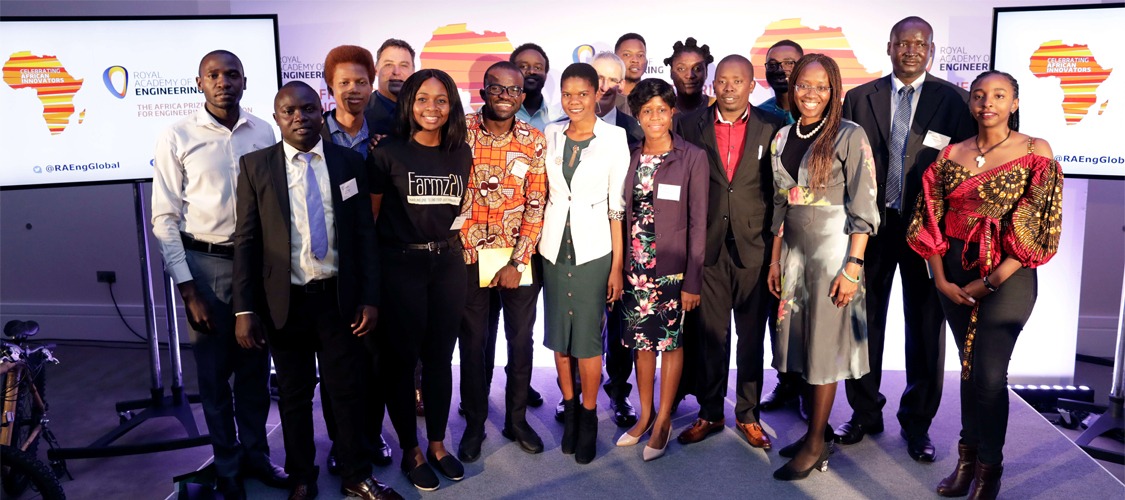
The Royal Academy of Engineering has named its 2026 shortlist for the Africa Prize for Engineering Innovation, selecting 16 early-stage ventures from 11 sub-Saharan countries. The cohort will compete for a prize pool of £85,000 (approximately $113,000), with the top winner taking home £50,000.
Now in its second decade, the Africa Prize remains the continent’s largest engineering-focused award, part-funded by the UK’s Department for Science, Innovation and Technology. Beyond the money, shortlisted innovators gain entry into an alumni network of over 160 entrepreneurs, with continued access to funding pathways, business development support, and peer connections.
Nigeria’s Moment
Two Nigerian innovators made this year’s cut, a result that will resonate across Lagos and Abuja’s growing deep-tech circles.
Chidi Nwaogu’s Efiwe is a mobile-first coding education platform designed to function offline on basic smartphones. It targets young people locked out of mainstream digital education — offering web development instruction with AI support across 189 languages. Given that Nigeria’s youth unemployment challenge is inseparable from skills gaps and unequal internet access, the relevance here is hard to overstate.
Derick Nwasor’s Just Add Water takes a different direction entirely: a regenerative fuel cell system using quantum optimisation and AI to generate clean energy and produce medical-grade oxygen for healthcare facilities. In a country where hospitals routinely contend with grid failure and erratic oxygen supply chains, the application has clear real-world stakes.
A Continent-Wide Field
The rest of the 2026 shortlist spans healthcare, agriculture, water access, education, and urban mobility — sectors where engineering deficits have measurable human costs.
Kenya leads in representation with three entries. Alice Muhuhu’s MoyoECG brings AI-assisted cardiac screening to rural clinics using a wearable device that works without internet or mains electricity. Naom Monari’s Renal Roads addresses kidney disease through a mobile dialysis unit designed for communities too far from hospitals. Royford Mutegi’s vermicomposting device converts food waste into pest-resistant fertiliser pellets for smallholder farmers.
From Rwanda, Millicent Kariuki’s HarakaPlus provides real-time bus tracking and demand data — a straightforward concept with material implications for the reliability of public transport across African cities. Tanzania is represented by both WaterBank, a solar-powered water utility with prepaid access via RFID cards, and ZaidiApp, an eco-fintech platform for formalising waste collection and extending financial services to informal recyclers.
South Africa contributes two entries: Peecycling, which recovers liquid fertiliser and reusable water from human urine, and LabZero, a virtual tissue culture lab allowing students to practise biomedical research digitally — reducing contamination risk while widening access to scientific training.
Entries from Ghana, Lesotho, Malawi, Niger, Senegal, and Zambia round out the field, covering off-grid energy, AI-personalised education for Francophone Africa, household water treatment, and maternal health platforms in local languages.
What the Judges Said
Rebecca Enonchong, chair of the Africa Prize judging panel, noted in a statement that the 2026 shortlist reflects the growing diversity of engineering-led businesses across the continent — spanning healthcare, education, transport, and sustainability — and expressed the panel’s commitment to helping these entrepreneurs extend their reach into local communities.
Why It Matters
The Africa Prize has carved out a distinct identity from the wider startup award circuit by grounding its criteria in engineering rigour and practical deployment rather than growth metrics alone. This year’s cohort is notably heavy in healthcare and climate-adjacent solutions — a reflection of where African engineers are directing their energy.
Three runners-up will each receive £10,000, while an audience-selected ‘One-to-Watch’ award carries a separate £5,000 prize.