Why Digital Identity is Central to Nigeria’s Digital Transformation Agenda

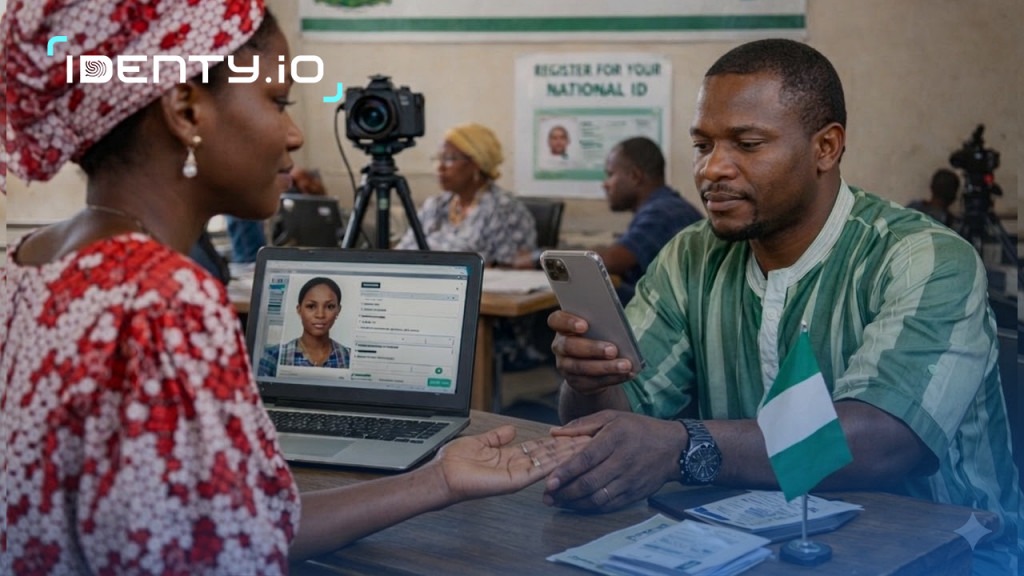
Digital transformation has become a defining pillar of Nigeria’s national development strategy. From expanding broadband access to deepening financial inclusion and digitizing public services, the country is positioning itself as Africa’s leading digital economy. Yet beneath every successful digital ecosystem lies a single foundational element: trusted digital identity.
The strength of any digital economy hinges on the ability to uniquely identify citizens and residents. Without this, financial inclusion stalls, fraud flourishes, and access to services remains uneven. Nigeria’s pioneering Bank Verification Number (BVN) initiative, a biometric identity system linking individuals across banking institutions, has offered valuable momentum. As of December 2025, BVN enrolment stood at 67.8 million bank customers from 63.5 million in 2024, representing 6.8% year-over-year (YoY) growth, per the Nigeria Inter-Bank Settlement System (NIBBS). The development reflects the rising adoption of digital identity as a foundational financial tool in Nigeria. Yet this still leaves a significant portion of the adult population outside its coverage, particularly in rural and informal sectors where identity challenges persist.
Digital identity is crucial because it fuels trust and addresses key challenges in key economic sectors. In the financial sector, fraud costs continue to threaten confidence in digital services. According to the NIBSS, fraud losses across digital channels escalated to about N52.26 billion ($35 million) in 2024-—a figure inflated by a single ?31.1 billion incident involving one institution, before tighter identity verification and data standards helped halve that figure in 2025 to around ?25.85 billion. These statistics reveal two truths: fraud is costly, and stronger identity systems have a real impact when implemented effectively.
To move forward, Nigeria’s identity ecosystem must become more secure, privacy-preserving, interoperable, and accessible. This is where innovation from companies like Identy.io becomes strategically relevant.
Identy.io specializes in contactless, on-device biometric authentication that verifies identity without storing sensitive biometric data in centralized cloud databases. Its technology processes biometric data directly on the user’s device, significantly reducing exposure to mass data breaches while maintaining high assurance levels for identity verification. This privacy-by-design architecture aligns with global standards such as FIDO and supports compliance with regulatory frameworks governing financial services and digital onboarding. Importantly, Identy.io’s Automated Biometric Identification System (ABIS) is Modular Open Source Identity Platform (MOSIP)-compliant and listed on the MOSIP Marketplace, directly relevant as the Nigeria Identity Management Commission (MINC) began transitioning Nigeria’s national identity system to the open-source MOSIP platform in July 2025, backed by the World Bank’s $430 million ID4D programme.
For Nigeria, the implications are significant. In the financial sector, secure biometric authentication can reduce account takeover fraud, eliminate password vulnerabilities, and strengthen remote onboarding processes for banks and fintechs. By lowering fraud losses and improving trust in digital channels, financial institutions can extend services more confidently to underserved populations, accelerating financial inclusion.
In public service delivery, resilient identity verification, including solutions that function offline, can help address infrastructure challenges in rural and low-connectivity environments. Nigeria’s DPI framework, anchored on the National Identification Number (NIN), now issued to over 121 million residents, depends on reaching the remaining population, particularly women, persons with disabilities, and communities in low-connectivity areas. Lessons from humanitarian deployments across Africa show how on-device biometrics enable accurate identification, reduce duplication, and improve service traceability even in remote settings. These capabilities are directly applicable to Nigeria’s healthcare systems, social intervention programmes, and digital ID expansion initiatives.
Beyond fraud prevention, Identy.io’s value proposition lies in enabling scalable trust. A digital economy cannot thrive without secure authentication mechanisms that protect both institutions and citizens. Replacing vulnerable password-based systems with strong biometric authentication can strengthen Nigeria’s cybersecurity resilience while improving user experience. This matters in Nigeria’s competitive context, where legacy biometric suppliers, large multinationals reliant on centralized databases and specialized hardware, have historically dominated government contracts. On-device processing offers a fundamentally different model: lower infrastructure cost, reduced vendor dependency, and stronger data sovereignty for the Nigerian state.
Importantly, identity systems must not only be secure but also inclusive. Digital transformation that excludes informal workers, rural populations, women, and displaced persons risks widening inequality and missing broader economic opportunities. Technologies that operate on widely available smartphones and do not require constant connectivity can help bridge that gap, ensuring broader participation in digital finance, commerce, and public services.
Nigeria stands at a defining moment in its digital evolution. The ambition to build a globally competitive digital economy is clear. The entrepreneurial energy is unmatched. But sustainable growth depends on embedding secure digital identity at the core of this transformation.
Digital identity is not a supporting element of Nigeria’s digital agenda. It is the keystone. By embracing privacy-first, fraud-resistant, and scalable biometric technologies, supported by innovators such as Identy.io, Nigeria can reduce systemic fraud, strengthen public trust, deepen financial inclusion, and unlock the full economic potential of its digital future.
Written By Dr. Olalekan Olasiyan