

The AI Tools African Small Businesses Are Using and the Ethical Fault Lines That Come with Them

Across the continent, SMEs are finding genuine value in a new generation of AI-powered tools. But questions of bias, data sovereignty, and regulatory gaps sit at the centre of how this technology will actually land.
Walk into a small textile shop in Lagos Island, a logistics firm in Nairobi’s Industrial Area, or a two-person accounting outfit in Accra, and you are increasingly likely to find someone using an AI tool, often without calling it that. They might describe it as “the thing I use to write my emails faster” or “the chatbot we put on our website.” The category has become mundane in a way that was difficult to anticipate even three years ago.
That normalisation is, in some ways, a measure of progress. Africa’s businesses and governments are incorporating generative AI into their technology strategies, often using it to solve some of the continent’s most pressing problems in novel ways. But the acceleration also means that hard ethical questions about whose data trains these systems, who benefits from their outputs, and who is harmed by their errors are not being asked loudly enough by the people most affected.
What Small Businesses Are Actually Using
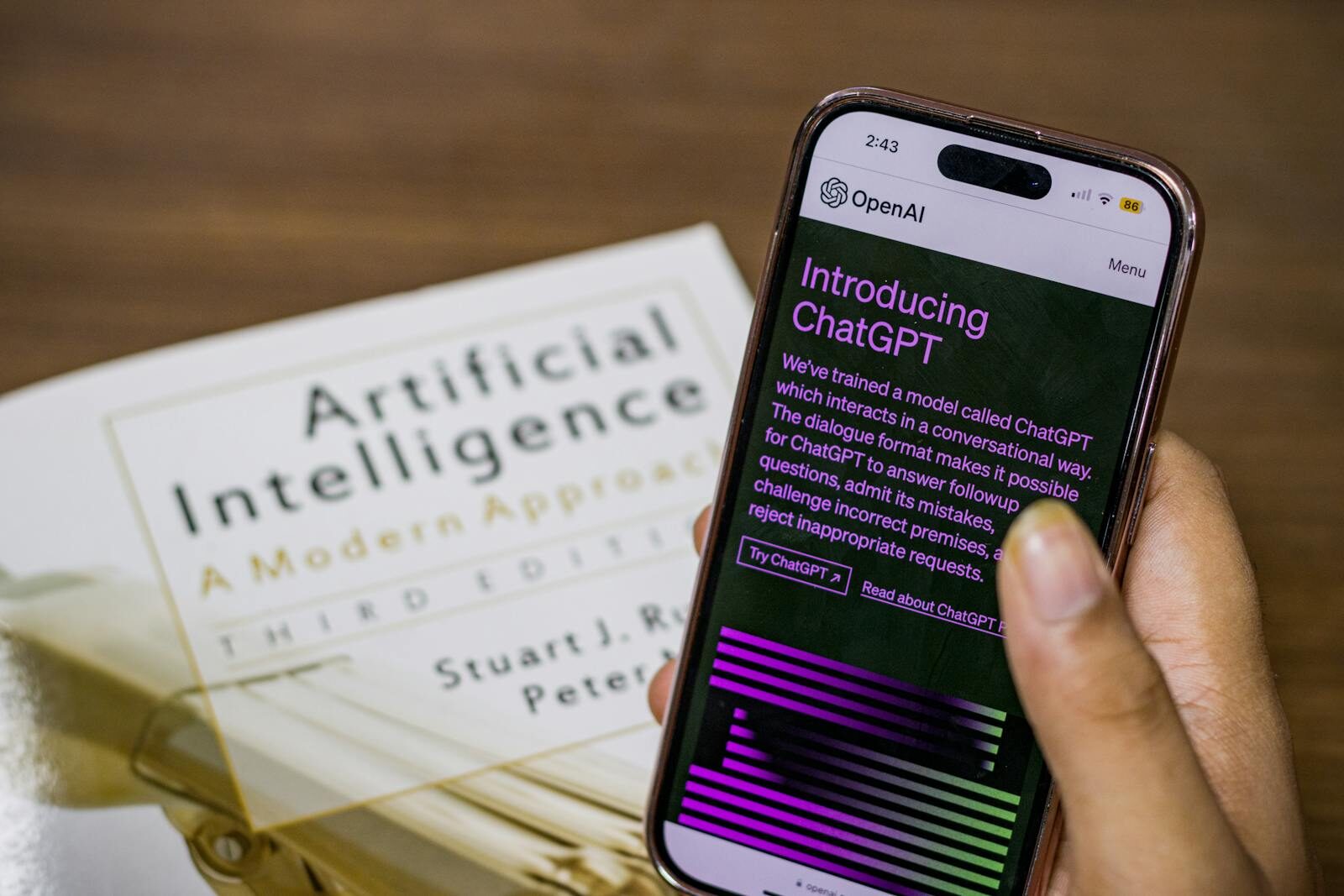
The tools seeing the most traction among African SMEs are not exotic. ChatGPT and similar large language models are being used for drafting customer communications, generating social media content, and summarising supplier agreements in plain language. Canva’s AI-assisted design tools have become a quiet favourite among entrepreneurs who previously could not afford a graphic designer. Accounting platforms with embedded AI features flagging anomalies in cash flow or categorising expenses automatically, are gaining ground in markets where bookkeeping has historically been done by hand or in spreadsheet rows.
Marketing represents the most active adoption area globally, with over 80 percent of AI-using SMEs applying the technology in this domain. In an African context, where most small business owners must simultaneously manage operations, sales, customer service, and finances without specialist staff, that figure reflects a genuine need rather than mere enthusiasm for novelty.
The financial access problem is where AI is showing perhaps its most consequential potential. A study conducted by the investment group Investisseurs et Partenaires found that 40 percent of SMEs in Africa identified accessing finance as the main obstacle to higher growth, with the funding gap estimated at more than $140 billion. AI-driven credit scoring tools that assess business viability through transaction history and mobile money records rather than collateral are beginning to chip away at that gap, though uptake remains uneven.
The same AI tools available to multinational corporations are equally accessible to small businesses in Soweto or Khayelitsha. The question is whether those tools were built with them in mind.
For Nigerian businesses specifically, the practical barriers to AI adoption run deeper than awareness. Unreliable power supply means cloud-dependent tools are only as good as the internet connection available at any given moment. Pricing in dollars for tools built for global markets bites harder in a naira economy that has depreciated sharply. And many platforms default to English language interfaces, creating friction for entrepreneurs whose customers and whose thinking operate primarily in Yoruba, Igbo, or Hausa.
The Ethical Challenges That Do Not Announce Themselves
In Africa, the deployment of AI systems has sparked critical discussions about algorithmic biases and their implications for information fairness and ethics. Key concerns include the lack of diverse datasets, implicit biases in algorithms, insufficient transparency in AI systems, and limited access to technology. These are not abstract academic concerns. They surface in concrete ways: a lending algorithm trained on financial data from the United States that systematically undervalues businesses operating in informal markets; a facial recognition tool that performs poorly on darker skin tones; a customer service chatbot that cannot parse a sentence written in code-switching Pidgin English.
Only 0.02 percent of internet content is available in African languages, limiting the development of AI models that can serve the continent’s diverse linguistic and cultural needs. When the data that trains these models is dominated by English-language sources from Western markets, the outputs reflect those markets. A small business owner in Kano asking an AI tool for advice on pricing strategy will receive guidance calibrated for a very different economic environment than the one she is actually navigating.
The bias problem is compounded by what researchers have begun calling the data sovereignty question. Experts warn that without locally grounded governance, AI could widen inequality, reinforcing existing gaps in access to opportunity and economic participation. When African businesses use tools built by companies headquartered in San Francisco or London, their customer data, often their most valuable business asset flows to servers in jurisdictions with different legal protections and commercial incentives.
Where Regulation Currently Stands
The regulatory picture is improving, though not uniformly. The African Union Executive Council approved its Continental AI Strategy in July 2024, focusing on regulatory frameworks, local innovation, and civil rights protections. That same year, 52 African states signed the Africa Declaration on Artificial Intelligence in Kigali. These are significant institutional steps, even if implementation remains the harder task.
At the national level, Nigeria’s draft Data Protection Act includes ethical guidelines for AI applications, while countries including Egypt, Kenya, Morocco, Uganda, and Zimbabwe have made headway in drafting AI legislation. Nigeria has also introduced a national AI strategy. The challenge, as with most digital regulation on the continent, is the distance between legislation on paper and enforcement in practice. Regulatory bodies remain under-resourced, and many small businesses are operating in a compliance grey zone simply because they do not know what the rules are.
For SMEs, that ambiguity cuts both ways. It means they face fewer formal compliance requirements today — but it also means they have little institutional guidance on how to handle a data breach, what to disclose to customers whose information is being processed by AI systems, or how to contest an automated credit decision that seems wrong.
What Responsible Adoption Looks Like in Practice
The conversation around AI ethics in Africa has occasionally drifted toward the abstract, continental strategies, global frameworks, philosophical debates about decolonising technology. Useful, but insufficient for a market trader in Port Harcourt or a tailoring cooperative in Kumasi trying to decide whether to trust a new tool with their customer records.
The South African government introduced a National Artificial Intelligence Policy Framework in 2024, which aims to harness AI’s potential for economic growth while upholding societal wellbeing. Similar frameworks elsewhere on the continent are nudging businesses toward a few practical principles: know what data you are sharing and with whom, prefer tools that offer clear explanations of how decisions are made, and treat AI outputs as a starting point rather than a final answer.
AI-focused funding across Africa exceeded $600 million in 2024, and a portion of that capital is flowing toward homegrown tools built with local context in mind. Startups training models on African language datasets, building credit infrastructure from mobile money transaction records, and offering SME-facing tools priced for local purchasing power represent a structural alternative to simply importing tools built elsewhere and hoping they fit.
The opportunity is real. So is the risk of sleep-walking through the adoption process and discovering, too late, that the tools used to grow a business have also handed sensitive customer data to a third party, replicated existing biases in hiring or lending, or locked a small enterprise into a platform whose pricing model will shift once the market matures. African small businesses deserve tools that were built with their realities in mind, and they deserve the information to make that judgement themselves.
That is, ultimately, what the ethical AI conversation needs to be about: not just what governments and regulators should do, but what individual business owners can reasonably expect, demand, and verify when they hand any system access to their operations.