

Can Technology Fix Africa’s Election Trust Problem? Peter Ike Thinks It Can

As Nigeria edges closer to another general election cycle in 2026, familiar questions are resurfacing. Can votes be counted transparently? Can results be trusted? Can elections be conducted without widespread disruption, violence, or prolonged uncertainty?
These questions are not unique to Nigeria. Across Africa, elections remain one of the most fragile points in democratic governance, plagued by logistical failures, delayed results, high costs, voter intimidation, and allegations of manipulation. While electoral commissions such as Nigeria’s INEC continue to operate within complex legal and infrastructural constraints, public confidence in electoral outcomes remains uneven at best.
Against this backdrop, a growing number of technologists are asking a difficult but necessary question: what role can technology realistically play in restoring trust in African elections?
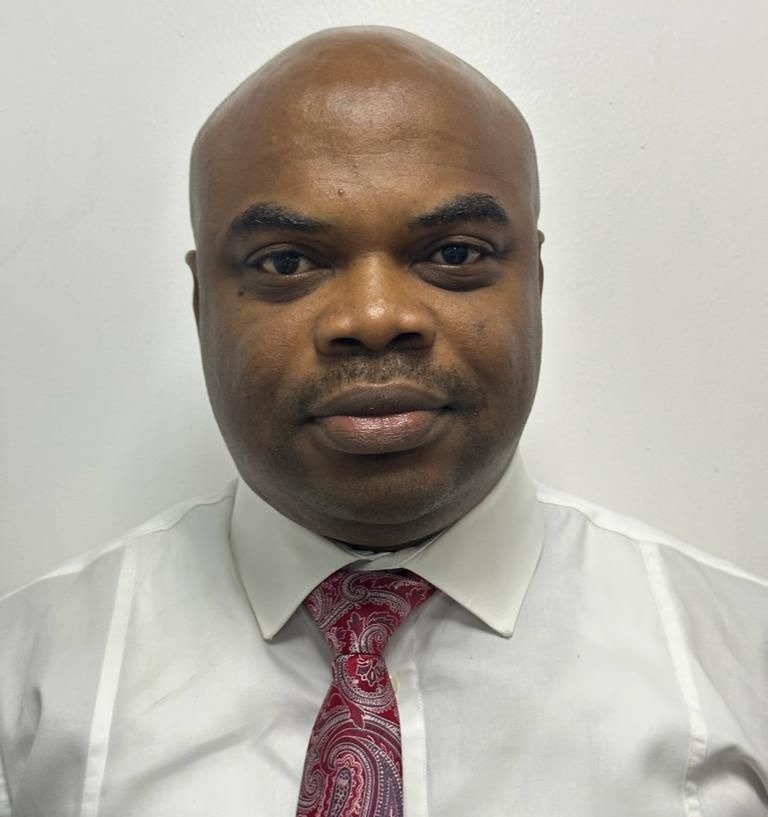
One of them is Peter Ike, a data architect and founder of Castle & Knight Data Architects Ltd, whose voting platform, iVoteAfrica, is quietly challenging long-held assumptions about how elections can be conducted on the continent.
A System Built from Friction
Peter Ike did not arrive at election technology from political activism. His background is firmly rooted in data systems, enterprise architecture, and large-scale digital infrastructure. Over years of working with public-sector and enterprise systems, he observed a recurring pattern: when systems are opaque, centralised, and slow, trust erodes, regardless of intent.
Nigeria’s elections, he argues, suffer less from voter apathy than from process friction. Millions of citizens are effectively locked down on election days. Businesses lose man-hours. Results take days to collate. Physical polling units become flashpoints for tension. And even when elections are conducted peacefully, credibility is often questioned after the fact.
“The problem is not that Nigerians don’t want to vote,” Ike has said in public forums. “It’s that the system makes voting costly – in time, safety, and confidence.” iVoteAfrica was conceived as a response to that structural problem.
What iVoteAfrica Is — and What It Is Not
At its core, iVoteAfrica is not a voter registration platform and not a replacement for national identity systems. It is a secure digital voting platform designed to authenticate voters, prevent multiple voting, and publish results transparently in near real time.
During a live demonstration at the Nigeria Innovation Summit 2025, Ike walked participants through the platform using their mobile devices. Voters register with minimal information, select their polling unit, and are automatically mapped to their ward, local government, constituency, and state. Once authenticated, they can vote in eligible elections, presidential, gubernatorial, and legislative, using a single secure login.
The system does not allow double voting. Attempts to re-vote in the same election are blocked. Results are visible immediately, broken down by geography and party, with vote counts and percentages updated live. What typically takes days of collation and transmission, iVoteAfrica demonstrated in minutes.
Importantly, the platform also decouples where you vote from where your vote counts. A voter registered in Abia State can cast a vote from Lagos or Abuja, and that vote is still counted correctly for their home polling unit. In theory, this removes one of the biggest logistical and security bottlenecks of African elections: forced physical presence in volatile locations.
A Complement, Not a Confrontation
Peter Ike is careful not to frame iVoteAfrica as an attack on electoral institutions. Instead, he positions it as a technical complement, a system that addresses known pain points while respecting institutional realities.
INEC, like many electoral bodies across Africa, operates within legal frameworks that prioritise physical voting, manual collation, and centralised result announcement. These frameworks exist partly to ensure legitimacy, but they also introduce inefficiencies and vulnerabilities.
“What if citizens could verify the truth for themselves?” Ike asks. “What if transparency didn’t depend on trust in a single institution, but on visibility built into the system?”
In this framing, iVoteAfrica does not replace electoral authorities; it changes the information dynamics. Results are not hidden behind long chains of transmission. They are observable, verifiable, and difficult to manipulate without detection.
Cost, Scale, and Sustainability
Beyond trust, there is a financial argument. Election logistics in Nigeria cost hundreds of billions of naira over multiple cycles – from printed materials and transportation to security deployments and re-runs. By contrast, the estimated cost of deploying a national digital voting system is significantly lower once infrastructure is established.
iVoteAfrica also introduces the possibility of multi-day elections without added complexity. Since votes are digitally locked to voter identities and election types, extending voting periods does not increase the risk of duplication, a feature that could ease pressure on infrastructure and security agencies.
A Continental Question
While Nigeria is the immediate context, the implications are broader. From Kenya to the DRC, from Ghana to Zimbabwe, African elections continue to test the limits of trust. In many cases, the legitimacy of outcomes matters as much as the outcomes themselves.
The rise of platforms like iVoteAfrica signals a shift in how Africans are thinking about democracy, not as a static process inherited from paper-based systems, but as an evolving infrastructure problem that can be redesigned.
Still, technology alone is not a silver bullet. Legal reform, institutional buy-in, cybersecurity safeguards, and public education remain essential. But as Africa prepares for another decade of elections under increasing population pressure and political complexity, the question is no longer whether technology should play a role. It is how thoughtfully it should be integrated.
For Peter Ike, the answer lies in systems that reduce friction, increase transparency, and allow citizens to see – in real time – that their voices count. Whether governments are ready to take that step remains an open question. But the technology, it seems, is no longer the limiting factor.