

Nnedinma Obioha: Building Africa’s Tech Future One Community at a Time


When Nnedinma Obioha talks about technology, she rarely starts with code, platforms, or certifications. She starts with people. In an industry often driven by speed and scale, Nnedinma’s work is deliberately rooted in legacy, access, and long-term impact.
As Founder and CEO of Centre Point Multi-Solutions Group and Tech Terminal Ltd., she has quietly become one of the most influential figures shaping tech education and workforce development in Nigeria’s South-East, and increasingly, beyond it. Her journey into technology was neither linear nor accidental.
From Global Exposure to a Call Back Home
Nnedinma spent nearly two decades abroad, studying and working across the UK and Europe. Trained in accounting and finance, she once nursed an entirely different ambition: aviation. The discipline, structure, and systems thinking that came with that early dream would later become evident in how she builds institutions.
But life had other plans. Following the passing of her mother, who had laid the foundation for an ICT training centre years earlier, Nnedinma made the decision to return home. What was meant to be a continuation of a family legacy became something far bigger: a mission to rethink how technology education could work for everyday Nigerians, not just those in Lagos or privileged urban centres.
“I saw gaps everywhere,” she would later say in public forums. “Not just in skills, but in opportunity.”
Building Where Few Were Looking
At a time when most tech education investments were clustered around Lagos, Nnedinma took a contrarian path. She expanded aggressively across the South-East, establishing APTECH technology hubs in all five states of the region, becoming the first regional leader to do so, and the only woman managing multiple APTECH franchises in Nigeria.
It was not without resistance. Infrastructure challenges, scepticism about market readiness, and deeply entrenched gender biases made early growth difficult. Yet Nnedinma persisted, betting that talent was evenly distributed, even if opportunity was not.
Today, Centre Point Multi-Solutions operates across Owerri, Enugu, Onitsha, Abuja, Ebonyi, and beyond, training thousands of young Nigerians in software development, cybersecurity, data analytics, UI/UX design, and emerging digital skills.
Employability, Not Just Education
For Nnedinma, certificates alone were never enough. Tech Terminal was designed around a simple but radical idea that training should lead directly to employability. Beyond classroom instruction, the academy integrates mentorship, internships, career guidance, and HR outsourcing, creating a pipeline from learning to real work.
That philosophy has paid off. Graduates of her programs now work across Nigeria, Europe, and North America, both remotely and on-site, in roles that would once have seemed unreachable from their local communities.
Impact, she insists, is not measured only by enrolment numbers. “It’s measured by confidence, by independence, by the moment someone realises they can compete globally.”
Opening Global Pathways Without Losing Local Relevance
Recognising the importance of global exposure, Nnedinma has built partnerships with international institutions, including universities in the UK and Germany. These collaborations allow Nigerian students to access internationally recognised qualifications while remaining grounded in Africa’s realities.
But she is equally clear about the danger of exporting talent without purpose. Her model is not about brain drain; it’s about brain circulation, equipping Africans to compete globally while contributing meaningfully at home, whether through remote work, entrepreneurship, or local innovation.
Tackling the Hardware Problem Head-On
One of the more unconventional moves in Nnedinma’s journey was her decision to step into hardware. After years of watching promising students struggle due to a lack of access to personal devices, she led the development of affordable laptops tailored specifically for learners. It was a practical response to a problem many in EdTech talk about, but few address directly.
Access, in her view, must be holistic, including skills, devices, mentorship, and opportunity, all working together.
Catching Them Young
In recent years, her focus has expanded to primary and secondary education. Through ICT lab upgrades and digital literacy programs, Nnedinma is working to introduce technology to students at an earlier age, before fear or unfamiliarity sets in.
She believes Africa cannot afford to delay digital education any longer. “If we wait until adulthood,” she often warns, “we are already behind.”
Beyond Business: A Commitment to Service
Through the Hand of Gold Foundation, Nnedinma channels her work into philanthropy, supporting women, youth, and underserved communities through scholarships, empowerment initiatives, and community development programs.
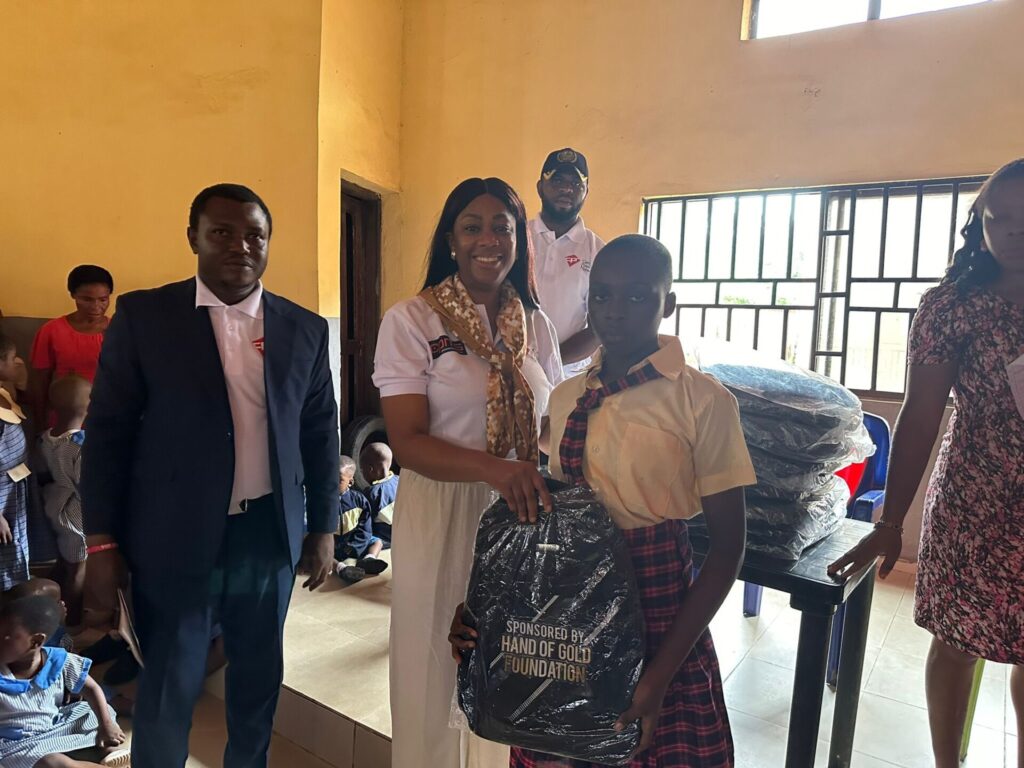
To her, this is not charity. It is a strategy with a conscience. Education, workforce development, and social impact, she believes, are inseparable.
Looking Ahead
With the South-East firmly established, Nnedinma is now expanding into the North-Central region, guided by lessons learned from earlier growth: build locally, partner deeply, and stay focused on outcomes. In the next decade, she envisions Tech Terminal and Centre Point evolving into pan-African platforms for digital talent development, institutions that do not merely respond to the future of work but help define it.
For young Africans, especially women considering careers in technology or education, her message is consistent and unembellished: You don’t need permission to lead. You need preparation, persistence, and a reason bigger than yourself.
And if Nnedinma Obioha’s story proves anything, it is that when technology is built with purpose, it can change far more than careers; it can reshape communities.