
Commonwealth Startup Fellowship Opens: Fully Funded Path from Accra to London for African Founders

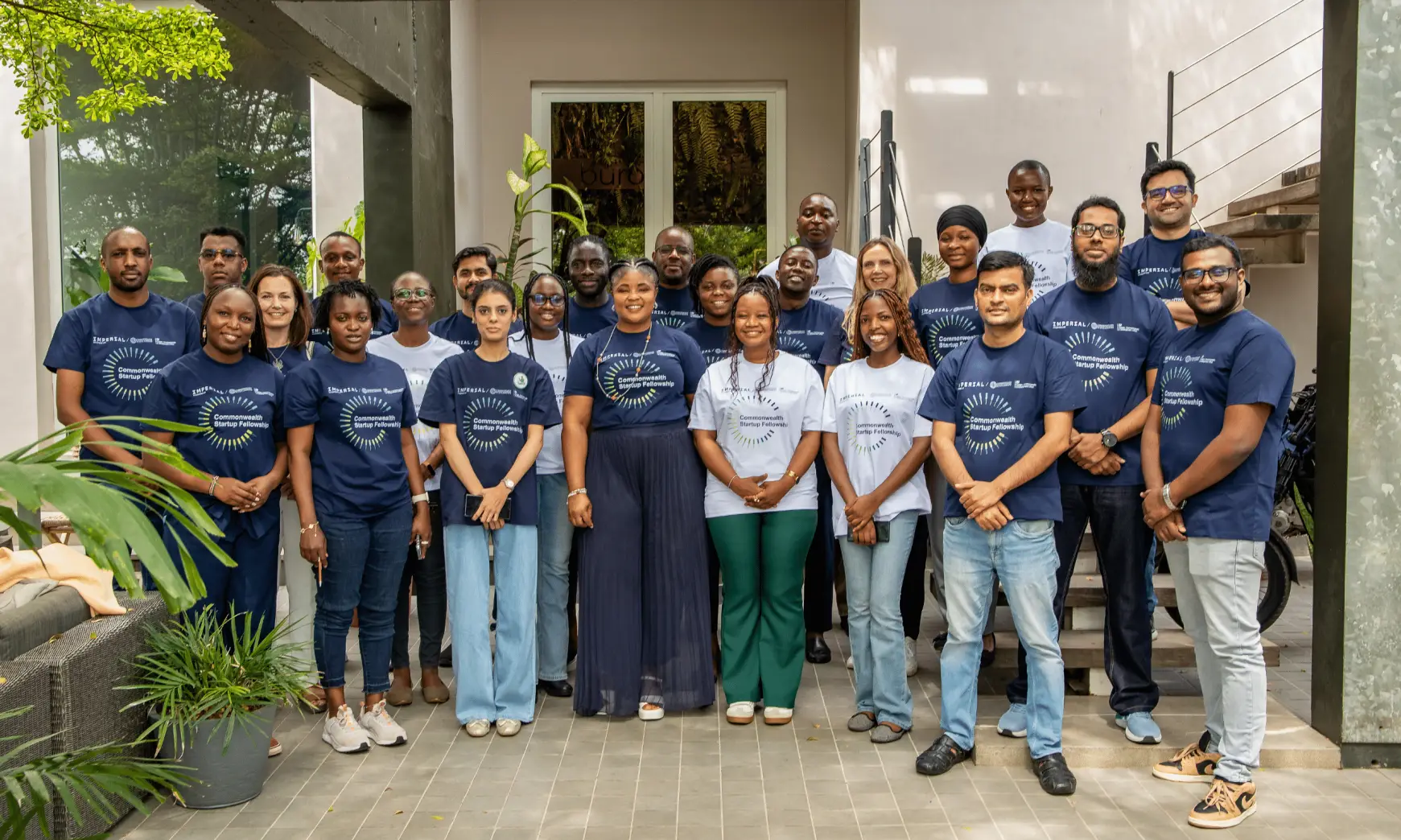
Founders across the Commonwealth’s low and middle income countries now have a narrow window to apply for the 2026/2027 Commonwealth Startup Fellowship, a fully funded six-month programme built to push early-stage ventures toward investment readiness and measurable job creation.
The fellowship is jointly run by the Commonwealth Scholarship Commission and Imperial College London, pairing the CSC’s development mandate with Imperial’s track record in enterprise acceleration. Rather than a purely virtual course, the structure leans on two in-person anchors bookending months of online coaching, a format the organisers say better mirrors how founders actually build traction: through sustained contact, not a single workshop.
Selected entrepreneurs begin with a two-week bootcamp in Accra, Ghana, tentatively scheduled for late January into early February 2027, followed by ongoing monthly coaching, peer reviews and sessions with industry experts delivered remotely. The programme closes with a week-long Capstone in London around mid-May 2027, where founders pitch directly to investors, venture capitalists and industry specialists in a live setting rather than a recorded submission.
Every cost tied to participation is covered. Fellows get return economy flights, accommodation and catering for both the Accra bootcamp and the London Capstone, along with reimbursement of standard visa fees. On top of the logistics, each startup can draw on an equity-free grant of up to £2,000 (roughly $2,700) to put toward business costs or expenses linked to taking part. Founders who declare a disability are eligible for an additional needs assessment, with further financial support available where warranted.
What the fellowship is actually trying to build is investment-ready operators, not idea-stage dreamers. Eligibility criteria are correspondingly strict: applicants must already hold a legally registered business, show at least twelve months of active operation, and have a product or service already reaching paying customers rather than sitting in pilot or prototype form. The CSC has been explicit that it wants ventures demonstrating genuine market traction and a workable business model, not early concepts still being tested.
Beyond registration and traction, candidates need graduate-level education, citizenship or recognised refugee status in an eligible low or middle income Commonwealth country with current permanent residence there, and fluency in written and spoken English. Applicants who have completed a Commonwealth Professional Fellowship within the past five years are excluded from this round, and only one founder per selected startup travels for the in-person bootcamp, though co-founders and wider team members can still tap into the remote mentoring and network-building components.
The curriculum itself, delivered largely by Imperial faculty and affiliated experts, spans leadership and team-building, sales, fundraising, financial forecasting, market expansion and business resilience. Imperial has flagged particular interest in technology-enabled and science-led ventures positioned to benefit from its research base and innovation networks, alongside climate, energy and engineering-focused businesses working on commercial rather than purely academic solutions. That said, organisers have also indicated the fellowship is open across sectors, so founders outside deep-tech should not assume they are excluded.
For African founders specifically, the appeal sits less in the training content, most accelerator curricula converge on similar ground, and more in the access. A live pitch to global investors in London, direct contact with Imperial’s enterprise networks, and peer relationships with founders from other Commonwealth economies are the kind of connections that are otherwise expensive and slow to build from Lagos, Nairobi or Accra alone. Reports on the previous cohort suggest a relatively small intake, meaning selection will likely stay competitive even as awareness of the programme spreads.
Applications for this cycle opened on 3 August 2026 and are set to close on 1 September 2026, with no allowance for late submissions. The CSC has scheduled online information sessions through August for prospective applicants who want a clearer sense of what the review panel is looking for before they submit. Given the short application window relative to the depth of documentation typically required for a Commonwealth-backed fellowship, founders considering a bid would be well served to start pulling together traction data, registration documents and financial history now rather than waiting until closer to the deadline.
Full eligibility details and the application portal are available on the Commonwealth Scholarship Commission’s website.