
At 17, Chanda Prosper Is Rewriting the Script for African Science

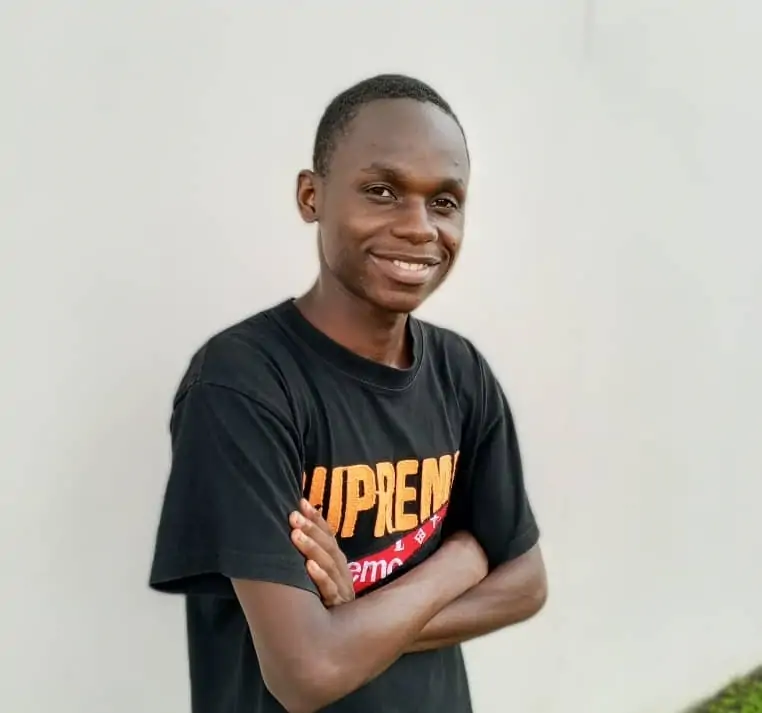
In Kasama, a quiet town in Zambia’s Northern Province, a teenager is quietly doing what many assume is impossible, contributing original ideas to global conversations in theoretical physics.
Chanda Prosper is 17 years old. He is an independent theoretical physics researcher, the youngest member of the World Research Fellow of London (WRFL), and the youngest member of the African Materials Research Society (AMRS). While many of his peers are still discovering academic interests, Chanda is already publishing research, completing advanced university-level courses, and preparing for a future in aerospace engineering.
His journey is not the product of elite labs or well-funded research institutes. It is the result of curiosity, discipline, and an uncommon commitment to learning, built largely with open-access resources, self-study, and persistence.
An Unusual Beginning
Chanda’s academic path has never followed the usual timeline. While most children in Zambia begin Grade One around the age of seven or eight, he was solving algebraic equations and sitting Grade One examinations at just three years old.
From Grades 1 through 7, he consistently ranked first in his class, earning multiple awards in mathematics and science. By age eight, he was already competing in high school–level quizzes. By thirteen, he was teaching advanced mathematics and physics concepts to people in his community, often using nothing more than chalk, pen, and paper.
During Grades 8 and 9, instead of focusing solely on classroom work, Chanda began exploring deeper scientific questions independently, critiquing existing theories and attempting to build his own conceptual frameworks. Despite this unconventional focus, he maintained top academic performance and graduated from Gibeon Adventist Secondary School at age 16, with distinctions in nearly all subjects.
Learning Beyond the Classroom
Formal education alone could not contain Chanda’s curiosity. With limited access to advanced textbooks, journals, or simulation software, he turned to open-access platforms and international online programs.
Today, he holds over 13 verified diplomas and certificates from globally recognized institutions. These include Alison diplomas in mathematics, physics, chemistry, mechanical engineering, mechatronics, thermodynamics, and advanced English, alongside certifications from Saylor Academy and UN-affiliated programs.
He has also completed courses at Northwestern Polytechnical University (NPU), Xi’an, China, including Fundamentals of Low-Speed Aerodynamics, Electric Machinery, and Image Processing Algorithms & Computer Vision, all before formally enrolling as a degree student.
Chanda is currently studying at Copperbelt University (CBU), Zambia, and is scheduled to begin Aerospace Engineering at NPU in September 2026, under the mentorship of Professor Saikia of Apex University, India.
Entering the World of Research
Chanda began formal research work at the age of 14. His earliest projects – Harmonic Mathematics and Harmonic Physics were exploratory, serving as learning tools rather than final contributions. Over time, however, his work became more structured and theoretically grounded.
Among his notable research milestones are:
- Dark Matter–Gravity Inverse Law and Dark Energy Divergence Law, which explore theoretical relationships between fundamental forces.
- Modeling Proper Time Evolution in Relativistic and Quantum Frameworks, accepted by the International Journal for Multidisciplinary Research (IJFMR).
- Prosper’s Unified Position Equation (PUPE), a deterministic framework aimed at unifying dynamics, which has passed technical review and is currently awaiting editorial decision at Scientific Reports.
These are not classroom exercises. They are original theoretical contributions that have undergone international academic scrutiny, a rare achievement for a researcher of any age, let alone a teenager working independently.
Teaching While Learning
Alongside his research, Chanda has taken on an informal teaching role in his community. He has recorded and shared video lessons, breaking down complex physics and mathematics concepts visually for learners who lack access to advanced instruction.
His approach is simple and deliberate: no expensive equipment, no abstraction without explanation. Just clarity. “I wanted people to see the ideas,” he has said in previous communications. “Not just hear formulas.”
The Challenges Behind the Progress
Chanda’s path has not been easy. Access to scientific literature and research tools has been limited. Institutional structures focused largely on examinations, offering little support for independent research. Social pressure, skepticism, and even bullying followed his early pursuit of advanced science.
Starting serious research at 14 also meant confronting gaps in methodology and experience — gaps he addressed through disciplined self-study and constant revision. What sustained him was motivation and long-term focus. Rather than being discouraged by limitations, he learned to work within them.
A Vision for African Science
Chanda’s ambitions extend beyond personal achievement. Through an emerging initiative called Genius Hub, he hopes to mentor young Africans in STEM, introduce research thinking early, and expose students to real scientific inquiry, not just exam preparation.
His vision is simple but ambitious: to normalize independent research, creativity, and intellectual rigor among African youth, even in environments with limited resources. For Chanda, science is not reserved for well-funded labs or distant institutions. It is something that can begin anywhere, with curiosity, discipline, and access to knowledge.
Why His Story Matters
Chanda Prosper’s story challenges a common narrative that world-class research must come from well-resourced systems. His work shows what is possible when determination meets access, even imperfect access to global knowledge.
His journey reflects a broader truth about the continent’s future. Africa’s next generation of innovators, researchers, and problem-solvers is already here. In many cases, they are simply waiting to be seen, supported, and connected.
About Chanda Prosper
Chanda Prosper is a 17-year-old independent theoretical physics researcher from Kasama, Zambia. He is the youngest member of the World Research Fellow of London (WRFL) and the African Materials Research Society (AMRS). His research portfolio is available on Academia.edu and via a Google search of his name. He can be contacted through [email protected]