
4G Still Not Ubiquitous: The Coverage Lie Telecoms Keep Telling

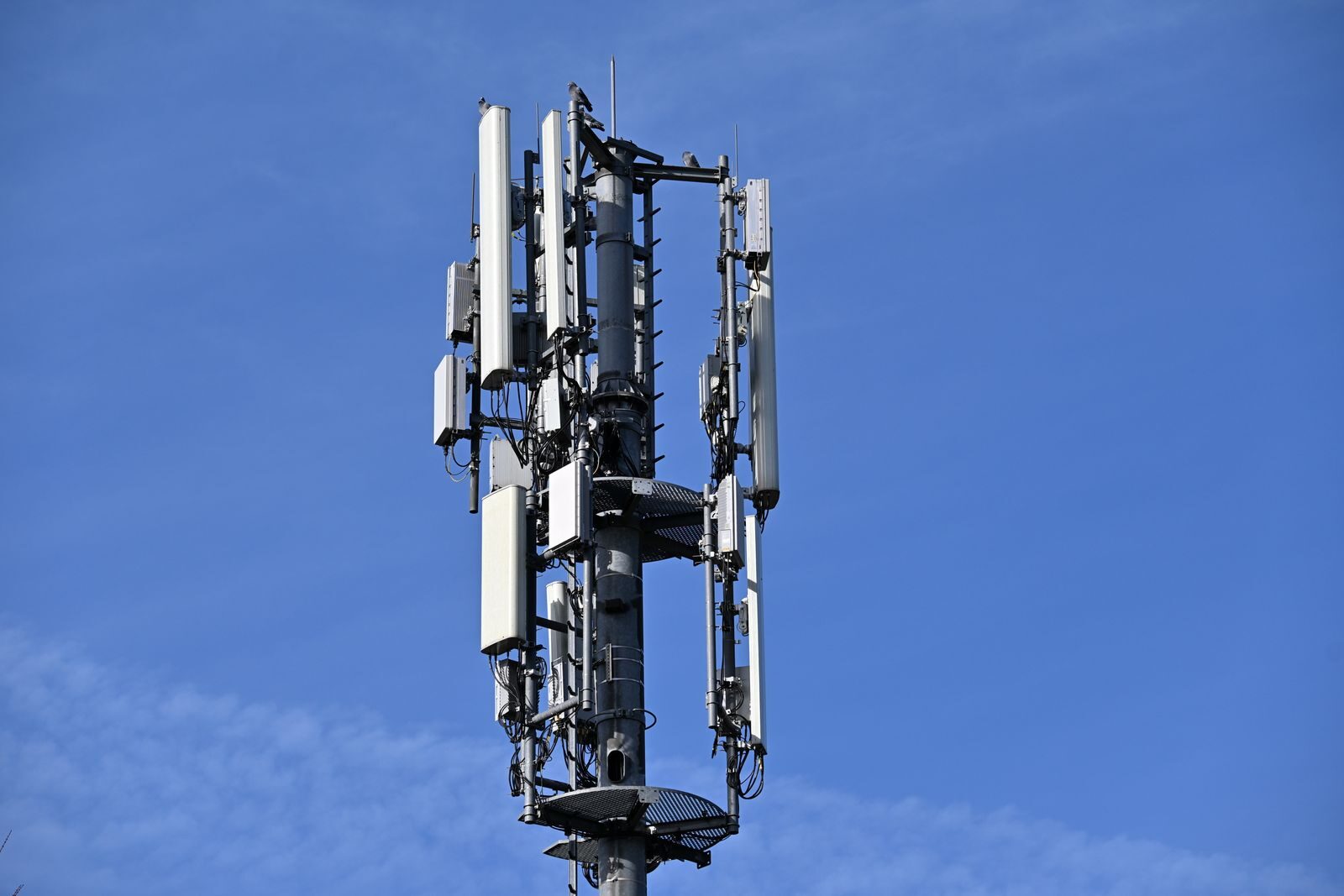
Every few months, a telecom operator somewhere on the continent announces that it has achieved “nationwide 4G coverage.” The press release usually comes with a map, a percentage in the high nineties, and a quote from an executive about closing the digital divide. Anyone who has actually tried to load a webpage outside a state capital knows the map and the experience rarely match.
This is not a uniquely Nigerian problem, but Nigeria illustrates it well. The Nigerian Communications Commission’s own data shows 4G penetration rising from 45 percent in January 2024 to 54 percent by 2026, alongside national median download speeds climbing from 16.5 Mbps to 20 Mbps over the same period, according to a Businessday report on NCC’s service-improvement statement. That is genuine progress. It is also, on its own terms, an admission that roughly half the country was still without 4G as recently as two years ago, and that a meaningful share remains so today.
Coverage Is Not the Same as Access
The industry’s favourite metric is population coverage: the share of people who live within range of a signal. It is the number operators lead with because it flatters them. It says nothing about whether that signal is usable: whether it holds up during a video call, survives peak-hour congestion, or reaches inside a building rather than stopping at the compound gate.
GSMA’s own research draws a sharper distinction between the coverage gap and what it calls the usage gap. Across Africa, mobile broadband networks now technically reach the overwhelming majority of the population, yet the GSMA’s Mobile Economy Africa 2026 report finds that almost a billion people, 63 percent of the population, are still not using mobile internet despite living inside that coverage footprint. Device cost, not tower placement, is increasingly the bottleneck.
But the usage gap only tells half the story, because a smaller, more stubborn coverage gap sits underneath it. Sub-Saharan Africa has the widest such gap of any region in the world, with roughly 13 percent of the population living entirely outside mobile-broadband range, concentrated in conflict-affected and sparsely populated areas, per figures compiled from the ITU’s global coverage data. In low-income countries, that Mappr analysis notes 4G reaches only about 52 percent of the population overall, and barely 30 percent of rural residents. That is the part telecom marketing tends to leave off the map.
What “Coverage” Looks Like on the Ground in Nigeria
Nigeria’s experience adds a second layer of dishonesty beyond raw coverage claims: coverage that exists on paper but degrades badly in practice. A joint Quality of Experience study by the NCC and Ookla, covering mid-2025 through May 2026, found that even in cities with strong headline coverage, users routinely fall back to weaker 3G or 4G connections because higher-tier networks are either absent or too congested to hold a session, as detailed in Technext’s coverage of the NCC-Ookla report. The report singled out Lagos, Abuja and Port Harcourt as the only cities with consistently strong service, a reminder that even Nigeria’s best-connected corridors are the exception rather than the rule.
Underneath the network layer, physical infrastructure keeps failing in ways that make coverage maps somewhat theoretical. The NCC has recorded roughly 27,000 fibre optic cable cuts in 2025 alone, largely from vandalism and construction damage, and has asked the Office of the National Security Adviser to help curb it, according to an AllAfrica report on Nigeria’s quality-of-service struggles. Every cut degrades backhaul capacity for the towers that depend on it, which is a less visible but equally real form of coverage failure.
Regulation Is Catching Up, Slowly
To its credit, the NCC has moved from acknowledging the gap to attaching consequences to it. As of April 2026, a new Consumer Compensation Framework requires operators to issue airtime credits to subscribers in areas where measured service quality falls below approved thresholds, a shift covered by Connecting Africa’s report on the compensation order. Tower companies found responsible for below-standard performance now face fines that are meant to be reinvested in infrastructure rather than absorbed as a cost of doing business.
Operators, for their part, say they are not standing still. The NCC has confirmed commitments to deploy or upgrade more than 12,000 telecom sites in 2026, with close to 3,000 already completed and over 730 new 5G sites live across 27 states. Whether that pace outruns Nigeria’s growing appetite for data, or the next round of fibre cuts, remains an open question.
The Honest Version of the Map
None of this means operators are lying outright when they publish coverage figures; the numbers are usually accurate by whatever definition of “coverage” they choose. The dishonesty is in the framing: presenting a population-in-range statistic as a promise of usable, affordable, everyday connectivity, when lived experience across Nigeria and much of Africa says otherwise.
A more honest industry conversation would separate three things that keep getting collapsed into one number: whether a signal reaches an area, whether it is strong enough to be useful, and whether people there can afford a device and data plan to use it. Nigeria’s regulator is beginning to force that distinction through compensation rules and published quality data. Until that becomes standard practice continent-wide, an operator’s coverage map will keep saying more about marketing than about the internet people can actually get.