
How African Startups Are Leading the Future of Innovation


For years, the dominant narrative around African technology went something like this: a promising but fragile ecosystem, perpetually waiting on foreign capital, building workarounds for problems that more mature markets had already solved. That framing is increasingly hard to defend.
African startups raised $4.1 billion in total funding in 2025, a 25% increase from the year prior, according to Partech Africa’s annual VC report. More telling than the headline number is how that capital was structured. Debt financing reached a record $1.64 billion, 41% of total capital, a sign that African startups are not simply chasing equity rounds, but actively engineering their own financial infrastructure.
Building Where the Market Is
The most consequential thing happening in African tech right now is not a funding round. It is a shift in design philosophy. Global technology companies historically built for populations that already had bank accounts, reliable electricity, and paved roads, then attempted to adapt those products for Africa. African founders have inverted this. They build for scarcity first, and scale from there.
In healthcare, this distinction is stark. The doctor-to-patient ratio across many African countries sits at approximately 1:5,000 — five times worse than World Health Organization recommendations. Rather than waiting for that structural gap to close, startups are working around it with precision. Zipline, operating across Rwanda and beyond, has used drones to deliver over 75% of Rwanda’s national blood supply. mPharma has built a pharmaceutical supply chain that serves over one million patients monthly across nine countries. Deep Echo applies AI to ultrasound imaging specifically to reduce preventable fetal mortality in low-resource settings.
These are not pilot projects. They are functioning systems, built at scale, solving problems that developed-market health infrastructure has not had to confront in the same way.
Fintech as Infrastructure, Not Just Product
Fintech remains the dominant sector, capturing between 45% and 60% of all equity funding in the first half of 2025. But the category obscures as much as it reveals.
What is being built under the “fintech” label in Africa is closer to financial infrastructure than a consumer product. Flutterwave, Paystack, M-Pesa, and MNT-Halan have each, in different ways, created the plumbing that the broader digital economy runs on — payment rails, credit access, and remittance channels serving populations that formal banking either ignored or failed. In 2025, fintech firms account for eight of Africa’s nine unicorns, which suggests investors understand that the infrastructure play, not just the consumer play, is where the durable value lies.
The expansion trajectory is also shifting. LemFi, a Nigerian-founded fintech, used a $53 million funding round in early 2025 to expand into Asia and Europe. That directional move, an African startup scaling into traditionally dominant markets, deserves more attention than it typically receives.
The Ecosystem Beneath the Headlines
The scale of institutional support now backing African founders indicates that this is no longer a speculative bet.
As of 2024, more than 1,000 tech hubs operate across the continent, with Nigeria, South Africa, and Kenya hosting the largest concentrations. Google’s accelerator program for Africa has supported 153 startups from 17 countries since 2018, which have collectively raised over $300 million and created more than 3,500 jobs. The program’s most recent cohort drew nearly 1,500 applications, the vast majority of them building with AI at the core.
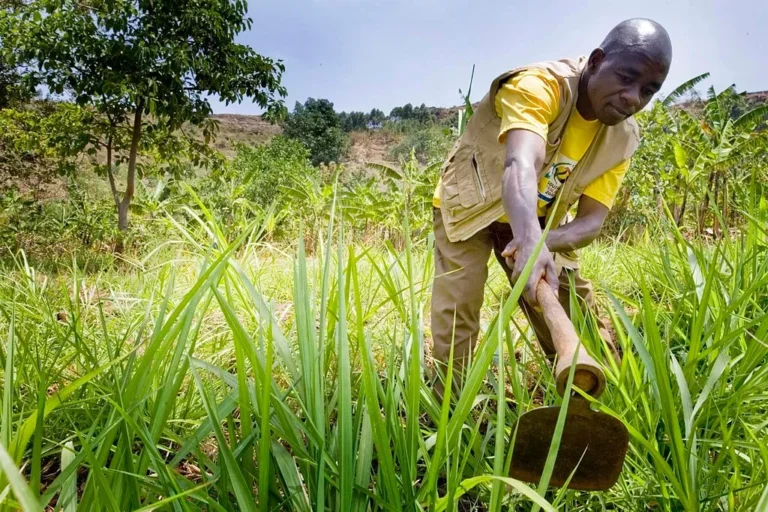
Agritech is re-emerging as a serious sector. Morocco’s OCP Group launched Innovx specifically to back agritech startups, and has already worked with Kenya’s Pula, an agricultural insurance company, to bring its model to rice farmers in Côte d’Ivoire, with Nigeria and additional crops next. The cross-border replication of proven African models within Africa is a pattern worth watching.
The Gaps That Remain
Honest analysis requires acknowledging the structural constraints that still shape the ecosystem. Funding concentration is one. Kenya, South Africa, Egypt, and Nigeria captured 72% of total investment in 2025. Emerging hubs in Rwanda, Ghana, and Senegal are gaining momentum, but the distribution gap raises real questions about which founders, and which problems the ecosystem is leaving behind.
Gender is another. Female-led startups raised just 2% of funding in 2024, and less than 1% if grants are excluded. No ecosystem that systematically underinvests in more than half of its potential founders can claim to have solved the innovation problem.
There is also a pipeline concern at the growth stage. A “Series B cliff”, where promising startups struggle to secure the capital needed to scale past early growth, has become a recurring structural issue, particularly in Nigeria. Seed-stage funding contracted slightly in 2025, and low conversion rates from seed to Series A suggest the constraints will work their way upstream.
A Different Kind of Innovation Story
What African startups are demonstrating, quietly and at scale, is something more interesting than simple market growth. They are stress-testing solutions in genuinely difficult environments, and finding that the resulting products are often more resilient and more adaptable than equivalents built for easier conditions.
The world’s largest youth population, a median age roughly half that of the United States, and a continent where mobile penetration reached 90 subscriptions per 100 people in Sub-Saharan Africa: these are not just demographic facts. They are the conditions under which an entire generation of builders is writing the first draft of what digital economies look like when they are designed from the ground up, for the people who actually live here. That is not catching up. That is something else entirely.