
Africa’s AI Moment Has Arrived, But the Continent’s Future Depends on What Happens Next

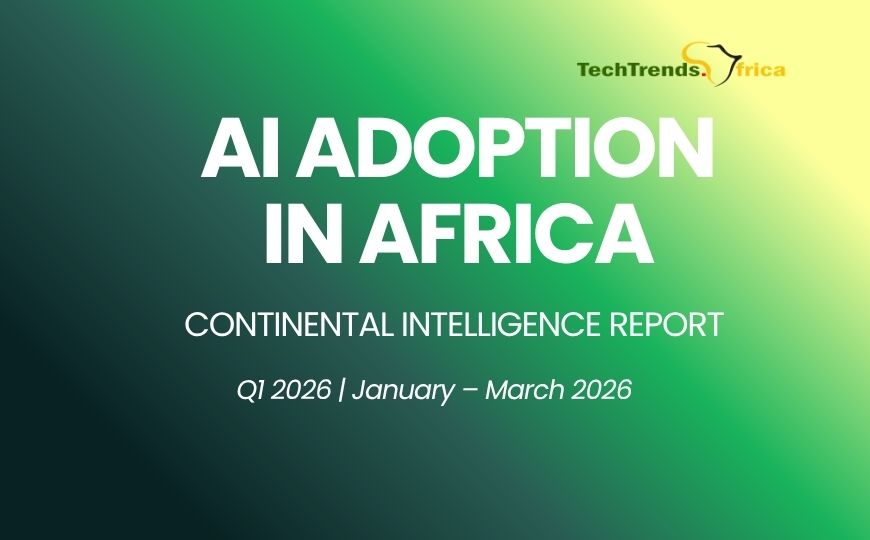
We spent Q1 2026 tracking how artificial intelligence is reshaping economies, startups, governments, and workforces across the African continent. Today, we are releasing our findings, a 38-page continental intelligence report that takes a genuinely pan-African view of AI adoption.
From Egypt launching Africa’s first sovereign large language model, to Kenya training over 600,000 citizens in AI skills, to Senegal outpacing several larger economies on AI adoption rates, the first quarter of 2026 has been one of the most active periods in African AI history.
And yet the numbers that sit alongside that momentum are sobering. Africa accounts for just 3 percent of the global AI talent pool. The continent hosts less than 1 percent of the world’s data centres. Funding continues to concentrate in four markets, while the remaining 50-plus countries struggle for visibility and capital.
That tension, between genuine momentum and structural constraint, is the story of African AI in Q1 2026. It is also the reason we built this report.
The numbers at a glance
| $705M | raised by African startups across 59 deals in Q1 2026 — Egypt led with $190M, ahead of South Africa and Kenya |
| $10B | targeted by the AfDB–UNDP AI Initiative launched at the Nairobi AI Forum, February 2026, aiming to unlock 40 million new jobs by 2035 |
| 64% | of African workers now use AI tools at work, higher than the global average of 54%, according to PwC’s Africa Workforce Survey |
| 44 | African countries now have formal data protection laws, with 38 enforcement authorities in place — the continent’s governance baseline is growing |
| 600,000+ | citizens trained in AI skills in Kenya alone through the national AI Skilling Initiative, and Microsoft has reached 4 million learners in South Africa |
A report for the whole continent
One of our deliberate choices in building this report was geographic balance. African AI coverage has a concentration problem of its own; the same four or five markets dominate the headlines while the rest of the continent gets footnotes. This report is different.
We cover all five of Africa’s regions, with dedicated analysis of:
- East Africa — Kenya’s governance leadership, Rwanda’s ‘AI Lab’ designation, Ethiopia’s indigenous language AI work
- North Africa — Egypt’s Karnak LLM launch, Morocco’s UNESCO AI Centre and JAZARI ROOT Institute, Tunisia’s world-leading talent density
- West Africa — Côte d’Ivoire’s $45M mobility deal, Ghana’s decade-long AI strategy, Senegal’s rising adoption rate
- Southern Africa — South Africa’s enterprise AI maturity, Microsoft’s R5.4 billion infrastructure investment, and the delayed AI Policy gazette
- Continental institutions — the African Union’s Phase 1 strategy, the Africa AI Fund, and the AfDB–UNDP $10 billion initiative
Every section is sourced. We cite the African Development Bank, UNDP, ILO, World Bank, PwC, Microsoft’s AI Readiness Report, the Africa AI Policy Lab’s March 2026 continental intelligence briefing, Condia’s Q1 funding tracker, and original reporting from the TechTrends Africa newsroom.
“Africa is not being left behind. But it is not yet leading. The window to shape AI on African terms is open, and it will not stay open indefinitely.”
What the report covers
The report is structured around the four questions we set out to answer:
- African startups building with AI — which companies are building AI-native products, which sectors are attracting the most capital, and what the Q1 2026 funding data actually reveals across 14 countries
- Businesses adopting AI tools — from fintech fraud detection in Cairo and Nairobi to AI-powered SME credit scoring in Accra and Dar es Salaam, and the ethical fault lines running through all of it
- Government AI initiatives — country-by-country analysis of who is legislating, who is stalling, and what the African Union’s continental strategy means in practice
- Job impact and the skills race — what the ILO, World Bank, and PwC data actually says about African workers and AI, including which jobs face the highest displacement risk and where skilling programmes are having real impact
We close with a direct answer to the central question: Is Africa catching up or being left behind? — backed by evidence from across the continent, not a single market.
AI Adoption in Africa — Q1 2026 Report
A fully sourced, 38-page continental intelligence report covering AI startups, business adoption, government initiatives, and workforce impact across East, West, North, Southern, and Central Africa. Includes data from the African Development Bank, UNDP, ILO, World Bank, PwC, Microsoft, and more.
What you will find inside:
- African startups building with AI — who, where, and how much they raised in Q1 2026
- Enterprise and SME adoption across fintech, agritech, health, and retail
- Government AI initiatives — 12 countries profiled from Morocco to Rwanda to South Africa
- Jobs and skills data — ILO, World Bank, and PwC findings on workforce impact
- The central question answered with evidence: Is Africa catching up or being left behind?
>> DOWNLOAD THE FULL REPORT HERE << pdf file— No sign-up required
This report is free. It is for founders, investors, policy professionals, journalists, students, and anyone who wants to understand what is actually happening with AI in Africa right now; not the headlines, but the data behind them.
If you find it useful, share it with your network. And if you have a story, a correction, or a perspective from your market that we missed, reach out to us at [email protected]. This is a living conversation, not a final word.