
Inside a Pan-African Program Leveraging Product Leadership to drive the growth of digital startups

For years, African universities have produced world-class research with limited pathways to market. The Pan African University, backed by the African Union Commission and international partners including Germany, Japan and the African Development Bank, was created to close that gap by embedding innovation and commercialisation into postgraduate education. Pan African University Institute of Life and Earth Sciences (PAULESI) operates as part of the Pan African University, supported by all 55 AU member states and global development partners, with a remit that extends beyond teaching into applied innovation and entrepreneurship.
Between July 2023 and March 2024, PAULESI took a decisive step in that direction, running an International Entrepreneurship and Innovation Programme that brought together 110 startup founders and their product managers from 40 African countries to enhance their digital solutions for wider commercialisation and impact. Central to the programme’s execution was John Awodeyi, Product Manager at Bunce and Co-founder, Tayture, selected as Product Development Mentor following what PAULESI described as “weeks of extensive evaluation of numerous highly qualified candidates”. The mandate was to brace the product development capabilities of these companies by connecting them with experienced product leaders who could guide them through the complexities of designing and scaling digital products.
PAULESI described Awodeyi as “excellent and unique in his understanding in developing innovative digital solutions”, tasking him with designing and implementing a curriculum that covers product roadmapping, prioritisation frameworks, design thinking methodologies, user-centric product development, product-market fit validation, data-driven decision making, experimentation frameworks, and scalable product architecture through masterclasses and team-focused office hour sessions.
By the end of the programme, PAULESI documented product iterations and pivots of participating startups. PAULESI’s Deputy Director, Prof. M. A. Oladunjoye, described the final demonstration event as “the highlight of our year,” noting that participants had moved decisively from weak product adoption records to steady growth. Several solutions including Mtalii, Medeasy, Vetty, and EranPro modified their platform operation, launching new versions of their web applications addressing sectors such as geotourism, healthcare access, veterinary medicine, and agricultural logistics. According to PAULESI, these ventures are already “gradually penetrating” their target markets.
Prof. Oladunjoye credited the shift to sustained mentorship and organised commercialisation support, writing that the programme helped students “advance their solutions beyond early user adoption to sticky product features that opened up new market potentials and guaranteed retention” and strengthened PAULESI’s position as “a hub for pan-African innovation” .
Participants behind the emerging digital solutions described the experience as a turning point. Dr. Costly, C.E.O of Medeasy, a healthcare-focused product, reported that the programme provided their first exposure to product strategy and user-centred design which are skills not typically covered in academic training and have been helpful for acquiring over 3,000 customers.
Similarly, Jassem, who leads the Mtalii team, a geotourism solution, noted that the product analytics masterclass helped them discover how to translate data into insights that guide feature prioritisation. “This understanding has greatly increased clarity in our product roadmap”, Jaseem said.
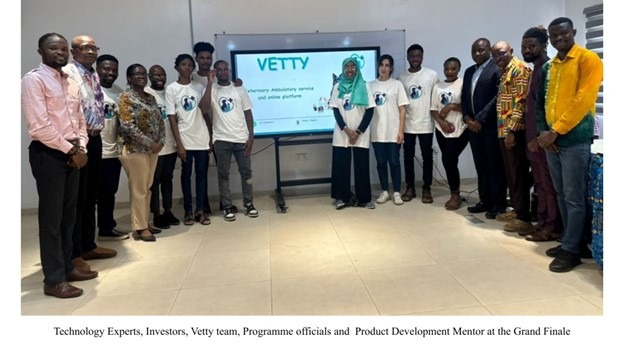
PAULESI’s evaluation indicates that several startups continued refining their solutions after the programme, engaging external stakeholders and exploring further support pathways. What distinguished the programme, PAULESI noted, was the depth of engagement. Beyond formal sessions, Awodeyi worked closely with students in one-on-one and small-group settings, helping them test assumptions, refine business models and prepare investor-ready demonstrations. Prof. Oladunjoye highlighted that this approach “created confidence and clarity among participants,” enabling them to present solutions with a level of commercial credibility uncommon.
Awodeyi’s contribution to this program illustrates how private-sector product leadership skills can be redeployed through volunteering and partnerships to accelerate innovation outcomes at scale. Prof. Oladunjoye remarked that PAULESI looks forward to more collaborations in the future to advance their mission of product innovation.
PAULESI’s innovation programme sits within a broader continental effort to link advanced education with Africa’s digital economy. As African governments and institutions increasingly prioritise innovation-led growth, the ability to convert research into scalable technology ventures has become a strategic imperative.