
POS Terminal Fraud in Nigeria: A System Under Pressure


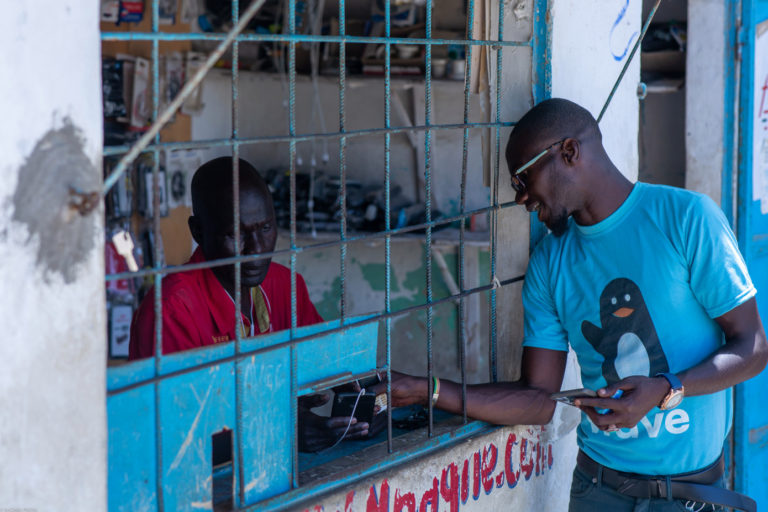
Nigeria’s agent banking network was built to extend financial access to the unbanked. Decades after banks failed to reach millions of Nigerians, a small terminal on a roadside table became the country’s most effective financial tool. Today, that same infrastructure is at the centre of a growing fraud crisis that regulators, operators, and consumers are struggling to contain.
The numbers tell a stark story. According to NIBSS fraud data cited by the House of Representatives ad-hoc committee, POS, banking, and digital payment channels lost N17.67 billion to fraud in 2023, affecting more than 80,000 customers. By 2024, that figure had climbed to N52.26 billion, a jump of N34.59 billion in a single year. These are not the figures of a sector with isolated bad actors. They point to structural vulnerabilities in a network that scaled far faster than oversight could keep pace with.
How the Ecosystem Grew Beyond Its Own Guardrails
Paul Okafor, National President of the Association of Digital Payment and POS Operators of Nigeria (ADPPON), told the National Assembly that Nigeria’s POS ecosystem has expanded from 50,000 operators in 2017 to over 2.3 million today, while regulatory capacity has grown by less than 10 percent. That imbalance created real gaps: agents operating without verified identities, terminals deployed without traceable addresses, and transactions processed with minimal KYC checks.
NIBSS data confirms that POS channels accounted for 26.37 percent of all fraud cases in 2023, making them the third most exploited payment channel after mobile and internet banking. Industry tracker FITC separately recorded a 95 percent surge in POS-related fraud in Q4 2024 alone.
The vulnerabilities go beyond logistics. Hon. Olufemi Bamisile, chairman of the House of Representatives ad-hoc committee, told stakeholders that investigators had uncovered cloned terminals, anonymous transactions, unprofiled agents, and weak KYC protocols operating across the country. More troubling still, security agencies have reported that in some states, nearly 40 percent of kidnap ransom payments pass through informal POS cash-out channels. As Okafor put it plainly: “This is no longer a fintech issue; this is a national security threat.”
The Regulatory Response — Measured or Miscalculated?
The Central Bank of Nigeria has not been passive. New CBN guidelines for agent banking capped individual customers at ?100,000 per day and N500,000 per week via POS agents, while agents themselves face a cumulative daily cash-out ceiling of N1.2 million. All transactions must now route exclusively through dedicated accounts maintained by licensed principal institutions.
Then, in August 2025, came the geotagging directive. The CBN set an October 31 deadline requiring all existing and newly deployed payment terminals to have native geolocation services enabled, fitted with double-frequency GPS receivers. The logic is sound: if a terminal can be located precisely, fraudulent actors become easier to trace. Under the rule, operators, including Moniepoint, OPay, and PalmPay must register each device with exact GPS coordinates, and merchants may only process transactions within a 10-metre radius of their registered business address.
But the rollout of such a sweeping policy in under 60 days raised serious implementation concerns. As Techpoint Africa reported, geotagging 4.2 million active terminals at the pace required roughly 77,000 per day, demands thousands of trained field engineers that industry experts say the CBN and the National Central Switch simply do not have. Dr. Obioha Oti, Acting National President of the Association of Mobile Money and Bank Agents in Nigeria, told Channels Television that about 40 percent of POS devices currently in operation are not Android-based, meaning they would have to be physically withdrawn and replaced, a process involving high cost and time.
The 10-metre restriction also carries consequences beyond fraud prevention. For millions of Nigerians in rural and underserved areas who depend on mobile agents, locking terminals to fixed addresses effectively ends the flexibility that made agent banking work in the first place.
The Bigger Picture
POS transactions hit a record N10.51 trillion in Q1 2025 alone, a 301 percent increase from Q1 2024, underscoring just how central the network has become to Nigeria’s daily economy. Meanwhile, the Corporate Affairs Commission has warned that from January 2026, no POS operator will be permitted to operate without CAC registration, with security agencies mandated to enforce compliance.
International precedent offers some guidance. ADPPON cited examples from Brazil, India, Kenya, South Africa, and the United Kingdom where mandatory police vetting, continuous verification, and harmonised oversight frameworks have meaningfully reduced agent fraud. In Brazil, agent fraud reportedly fell by over 60 percent after police clearance certificates were made compulsory for operators.
Nigeria’s POS fraud problem is not simply a product of criminal ingenuity. It reflects the predictable strain on an informal network that scaled to national infrastructure status without the regulatory architecture to match. The policies now being introduced — transaction caps, geotagging, KYC enforcement, CAC registration — are necessary steps. Whether they are well-sequenced and whether operators and consumers can absorb their impact without serious disruption to financial access will ultimately determine whether the system holds together or buckles under the weight of its own growth.