
International Women’s Day 2026: 20 Women Driving Tech Innovation Across Africa

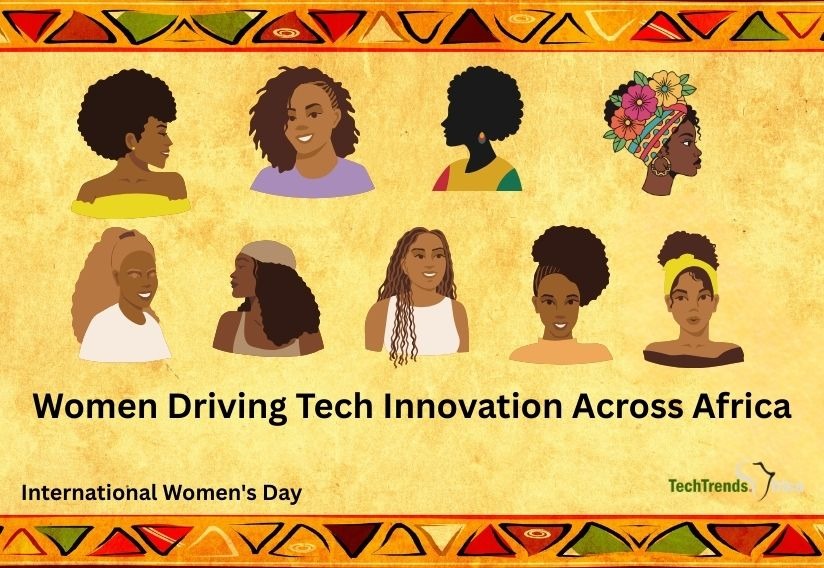
Africa’s technology sector has spent the better part of a decade reshaping itself, from a collection of nascent startup clusters into a more mature, regionally connected ecosystem. Within that transformation, a generation of women founders, engineers, and executives has emerged as architects of some of the continent’s most consequential companies.
This International Women’s Day, we profile twenty of them: leaders whose work spans fintech, healthtech, agritech, edtech, and infrastructure, across countries from Senegal to South Africa.
These are not honorary mentions. They are operators building revenue-generating businesses, managing teams, raising capital in markets where that remains structurally harder for women, and solving problems that affect hundreds of millions of people.
Fintech & Financial Inclusion
Odunayo Eweniyi — co-founded PiggyVest in Nigeria in 2016 alongside Joshua Chibueze and Somto Ifezue. What began as a savings tool for young Nigerians has grown into one of West Africa’s most widely used personal finance platforms, with millions of users managing savings, investments, and group funds. Eweniyi has been publicly vocal about the structural barriers women face in fundraising, and her candor has made her one of the most influential voices in Nigeria’s startup ecosystem.
Adia Sowho — formerly Chief Marketing Officer at MTN Nigeria, Sowho now leads strategic growth efforts in the digital financial services space. She has spent years at the intersection of telecommunications and fintech, understanding how mobile infrastructure underpins financial access for unbanked populations across West Africa.
Nadia Doghri — co-founded Paymaster in Tunisia, working to digitize payroll and HR payments for businesses across North Africa. Her work addresses a gap in enterprise fintech that has historically been underserved on the continent.
Wiza Jalakasi — leads developer relations and ecosystem strategy at Africa’s Talking, the Kenyan API platform that has become critical infrastructure for developers building communication and payment products across the continent. Her work shapes how the next generation of African tech products are built at the lowest level of the stack.
Healthtech & Life Sciences
Helène Dao — co-founded mTen in Côte d’Ivoire alongside her co-founders to address the diagnostic gap in West African healthcare. The platform supports community health workers with digital tools for screening and patient tracking. In regions where physician-to-patient ratios remain critically low, solutions like mTen represent a pragmatic response to a structural problem.
Chisom Obi — co-founded Healthtracka in Nigeria with Ifeoluwa Dare-Johnson to bring lab testing to people’s homes. The company raised pre-seed funding and has expanded its at-home diagnostics network, reducing friction in a healthcare system where patients frequently face delays accessing basic tests.
Nthabi Nhlapo — leads clinical informatics and digital health programs in South Africa’s private health sector, working on interoperability between hospital management systems and national health records infrastructure. Her work is less visible than consumer-facing founders, but operationally critical.
Marème Cisse — co-founded Sante Digilab in Senegal, focusing on digital laboratory management for clinics and hospitals in francophone West Africa. Her company addresses inefficiencies in how test results are recorded, stored, and shared, a bottleneck that affects patient outcomes.
Agritech & Climate
Lexi Novitske — Managing Partner at Amali Capital, a fund focused on early-stage African tech companies. While Novitske comes from the investment side, her consistent support for agritech and climate-adjacent founders across East and West Africa has shaped which companies have the resources to grow. Capital allocation is its own form of influence.
Makena Mwangi — co-founded Apollo Agriculture alongside Benjamin Njenga and Eli Pollak to deliver credit, insurance, and inputs to smallholder farmers in Kenya. The company uses satellite data and machine learning to underwrite farmers who would otherwise be invisible to traditional lenders. Apollo has raised significant funding and continues to expand its reach across sub-Saharan Africa.
Cécile Ngo Mbing runs agricultural digitization programs in Cameroon, connecting smallholder cocoa and cassava farmers with buyers and inputs through a mobile platform. Her work is in a country often absent from the main startup conversation, yet it has one of the continent’s most significant agricultural workforces.
Edtech & Workforce Development
Carrol Chang — CEO of Andela, the talent marketplace that connects African software engineers with global companies. Folawiyo took over leadership of a company that had already reshaped how the world thinks about African technical talent and has continued to scale its marketplace model. Andela’s trajectory, from a training academy to a global talent platform, is one of the most closely watched pivots in African tech.
Adetola Nola — co-founded Gradely in Nigeria alongside Boye Oshinaga to address learning gaps for primary and secondary school students. Gradely uses diagnostic assessments to personalize learning, specifically designed for the Nigerian curriculum. In a country with over 40 million school-age children, the potential scale of impact is significant.
Temi Marcella Awogboro — co-founded LagosJobber, a platform connecting Lagos-based artisans and blue-collar workers with employment. The platform speaks to a workforce development gap that most edtech companies ignore — the majority of African workers are not in white-collar employment, and building pathways for informal sector workers requires a different product philosophy entirely.
Infrastructure & Enterprise Tech
Rebecca Enonchong — founder and CEO of AppsTech in Cameroon, one of Africa’s longest-standing enterprise software companies. Her work spans decades, and her influence on infrastructure and policy thinking across the continent is difficult to overstate.
Judith Okonkwo — CEO of Itanna in Nigeria, an accelerator and co-working space that has supported dozens of early-stage Nigerian startups. Okonkwo’s role sits at the ecosystem-building layer — the infrastructure that makes other companies possible.
Goziem Obi-Okoye — leads cloud and enterprise infrastructure partnerships across West Africa for a major cloud provider. Her work translates directly into which Nigerian and Ghanaian enterprises have access to reliable computing infrastructure, and at what cost.
Deep Tech & Data
Joy Buolamwini — Ghanaian-American researcher and founder of the Algorithmic Justice League, whose work exposing racial and gender bias in facial recognition systems has influenced regulation in the United States and Europe. Her 2023 book and ongoing advocacy have made her the most globally prominent African voice in AI ethics. The implications of her research for African governments considering AI adoption are direct and underexplored.
Pelonomi Moiloa — co-founded Lelapa AI in South Africa to build AI products specifically for African languages and contexts. In a landscape where most large language models perform poorly in Zulu, Swahili, or Twi, Lelapa AI represents an effort to build language infrastructure from an African starting point. The company has attracted investor attention as the global conversation around language AI has intensified.
Loubna Bouarfa — Moroccan-born AI scientist and founder of OKRA.ai, using machine learning to accelerate drug discovery. Named MIT Top Innovator Under 35 and Forbes Top 50 Women in Tech, she shaped EU AI ethics policy. Her deep learning approach to healthcare data offers a blueprint for Africa’s emerging health-tech landscape.
What the Pattern Suggests
Twenty standout founders are building Africa-native products, many at the infrastructure level rather than consumer-facing. Their leadership suggests a gradual recalibration of who shapes Africa’s digital economy. Notable representation comes from francophone Africa, often overlooked in tech coverage. Several tackle high-stakes sectors — agritech, healthtech, and workforce development, where inadequate solutions carry real human consequences.
International Women’s Day often prompts reflection. The challenges these founders face are not unique to women, but they are compounded for women. Research from the GSMA and Briter Bridges has consistently shown that female-led startups on the continent raise less capital on average, even when controlling for sector and stage.
In Africa’s tech ecosystem, the focus should be on institutional durability over symbolism. Women leading innovation are building lasting systems and infrastructure, not just achieving visibility milestones, constructing the enterprise platforms that will define the continent’s next phase of growth.