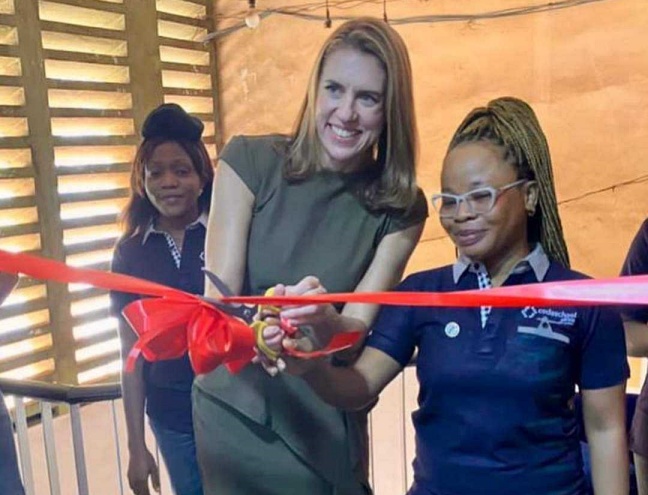

Shell Foundation and Startup Discovery School Target Women Farmers With New West Africa Agri-Tech Pilot


A new initiative backed by Shell Foundation and Startup Discovery School is setting out to address one of the more persistent gaps in African agriculture: the disconnect between proven climate-smart technologies and the women smallholder farmers who stand to benefit most from them.
The West Africa Aggregator Service Platform — known as WAASP — launched this week as a one-year pilot operating across Ghana and Senegal. Rather than introducing new tools, the programme will test whether existing agricultural technologies can reach women farmers more effectively when the way they are delivered is fundamentally redesigned.
A Delivery Problem, Not a Technology Problem
The premise behind WAASP reflects a view gaining traction among development practitioners and agri-tech investors: that the bottleneck in agricultural transformation is rarely the technology itself. The more stubborn obstacle is how that technology reaches farmers — and on what financial terms.
Women smallholder farmers across West Africa typically operate within tighter cash-flow constraints and carry less capacity to absorb upfront costs than their male counterparts. Many existing delivery models were not built with this reality in mind, which means viable technologies often sit unused or fail to scale in communities where they are most needed.
Mandy Nyarko, Chief Executive Officer of Startup Discovery School, noted in a statement that technologies which have already proven their worth continue to fall short in reaching women farmers because the underlying delivery structures are misaligned with how those farmers manage income and risk.
What the Pilot Will Test
WAASP will run structured six-month validation cycles coordinated by Startup Discovery School, working through three established farmer networks: myAgro in Senegal, and Vitara and Complete Farmer in Ghana. Between them, these networks serve more than 500,000 smallholder farmers and operate across value chains where women’s participation is particularly high.
The technologies being tested span solar-powered smart drying systems from Synnefa, cold storage solutions from ColdHubs, and solar irrigation from Irri-Hub. Additional providers focused on affordable fertiliser and climate-smart poultry production have also been selected based on their alignment with the financial realities of women farmers.
The platform will evaluate service-based, shared-use, and layaway delivery models — structures designed to lower the barrier of entry by spreading costs and distributing risk. Each solution will be assessed against uniform performance criteria covering adoption rates, retention and measurable income outcomes. Any model that fails to demonstrate commercial viability or a clear income benefit will be revised or dropped.
The programme targets at least a 20 per cent increase in incomes for participating farmers and aims to establish distribution pathways capable of reaching 200,000 farmers — at least half of them women — by 2030.
Funders and Regional Significance
Shell Foundation, an independent charity that works to raise incomes among underserved communities while reducing emissions, is anchoring the initiative alongside co-funding from the UK Foreign, Commonwealth and Development Office, the Autodesk Foundation and the Australian Centre for International Agricultural Research.
Jonathan Berman, Chief Executive Officer of Shell Foundation, said in a statement that the platform brings together major public and philanthropic funders with strong regional delivery partners, with the combined reach of those partners already extending to more than half a million farmers across the two countries.
Startup Discovery School, which designs and runs innovation programmes across Africa, Asia and the UK with a focus on climate, gender and inclusive growth, will manage the coordination and validation process throughout the pilot.
What Comes Next
WAASP has been structured as a disciplined test, not an open-ended experiment. Validated delivery models will be embedded directly into the operations of participating aggregator networks, with the intention of creating durable distribution channels rather than isolated pilots that fade once funding ends.
Over the course of the year, the programme intends to publish findings on adoption patterns, income outcomes and delivery economics — data that could shape how similar initiatives are designed and funded across the broader West African region, including in Nigeria, where smallholder agriculture remains central to rural livelihoods and food security.