
Nigeria and Finland Sign Digital Economy Pact as Finnish Participation in Project BRIDGE Comes Into Focus

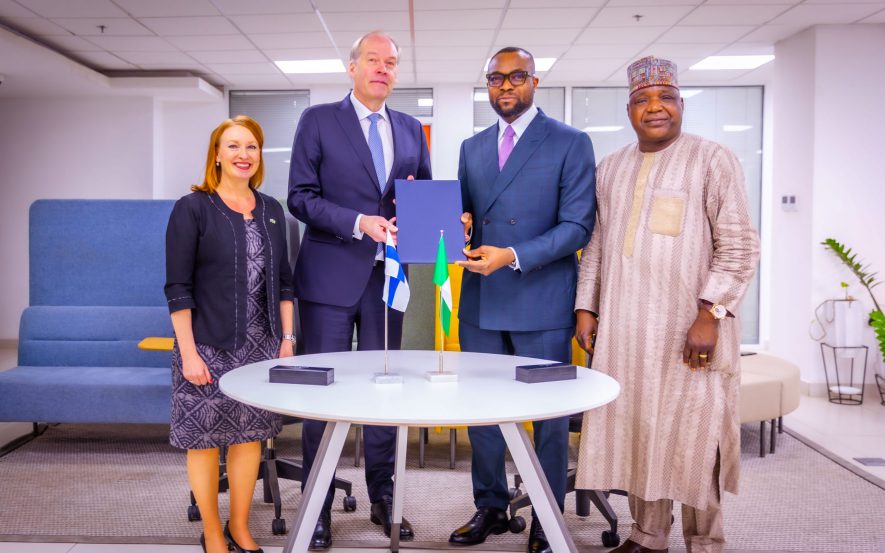
Nigeria and Finland formalised a partnership on digital transformation last week, signing a Memorandum of Understanding in Abuja that covers a broad range of cooperation areas — from cybersecurity and digital governance to emerging technologies and innovation capacity. The agreement signals a deepening of ties between Africa’s largest economy and one of Europe’s most advanced digital nations, with practical implications that extend well beyond a ceremonial signing.
What the MoU Covers
The agreement, executed on 23 March, establishes a structured framework for bilateral collaboration across digital government, digital public infrastructure, cybersecurity, emerging technologies, and capacity building. Both governments describe the pact as a foundation for channelling digital transformation into economic growth and improved public service delivery.
Dr. ‘Bosun Tijani, Nigeria’s Minister of Communications, Innovation and Digital Economy, signed on behalf of the federal government. Jarno Syrjälä, Under-Secretary of State for International Trade at Finland’s Ministry for Foreign Affairs, represented Helsinki.
According to Dr. Tijani, the agreement follows productive engagements in Helsinki in February, during which Nigerian officials held discussions with Finnish development finance institutions Finnvera and Finnfund, and explored collaboration around Nigeria’s Data Exchange Platform. Of particular note, the minister indicated that talks have extended to potential Finnish involvement in Project BRIDGE — Nigeria’s flagship broadband expansion programme targeting the deployment of roughly 90,000 kilometres of fibre optic infrastructure nationwide, at an estimated cost of $2 billion.
Finland’s EU-Backed Role in Nigeria’s Tech Skills Push
The MoU does not exist in isolation. Finland already leads the European Union’s Team Europe Initiative on Support to Digital Public Services in Nigeria — a €23 million programme implemented by Finland’s development agency HAUS in consortium with Estonia’s ESTDEV. The initiative is embedded within the broader EU–Nigeria Digital Economy Package under the EU’s Global Gateway strategy, and feeds directly into Nigeria’s 3 Million Technical Talent (3MTT) programme, one of the government’s most visible digital workforce initiatives.
The programme is focused on expanding access to secure, interoperable public services and strengthening institutional governance frameworks — objectives that complement the terms of the newly signed MoU.
Syrjälä, in remarks following the signing, described Nigeria as a strategic partner for Finland on the continent. He said the MoU creates a substantive basis for collaboration across governments, institutions, and the private sector, with an emphasis on building digital systems that are interoperable, citizen-centred, and sustainable.
Cybersecurity Context
The timing of the agreement is notable. Nigerian organisations currently face the continent’s highest volume of cyberattacks: Check Point Research recorded an average of 4,701 attacks per week against Nigerian institutions in January 2026, a 12 percent increase year-on-year. Authorities are simultaneously developing a 2026 update to the National Cybersecurity Policy and Strategy. Cybersecurity features explicitly in the MoU’s areas of cooperation, making Finland’s involvement relevant to an immediate and escalating national challenge.
A Partnership Worth Watching
What distinguishes this MoU from the routine diplomatic agreements that often dominate official press releases is the degree of groundwork already laid. Both governments entered the signing with an active EU programme already running, prior bilateral engagement at the ministerial level, and a specific infrastructure project — Project BRIDGE — where Finnish capital and technical expertise could plausibly play a role.
Whether those conversations translate into material Finnish investment in Nigeria’s fibre rollout remains to be seen. But the framework is now in place, and the signals from both sides suggest this is a partnership with defined objectives rather than aspirational language.