
Innovate Now Cohort 10 Spotlights Africa’s Assistive Tech Startups

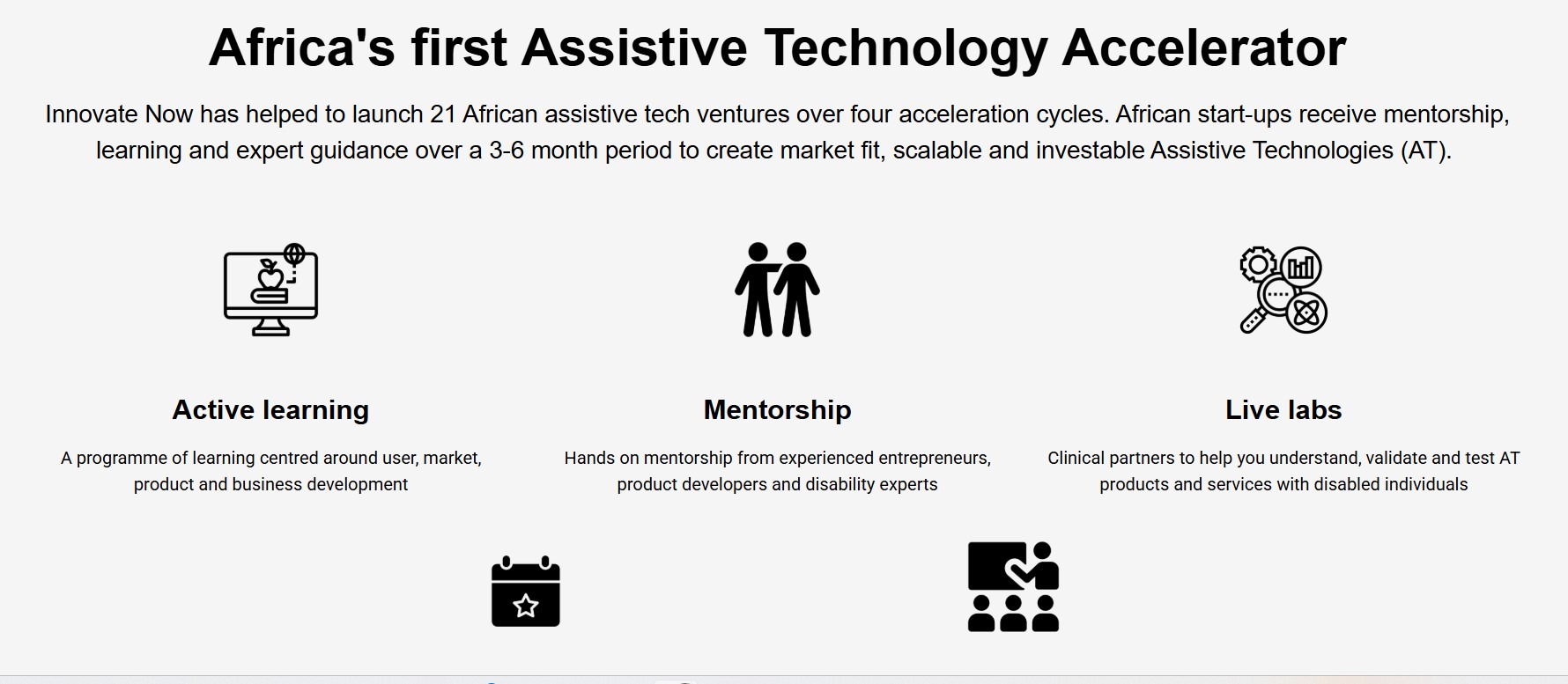
Eleven startups are redefining access to education, healthcare, communication, mobility, and employment for persons with disabilities across Africa following their graduation from Innovate Now Cohort 10, the continent’s first Assistive Technology accelerator.
The showcase brought together innovators, partners, government stakeholders, and the community of persons with disabilities to highlight how inclusive, human-centered innovation can unlock dignity, independence, and economic participation.
Across the accelerator, founders engaged in a hands-on, human-centered journey beginning with real-world problem analysis and co-design with persons with disabilities. This was followed by a structured diagnostic assessment to identify gaps, alongside targeted training, coaching, and venture-building support covering product development, team strengthening, market validation, and business modelling. Ventures tested their solutions directly with persons with disabilities — including lived-experience validations— ensuring continuous refinement. Through rapid iteration and accessibility-by-design checks, ideas evolved into evidence-backed solutions prepared for scalable implementation and meaningful impact.
On Demo Day, these solutions came to life through live demo, showcased innovations were solving issues around addressing critical barriers across sectors – from neurodevelopmental care and sexual health information to mobility, communication, navigation, and inclusive employment.
One example highlighted during the showcase was Neuronest, which addresses the critical gap in neurodevelopmental care across Africa. An estimated one in ten children on the continent lives with a neurodevelopmental difference, yet access to affordable, consistent, and specialized therapy remains limited. Families often travel long distances, face high costs, or receive delayed diagnoses and fragmented support.
Neuronest is responding to this challenge through a hybrid care model that combines in-person therapy, virtual consultations, and digital learning tools to support both children and caregivers. By integrating technology with clinical care, the solution reduces geographical and financial barriers, enables continuity of therapy, and empowers families with accessible resources — expanding dignified and affordable care to communities that have historically been underserved.
Innovate Now is an initiative of the Global Disability Innovation Hub (GDI Hub), Implemented in partnership with Assistive Technologies for Disability Trust and Kilimanjaro Blind Trust Africa with funding from NORAD.
Speaking at the event, Bernard Chiira, Founder and CEO of Assistive Technologies for Disabilities Trust, emphasized the importance of grounding innovation in lived experience and the need to drive funding into the space:
“Assistive Technology is not just about devices; it is about dignity, access, and opportunity. Cohort 10 demonstrates what is possible when solutions are co-created with persons with disabilities and designed to work in real African contexts. The Innovate Now accelerator programme continues to serve as a platform for nurturing inclusive, high-impact solutions — equipping founders with the tools, mentorship, and ecosystem connections needed to move from ideas to scalable ventures, while centering the voices and lived experiences of persons with disabilities at every stage of innovation. We recently launched the Momentus Fund Pilot in partnership with the Judith Neilson Foundation. The fund will address the critical funding gaps that Assistive Technology innovators face, and we believe it will catalyze patient capital into the ecosystem, unlock scale for inclusive ventures, and accelerate Africa-led solutions that advance dignity and economic participation. The call for applications for the fund will be announced soon.”
Echoing this call for deeper collaboration and long-term investment, Ben Hardman, Head of Inclusive Ecosystems at GDI Hub, shared:
“Innovate Now demonstrates the power of locally rooted innovations supported by global expertise. By centering lived experience and building strong ecosystems around entrepreneurs, we are helping build and scale solutions that advance inclusion, dignity, and economic participation across Africa.”
Founders in the cohort also reflected on the barriers their solutions are designed to dismantle. On behalf of the cohort, Patton Yugi, Co-founder of Ishara AI, – an AI powered platform translating Kenyan sign language into speech and text in real time – highlighted the role of inclusive technology in removing systemic barriers: “For Deaf communities, access to communication is access to education, healthcare, and public services. Our work is about breaking language barriers so that no one is excluded from participating fully in society.”
The event reinforced several key themes: The future of Assistive Technology in Africa depends on integrated solutions strengthened by strong cross sector partnerships and an enabling policy environment. Additionally, Inclusive startups are driving equitable employment and demonstrating the socio-economic contributions of persons with disabilities. At the same time, responsible and ethical use of artificial intelligence is expanding access across sectors, while co- creation with persons with disabilities remains central to effective – sustainable and scalable innovation.
The accelerator continues to call on the private sector to move beyond support and into strategic partnerships investing capital, distribution, and expertise to strengthen Africa’s Assistive Technology ecosystem and ensure no one is left behind.
Cohort 10 Ventures
Escort (eSCort) – Uganda: An SMS-based watch that enables caregivers to track children with disabilities and receive emergency alerts in low-connectivity settings.
Diversity Health App – Uganda: A mobile application delivering verified sexual and reproductive health information to Deaf and hard-of-hearing youth through sign-language videos and captions.
Sauti – Kenya: A multi-modal communication application offering speech-to-text, text-to-speech, sign-language translation, and captioning for people with hearing and speech impairments.
Hands and Hope – Kenya: An inclusive e-commerce platform supporting artisans with disabilities to access markets, mentorship, and sustainable income opportunities.
AbiliLife – Kenya: A mobile and SMS-based platform providing personalized home-based therapy services and caregiver support for people with disabilities.
Neuronest – Kenya: A hybrid platform combining in-person therapy, virtual care, and digital learning tools for neurodiverse children.
Provision Sight Africa – Kenya: Smart wearable glasses using AI and computer vision to deliver real-time audio navigation support for visually impaired individuals.
Ishara AI – Kenya: An AI-powered platform translating Kenyan Sign Language into speech and text in real time to expand access to essential services.
Sauti Yetu – Kenya: A smart cane integrated with a voice-guided navigation app that enhances independent mobility for visually impaired users.
STAND+ – Kenya: A voice-first indoor navigation platform providing step-by-step audio directions within complex indoor environments.
Sauti Mask – Kenya: An offline voice recognition solution trained to understand diverse speech patterns, improving access for people with speech impairments.